
Pet Insurance Claim Pack: Records, Receipts, and Deadlines
On this page
Quick answer
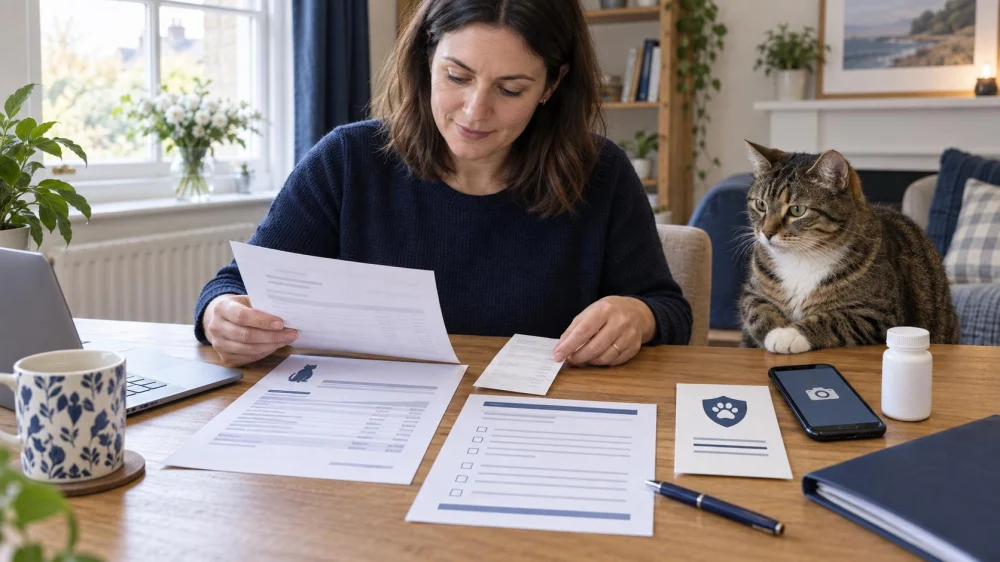
Open your current policy, identify the claim deadline, excess, limits, exclusions, and required form, then collect the itemised invoice, payment receipt, clinical history, diagnosis or treatment details, prescription evidence, and policy number. Ask whether your vet or you must submit the claim, keep copies of everything, and track the insurer’s acknowledgement and requests.

Vets4Pets - Coalville
Inside Pets at Home, Whitewick Retail Park, Whitwick Rd, Coalville LE67 3JN, UK
Read the policy before claiming
Use the policy schedule and wording for the period when treatment occurred, not only a marketing summary. Check which animal and condition are covered, the annual or condition limit, fixed and percentage excesses, waiting periods, pre-existing-condition wording, referral rules, and whether complementary treatment or dental care needs prior approval.
Note any time limit for notifying the insurer or submitting documents. If the policy renewed during a course of treatment, ask which policy year and limit apply. Do not delay necessary veterinary care while waiting for routine paperwork; contact the vet and insurer promptly when pre-authorisation might matter.

Flynn Vets Commons Brae
Lisburn and CastlereaghNorthern Ireland
188 Saintfield Rd, Belfast BT8 6NN, UK
Collect a complete evidence pack
Create one folder for the claim and use consistent filenames or dates. Keep originals when the policy requires them and retain copies of anything sent by post.
- Policy number, pet details, and policyholder contact information.
- Itemised veterinary invoice showing dates, services, medicines, and charges.
- Proof of payment when reimbursement depends on payment.
- Relevant clinical notes and history from current and prior practices.
- Laboratory, imaging, referral, discharge, and prescription documents if requested.
- Completed claim form and any declaration or consent.
Do not edit invoices or clinical records. If a document is wrong, ask the issuer to correct it and preserve the revised version.
Coordinate the vet and insurer
Ask the practice whether it submits claims directly, supports pre-authorisation, or expects you to claim after payment. A direct claim does not guarantee approval, and you may remain responsible for the bill, excess, or excluded amount. Confirm any administration fee and who will answer insurer questions.
Give the practice the correct insurer, policy number, and consent to release relevant records. Tell the insurer if the animal has changed practice or received related treatment elsewhere so the requested history can be complete.
Submit and track the claim
Use the insurer’s verified portal, email, app, or postal address. Before submitting, compare names, dates, totals, and attachments. Save the submission confirmation, reference number, date, and a copy of the final form.
- Record when the insurer acknowledges the claim.
- Check messages and spam folders for document requests.
- Send only through the insurer’s approved secure route.
- Note each call, representative, promise, and deadline.
- Ask how multiple invoices or continuing treatment should be added.
Never send passwords, full payment-card details, or unrelated records in response to an unverified message.
Check the decision carefully
Compare the payment or refusal with the invoice and policy. Review the applied excess, co-payment, limit, excluded items, and remaining cover. If something is unclear, ask the insurer for a written calculation and the exact policy term used.
For a disputed outcome, follow the insurer’s complaints process and include a concise timeline and supporting evidence. Keep veterinary welfare and payment arrangements separate from the dispute: continue to discuss necessary care and costs with the practice.
Frequently asked questions
Does a claim form prove the treatment is covered?
No. The insurer decides under the policy terms after reviewing the condition, dates, records, limits, and exclusions.
Can my vet be paid directly?
Some practices and insurers allow direct claims, but policies and practice rules vary. Confirm responsibility for unpaid or excluded amounts.
Why does the insurer need older records?
It may need the clinical history to assess when signs began or whether a condition relates to an exclusion. Ask what period and records are required.
Should I combine unrelated treatment in one claim?
Follow the insurer’s instructions. Different conditions or policy periods may need separate forms or references.
What if I miss a deadline?
Contact the insurer immediately, explain the circumstances, and ask for its written position. Do not assume late submission will be accepted.
Conclusion and next steps
Save the current policy and claim route before you need them. For each claim, gather an itemised invoice, receipt, relevant records, and a complete form; submit through a verified channel and preserve the confirmation. Check the final calculation against the policy and ask promptly about gaps.
Evidence note: The UK Financial Conduct Authority’s insurance rules require firms to provide appropriate product information, including key exclusions and claim-notification contacts in applicable summaries. This article is a record-keeping guide, not an interpretation of any individual policy or a guarantee of payment.




 Pets at Home Cardiff4.0 (1079 reviews)
 The Posh Dog Clothing Company5.0 (2 reviews)
 Paragon Veterinary Group4.0 (186 reviews)
 Moorview Vets4.0 (72 reviews)
 Chloes Creature Comforts0.0 (0 reviews)
 The Runtlings Cattery4.0 (58 reviews)
 UK Pet Owner’s Guide to Spaying and Neutering for Fish – Expert Advice
 Pet Breathing Changes: Count at Rest and Call Your UK Vet
 Common Cat Health Problems: Dental, Obesity and Skin Issues
 How to Handle Anxiety and Stress in Pets: Vet Advice
 Pet Not Eating: What to Record for Your UK Vet
 How to Record a Pet Symptom Video for Your Vet