
Out-of-Hours Vet Care in the UK: What Owners Should Prepare
On this page
Quick answer
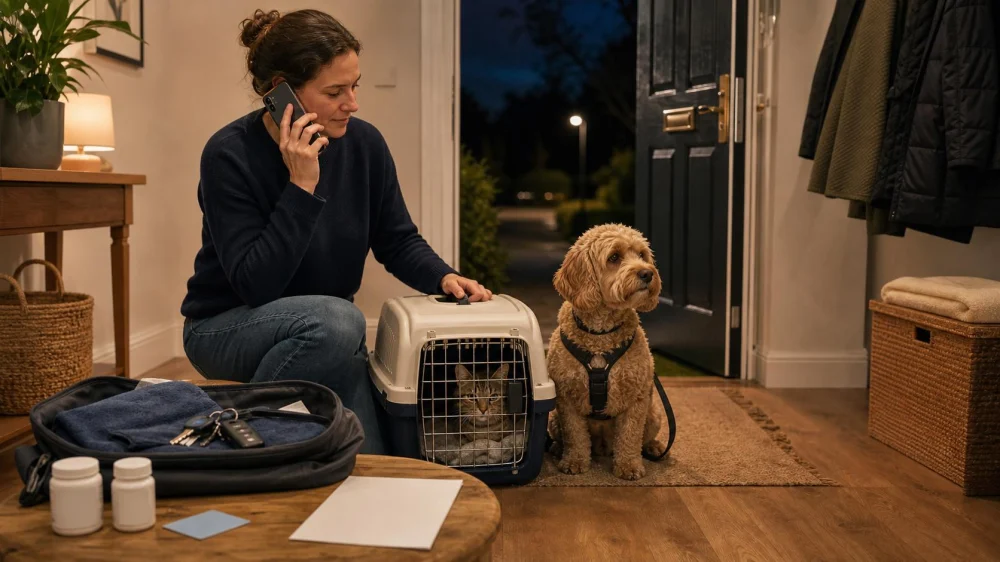
Ask your UK veterinary practice now who provides its nights, weekends and bank-holiday emergency cover, save the telephone number and exact address, and plan transport. In an emergency, call first unless immediate circumstances make that impossible, follow the triage instructions, and bring the pet securely restrained with medicines, history, insurance and microchip details. Do not wait for normal hours when delay could increase suffering.

Ashfield Veterinary Surgery - Durham
Annfield PlainCounty DurhamEngland
Classic House Industrial Estate, Morrison Rd, Annfield Plain, Durham DH9 7RX, UK
How emergency cover works
Out-of-hours veterinary care is urgent assessment and treatment delivered outside a practice's normal opening times. The Royal College of Veterinary Surgeons states that UK veterinary practices must ensure 24-hour emergency first aid and pain relief are available.
The service may operate at your usual practice, a shared local practice, a dedicated emergency clinic, or through another arrangement. The emergency site can be farther away than the daytime clinic, and the team may not automatically have the full medical record.

Prepare before an emergency
- Save the daytime and out-of-hours numbers under clear names in every carer's phone.
- Record the emergency provider's address, entrance, parking, and overnight access instructions.
- Test the route at night and identify an alternative when roads or public transport are unavailable.
- Keep a secure carrier, lead, muzzle previously introduced safely if appropriate, towels, and loading aid accessible.
- Maintain a current one-page history with diagnoses, medicines, allergies or reactions, vet details, microchip and insurance information.
- Agree who can authorise treatment and payment when the main keeper is away.
Call before travelling
The telephone team can identify the correct site, advise immediate first aid, prepare staff, and tell you how urgently to arrive. Explain the main sign in one sentence and answer questions directly.
Call immediately for severe breathing difficulty, collapse, uncontrolled bleeding, repeated seizures, major trauma, suspected poisoning, inability to urinate, severe pain, a rapidly swollen abdomen, or another sudden deterioration. Do not give human medicine, induce vomiting, offer food, or delay transport unless the veterinary professional directs you.
If a phone line uses a recorded message, listen to the full emergency instructions. Do not drive automatically to the closed daytime premises.
Information to give the vet
- species, breed or type, age, sex, weight, and relevant health conditions;
- what happened, when it began, and how symptoms are changing;
- breathing, consciousness, mobility, gum colour, bleeding, vomiting, urination, and seizures when relevant;
- possible toxin or foreign-object name, package, amount, and time—without guessing;
- all medicines, supplements, last doses, and allergies or previous reactions;
- recent surgery, pregnancy, infectious-disease risk, or aggressive/fearful behaviour;
- your location, travel time, vehicle, contact number, and any access needs.
Plan safe transport
- Follow the emergency team's handling advice, especially after trauma or with breathing difficulty.
- Use a secure carrier for cats and small pets and an appropriate lead, harness, carrier, or vehicle restraint for dogs.
- Keep your face away from a painful or frightened animal; even a gentle pet may bite.
- Use a blanket or rigid support only when advised and when enough people can move the animal safely.
- Have another adult drive when possible so one person can monitor the pet without distracting the driver.
- Call again if the condition changes during travel or you cannot reach the advised location.
Costs and insurance
Out-of-hours care usually costs more than routine care because of staffing, facilities and urgency. Ask for the initial consultation fee, likely stabilisation steps, estimate, deposit or payment timing, and how further treatment decisions will be authorised.
RCVS advises that cost discussion should not delay emergency first aid or pain relief. Be open about financial limits so the vet can explain essential priorities, alternatives and what can safely wait. Bring insurance details, but confirm whether the clinic submits claims directly or requires payment first.
Insurance exclusions, excesses, limits, waiting periods and pre-authorisation vary. A policy does not guarantee every treatment or fee is covered.
Arrival and follow-up
- Tell reception immediately if breathing, consciousness, bleeding or pain has worsened.
- Keep the pet secured and away from other animals unless staff direct otherwise.
- Give packaging for suspected toxins or medicines without exposing staff to spills.
- Ask what has been found, the immediate priorities, material risks, options and estimate.
- Request written discharge instructions, medicine directions, warning signs, and a follow-up plan.
- Confirm how the emergency record will reach your regular practice and contact it when advised.
Limitations and important notes
This UK-focused planning guide cannot diagnose an emergency or replace telephone triage. Species, size, condition and location affect first aid and transport. Large animals commonly require different on-site arrangements; discuss them with the attending practice in advance.
Remote advice can support triage but cannot replace hands-on examination when the animal needs physical care. Do not use an unverified online service as a reason to delay reaching the designated emergency provider.
Frequently asked questions
Will my usual vet be open all night?
Not necessarily. The practice must arrange access to emergency care, but another clinic or dedicated provider may deliver it. Check the current arrangement.
Can an emergency clinic help if my pet is not registered there?
RCVS says emergency services should still provide first aid and pain relief, though registered clients may be prioritised and different arrangements can apply. Call first and provide the history.
Should I drive straight to the daytime clinic?
No. Call the out-of-hours number and confirm the location because the service may operate elsewhere.
Can I request a home visit?
Small-animal owners usually need to travel to the clinic; exceptional home visits may be available. Large-animal arrangements often differ. Discuss transport constraints when calling.
What if I cannot afford the proposed treatment?
State your limits early and ask about essential first aid, staged options, estimates and available payment arrangements. Cost discussions should not delay necessary emergency first aid or pain relief.
Sources and evidence notes
The Royal College of Veterinary Surgeons' emergency and out-of-hours care guidance explains UK practice obligations, possible service arrangements, owner planning and transport responsibilities, non-registered clients, and costs. The treating emergency service's instructions take priority for a particular animal.
Next steps
Call your regular practice during normal hours and confirm its current emergency number, provider, location and initial fee. Save the details, prepare the carrier and transport plan, and create a one-page health summary. Share the plan with every person who cares for your pet.




 Pets Corner4.0 (330 reviews)
 Foxhall Veterinary Clinic4.0 (191 reviews)
 Ferris Claire4.0 (442 reviews)
 Raw Superstore @ Doggroom4.0 (21 reviews)
 Barwell Cattery4.0 (21 reviews)
 Carnforth Pet Care - Veterinary Centre4.0 (111 reviews)
 The Importance of Behaviour Training for Hamsters – UK Edition
 Seasonal Health Tips for Guinea Pigs: Essential Care Advice for UK Pet Owners
 Expert Vet Advice on Health Checkups for Puppies
 Complete Guide to Preventive Care for Exotic Pets
 Top 10 Common Illnesses Every Fish Owner in the UK Should Know
 Top 10 Puppy and Kitten Care Tips Every Bird Owner in the UK Should Know