
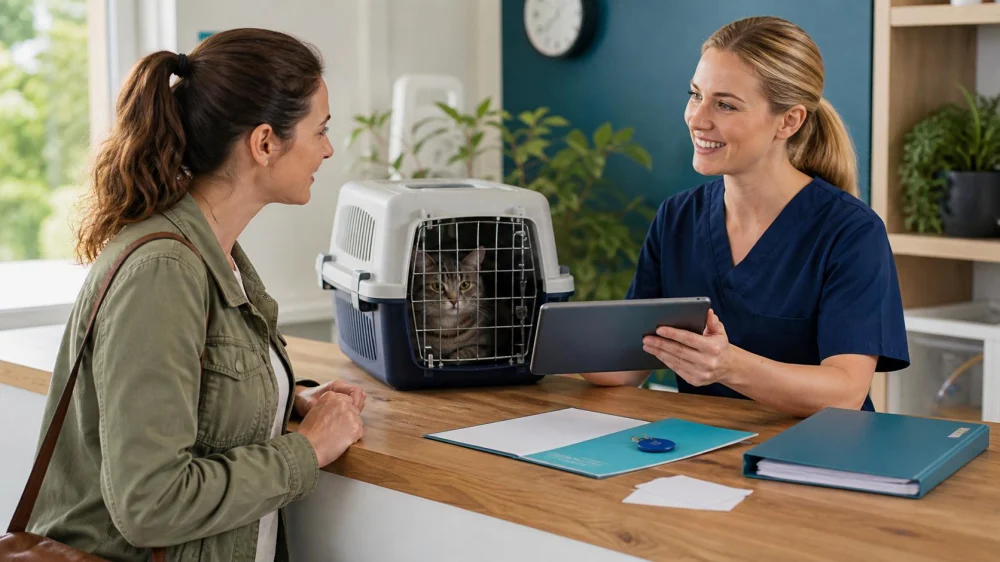
Register a New Pet With a UK Vet: What to Prepare
On this page
- Quick answer
- Check the practice can meet your needs
- Prepare pet and owner details
- Transfer veterinary records
- List medicines, food, and allergies
- Clarify insurance and payment
- Arrange access and communication
- Understand out-of-hours care
- Prepare for the first visit
- Sources and evidence notes
- Frequently asked questions
- Conclusion and next steps
Quick answer
Contact the UK veterinary practice before you need urgent care and confirm it is accepting registrations for your species and circumstances. Prepare owner contact details, pet identification and microchip information, full clinical records, current medicines, allergies, diet, insurance, payment method, and consent arrangements. Ask how routine, urgent, out-of-hours, home-visit, accessibility, and communication services actually work.

Rainton Gate Luxury Cats' Hotel
Rainton GateCounty DurhamEngland
Fourstones, Pittington Rd, Rainton Gate, West Rainton, Houghton le Spring DH5 9RG, UK
Check the practice can meet your needs
Veterinary registration creates an administrative and clinical link with a practice, but it does not guarantee every service, clinician, appointment time, or home visit. Confirm the actual branch and service scope.
Ask:
- Is the practice accepting new clients and your pet’s species?
- Which branch holds the record and provides appointments?
- Are there limits for exotic species, very large animals, behaviour needs, or complex medical care?
- What are routine appointment hours and typical booking methods?
- Does the practice offer nurse clinics, dental care, surgery, imaging, laboratory work, referrals, or home visits?
- How physically accessible are the entrance, parking, reception, consultation rooms, and toilets?
- How are language and communication needs arranged?
Verify professional registration and practice details through the appropriate current UK sources when relevant. Reviews can describe experiences, but they do not prove clinical quality or current availability.

Ashcroft Veterinary Surgery
Calcot House, Winterton Rd, Scunthorpe DN15 6AH, UK
Prepare pet and owner details
Have the owner’s full name, address, phone, email, and preferred contact method. Identify anyone authorised to bring the pet, receive information, consent to care, or make payment.
For the pet, provide:
- name, species, breed or description, sex, neuter status, and date of birth or estimated age;
- colour, markings, recent photo, and microchip number;
- microchip database and confirmation that keeper contact details are current;
- source or adoption date when relevant;
- behaviour, handling, mobility, communication, and transport needs;
- known reactions to people, animals, restraint, food, or clinic environments.
Registration at a practice does not automatically update a microchip database. Contact the relevant compliant database directly and retain confirmation.
Transfer veterinary records
Ask the previous practice, breeder, rescue, or overseas provider to send complete records securely. Include:
- visit notes and problem list;
- vaccination records;
- laboratory, imaging, pathology, and specialist reports;
- surgery, anaesthetic, and dental records;
- prescriptions and medication monitoring;
- allergies and adverse reactions;
- parasite-control history;
- insurance claims and pre-authorisations when relevant;
- travel documents and import records.
Confirm the new practice received and reviewed the transfer before a medication runs out or a planned treatment is due. A vaccination card or pet passport may not contain the complete clinical history.
Keep your own digital copy. If records are in another language, ask whether a qualified translation or additional summary is needed.
List medicines, food, and allergies
Create one current list with medicine name, strength, prescribed amount, route, schedule, purpose, prescriber, supply remaining, and monitoring due. Include prescription medicines, non-prescription products, supplements, flea and tick treatments, worming products, and medicated shampoos.
Bring original packaging or clear label photos. Do not combine medicines in one container. Do not change or extend treatment because registration or record transfer is delayed; contact the current prescriber and new practice for a safe plan.
Record food brand and formula, daily amount, treats, allergies, suspected reactions, and prescription diet. A new practice may need an examination and records before continuing certain prescriptions. Ask about timing early.
Clarify insurance and payment
Provide insurer, policy number, renewal date, and claims contact when you want the practice to record them. Ask whether the practice submits claims, charges an administration fee, accepts direct claims in some situations, or requires the owner to pay first.
Insurance cover depends on the current policy, condition history, waiting periods, exclusions, excess, co-payment, and limits. Registration does not confirm cover. Contact the insurer about pre-existing conditions, referral, dental, complementary care, travel, and pre-authorisation requirements.
Ask the practice about consultation fees, deposits, estimates, payment timing, missed appointments, prescription fees, record fees, and payment support it offers. Request an estimate for planned care, understanding that urgent findings can change it.
Arrange access and communication
Tell the practice in advance about step-free access, seating, hearing or visual communication, interpreter needs, assistance animals, sensory needs, or extra time. Ask which branch can provide the suitable room.
For the pet, request a quieter waiting option, direct-to-room arrival, species-separated area, or other low-stress adjustment when available. A secure carrier, properly fitted lead, and advance behaviour information improve safety.
Confirm how reminders, test results, repeat-prescription notices, and clinical messages are sent. A portal or email is not necessarily monitored for emergencies. Ask for expected response times.
Understand out-of-hours care
Save the out-of-hours provider, address, phone number, transport route, and payment process. It may be a different practice or hospital and may not automatically have the complete record.
Ask:
- When does routine service switch to out-of-hours?
- Should owners call before travelling?
- How are records shared back to the daytime practice?
- Does the provider treat your species?
- What happens if you lack transport?
- Which payment and insurance process applies?
Do not wait for registration completion during an emergency. Contact a veterinary service promptly for breathing difficulty, collapse, severe injury, suspected poisoning, inability to urinate, repeated seizures, uncontrolled bleeding, severe pain, or rapid deterioration.
Prepare for the first visit
- Confirm appointment purpose, branch, time, and arrival instructions.
- Bring the pet securely and allow travel time.
- Bring current medicines, food details, records, insurance, and questions.
- Write the main concern, timeline, and functional change.
- Tell staff about handling or access needs before examination.
- Confirm working assessment, options, tests, costs, and follow-up.
- Request written instructions and know who will call with results.
A routine registration visit is a useful time to establish baseline health and preventive plans with the veterinary team, but the appropriate examination depends on the individual animal.
Sources and evidence notes
This checklist follows broad UK veterinary continuity principles: register before urgent need, transfer complete records, reconcile current medicines, maintain microchip contacts, clarify consent and payment, and know the out-of-hours route.
The veterinary practice is the source for services and registration. The treating vet guides individual health care. Microchip databases maintain keeper details. Insurers govern cover, and current UK professional and government authorities provide applicable requirements.
Frequently asked questions
Can I register with more than one vet practice?
Ask the practices about their policies and ensure records and medicines remain coordinated. Fragmented records can create safety and billing problems.
Does registration cost money?
Policies vary. Ask about registration, first consultation, record, and missed-appointment fees before booking.
Will the new vet continue existing medicine?
Not automatically. The vet may need records, examination, and monitoring before prescribing. Plan before supplies run low.
Does registering update the microchip?
No. Verify keeper details directly with the appropriate microchip database.
What if my pet needs care before records arrive?
Contact the practice and explain the urgency. Bring labels and available summaries, but do not delay emergency veterinary care.
Conclusion and next steps
New-vet registration works best before illness. A complete setup links the pet’s identity, records, medicines, diet, insurance, payment, access needs, and out-of-hours route.
Your next step is to call the chosen UK practice, request the registration pack, and authorise secure record transfer. Verify microchip contacts, prepare a current medicine list, and save both routine and out-of-hours numbers before the first visit.



 West Lakeland Veterinary Group4.0 (174 reviews)
 Abbey House Vets in Cleckheaton4.0 (166 reviews)
 Dixon and Young Veterinary Surgery4.0 (356 reviews)
 Parklands Veterinary Group, Dungannon4.0 (66 reviews)
 Vets for Pets - Grimsby4.0 (464 reviews)
 Medivet West Bridgford4.0 (71 reviews)
 Behaviour Training Tips for Senior Pets: What UK Pet Owners Need to Know
 Pet Dental Care: Why Regular Vet Visits Matter for UK Pets
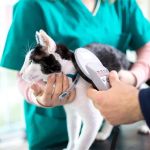 The Importance of Microchipping Your Pet in the UK | RegPets
 Why Does My Dog Stretch So Much? Understanding Normal Stretching vs Abdominal Pain
 How to Prevent Dog Slug Pellet Poisoning in UK Gardens
 UK Pet Owner’s Guide to Skin and Coat Care for Kittens