
Pet Urine Samples: Collect and Store for Your UK Vet
On this page
Quick answer
Ask your veterinary practice whether a home urine sample is useful, how much it needs, and when to deliver it. Use the clean container and collection method it recommends, avoid touching the inside, label the sample, and keep it cool only if instructed. A contaminated or old sample can mislead testing, and collection must never delay urgent assessment.

Bridge Referrals Ltd
Boldon Business Park, 3 Brooklands Way, Boldon Colliery NE35 9LZ, UK
Understand why the collection method matters
Urine can be checked for concentration, blood, glucose, protein, cells, crystals, bacteria, and other clues. Results depend on how the sample was collected, stored, and transported. A free-catch home sample may answer some questions, while suspected infection or other decisions may require a sterile sample collected by the veterinary team.
This guide is for UK dog and cat owners whose veterinary practice has requested a urine sample. It is not a diagnostic test or a substitute for examination. Species, sex, temperament, mobility, urinary symptoms, medicines, and the planned analysis change the correct method. Follow the specific practice’s instructions.
Fintastic aquariums limavady co derry
co derryCauseway Coast and GlensNorthern Ireland
9 St Annes Gardens, Greysteel, co derry, Londonderry BT47 3TT, UK
Practical checklist
- Confirm whether the practice wants a fresh free-catch sample, a particular time of day, fasting, or a clinic-collected sample.
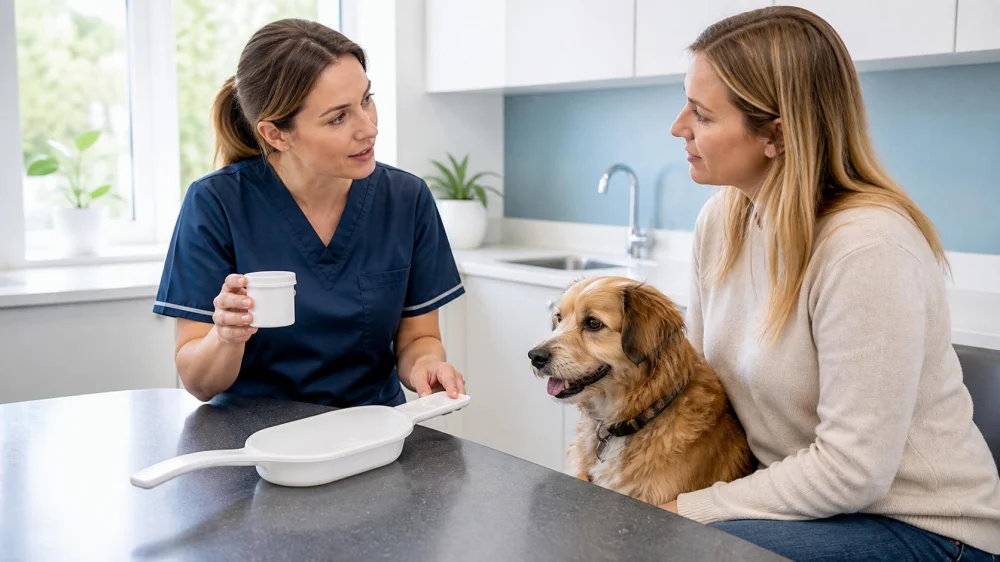
- Obtain the sterile or clean leakproof pot and any collection tray, ladle, pipette, or non-absorbent litter the practice approves.
- Do not reuse food jars, medicine containers, household cups, absorbent litter, or vessels cleaned with strong chemicals.
- Write pet name, owner surname, collection date and time, and method on the outside without covering practice identifiers.
- Avoid touching the inside of the pot or lid and prevent soil, faeces, litter dust, fur, soap, and water entering the sample.
- Ask exactly whether to refrigerate, maximum holding time, and how to keep it separate from food during transport.
- Plan calm handling and stop if collection causes fear, pain, struggling, or risk to the pet or person.
Step-by-step plan
- Prepare the approved equipment and a secure transport bag before the pet is likely to urinate.
- For a dog, use a long-handled shallow collector only if the pet tolerates it; approach quietly without blocking posture or startling the animal.
- For a cat, use the veterinary practice’s non-absorbent litter or tray method and keep other pets away from the prepared tray.
- Transfer enough urine into the pot without touching inner surfaces, close it firmly, wipe only the outside, and label immediately.
- Store exactly as instructed and deliver promptly with medicine, symptom, diet, and collection details.
- Tell the practice about spillage, contamination, delay, refrigeration error, difficulty urinating, or a sample collected from the wrong pet.
Record collection time, method, observed colour or cloudiness without diagnosing it, urine frequency, straining, accidents, pain, thirst, medicines, supplements, diet changes, and recent fluids. Note whether refrigeration occurred and the delivery time so the laboratory can interpret handling limitations.
Limits and important notes
Do not squeeze a pet’s abdomen, insert anything into the urinary opening, deprive water, give salt or diuretics, or delay prescribed medicines to obtain urine unless a vet explicitly directs it. Visible appearance cannot rule infection, stones, kidney disease, diabetes, or obstruction in or out.
Contact a vet urgently if the pet repeatedly strains but passes little or no urine, cries, collapses, vomits, becomes very weak, has a swollen painful abdomen, or passes significant blood. Urinary blockage can be life-threatening, especially in male cats; do not wait to obtain a home sample before seeking care.
Frequently asked questions
How much pet urine does the vet need?
Ask the practice because tests differ. Collect the amount requested without delaying delivery or stressing the pet; a small clean sample may be more useful than a larger contaminated one.
Can I refrigerate the sample overnight?
Only if the practice gives that instruction and confirms the acceptable time. Storage can change cells, crystals, bacteria, and chemistry, so prompt delivery is preferable.
Can I collect urine from the floor?
Usually this risks contamination from dirt, cleaners, and water. Call the practice before submitting it and ask whether a fresh recollection is needed.
What if my cat will not use non-absorbent litter?
Do not force or withhold access until distressed. Ask the practice about alternative home methods or a clinic appointment.
Why might the vet collect another sample?
The team may need a fresher, cleaner, or sterile collection for culture or another test, or to confirm a result affected by home handling.
Sources and evidence
Use the instructions from the UK veterinary practice and laboratory handling guidance for the requested test. The Royal College of Veterinary Surgeons register can help verify veterinary professionals, while recognised UK animal-welfare organisations provide general urgent-care information. The attending vet must interpret results with examination and history.
Conclusion and next steps
Confirm the test and method first, prepare approved clean equipment, collect without stress or contamination, label immediately, and deliver on schedule. Report every handling limitation honestly. When a pet cannot urinate, strains repeatedly, or becomes unwell, urgent veterinary care takes priority over producing a sample.
 Mellows Cattery4.0 (13 reviews)
 Pets at Home Consett4.0 (379 reviews)
 Irish Koi | Japanese Koi Northern Ireland5.0 (1 reviews)
 Pets & Aquatics at Plantsplus3.0 (11 reviews)
 Ribble Vets Penwortham4.0 (301 reviews)
 The Dog Grocer5.0 (33 reviews)
 New Lump on a Pet? Map, Measure, and Call Your UK Vet
 How to Improve Guinea Pigs Behaviour Training at Home: Effective Tips for Pet Owners
 The Importance of Travel Safety for Birds – UK Edition
 Vet-Approved Exercise and Fitness for Senior Pets
 Top 10 Nutrition Tips Every Dog Owner in the UK Should Know
 How to Prepare Your Pet for Their Annual Checkup