
Pet Travel Sickness: What to Record for Your UK Vet
On this page
Quick answer
If a pet drools, lip-licks, swallows repeatedly, pants, retches, vomits, shakes, vocalises, toilets, or refuses to enter the car, stop treating it as a behaviour problem alone. Record when signs begin, whether they occur before movement, trip length, food timing, restraint, temperature, route, and recovery. Contact your vet early. Do not give human travel-sickness medicine, sedatives, ginger, or another remedy unless the vet specifically prescribes or approves it.
Pet travel sickness describes nausea or vomiting associated with motion, often combined with fear or stress about the vehicle. A pet can have both. Similar signs can also result from heat, pain, poisoning, gastrointestinal illness, balance disorders, or medication effects, so a new or severe episode needs veterinary assessment.

Veterinary Instrumentation
Distington House, 26 Atlas Way, Sheffield S4 7QQ, UK
Recognise nausea and travel fear
Vomiting is not the first sign for every animal. Dogs with motion sickness may show drooling, panting, repeated swallowing, lip-licking, or retching. Watch the sequence rather than waiting for vomit.
Signs that can suggest nausea include:
- salivating more than usual;
- lip-licking, gulping, or repeated swallowing;
- restlessness, yawning, panting, or a lowered head;
- retching or vomiting;
- loss of interest in a usual reward;
- slow recovery or refusing food after travel.
Signs of fear can begin before the engine starts:
- hiding when travel equipment appears;
- pulling away from the vehicle or refusing to enter;
- shaking, whining, barking, or trying to escape;
- urinating or passing faeces in the car;
- freezing, crouching, or frantic movement in a carrier.
Do not punish accidents, vocalising, or refusal. Anxiety can intensify nausea, and forcing the pet into repeated long journeys can strengthen the association. Pain, poor carrier fit, unstable footing, and loud or hot travel conditions can also create resistance.

Rule out heat and urgent illness
Panting, drooling, vomiting, weakness, confusion, noisy breathing, collapse, and red gums can occur with heatstroke. A warm vehicle is an emergency risk, not a training problem. Never leave a pet in a car on a warm or hot day, even with windows partly open.
If heatstroke is possible, call the vet and follow current veterinary first-aid guidance immediately. The RSPCA advises stopping further heating, cooling the dog before transport, and travelling to the vet in a cool, well-ventilated vehicle. Dial 999 for a dog in a hot car showing signs of heatstroke when emergency assistance is needed.
Seek urgent veterinary advice for:
- collapse, severe weakness, confusion, or seizure;
- difficulty breathing, blue or very pale gums, or uncontrolled bleeding;
- repeated vomiting, blood in vomit, a swollen abdomen, or unproductive retching;
- suspected poison, swallowed object, or head injury;
- signs that continue when the pet is not travelling;
- a puppy, kitten, elderly animal, or medically vulnerable pet that deteriorates;
- the veterinary practice’s instruction to attend urgently.
Do not drive while trying to monitor or treat the pet. Pull over legally, stop, and have another adult call when possible.
Build a useful journey log
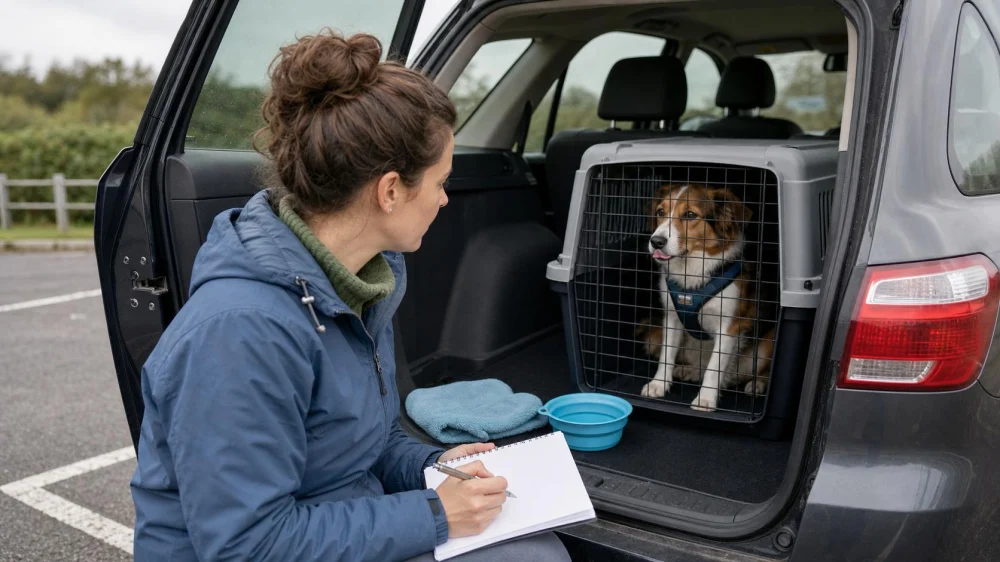
Record two or three necessary trips or short controlled training sessions unless the pet is unwell or the vet says to stop travel. Do not provoke a severe episode for data.
- Before travel: date, time, weather, health, food and water timing, medication, exercise, and behaviour when equipment appears.
- Vehicle stage: reaction near the parked car, inside with engine off, engine on, and first movement.
- First sign: exact sign and minutes after entering or moving.
- Trip details: duration, distance, bends, stop-start traffic, road surface, ventilation, and temperature.
- Restraint: carrier or harness model, location, security, bedding, and whether the pet slid or faced sideways.
- Severity: drooling, panting, lip-licking, retching, vomiting count, toileting, vocalising, or escape attempts.
- Recovery: time to settle, drink, eat, toilet, sleep, and behave normally.
A short video taken by a passenger while the vehicle is safely parked can show behaviour. No one should film while driving, and the pet should not be released from its restraint for a better view.
Make each necessary trip safer
Use a robust carrier or properly fitted travel restraint suitable for the species, size, vehicle, and manufacturer instructions. Secure it so it cannot slide in a turn or sudden stop. The pet should be able to rest in a natural position with appropriate ventilation.
- Plan a cool, direct route. Travel at a cooler time and avoid predictable congestion where possible.
- Prepare the vehicle. Cool and ventilate it before loading the pet.
- Use non-slip bedding. Keep it clean, familiar, and dry.
- Follow veterinary feeding advice. PDSA suggests allowing time after a meal and advises owners to speak to a vet when sickness occurs even on an empty stomach.
- Drive smoothly. Gentle acceleration, braking, and cornering reduce abrupt motion.
- Take appropriate breaks. Offer water and safe toilet opportunities on longer trips according to species needs.
- Prevent escape. Close doors and windows before opening a carrier; keep dogs on a lead at stops.
Do not let a dog travel with its head out of the window. The RSPCA and PDSA warn of injury, escape, and distraction risks. Never place an unsecured animal on a lap, front seat, or loose in the boot.
Use gradual travel training
For a healthy dog whose vet supports training, break the experience into steps small enough that the dog remains comfortable. PDSA recommends returning to an easier stage when anxiety appears rather than pushing through it.
- Approach the parked car without entering, then leave.
- Enter the stationary car briefly with the engine off.
- Rest in the secured travel position for a short time.
- Turn the engine on without moving.
- Make a very short journey—PDSA suggests beginning with no more than five minutes.
- Increase time by small amounts only after comfortable sessions.
Use rewards the pet can safely have and keep sessions separate from stressful destinations when possible. If signs begin at an early stage, stop, allow recovery, and return to the previous successful step later. A qualified clinical animal behaviourist working with the vet may help when fear is substantial.
Cats, rabbits, and other species need species-specific carrier acclimatisation and travel plans. Do not apply a dog training sequence without veterinary or behaviour guidance.
Questions for the vet
- Do the signs fit motion sickness, anxiety, pain, or another condition?
- Does my pet need an examination before further travel?
- Could an ear, balance, stomach, heart, breathing, or medication problem contribute?
- How should meal and water timing change for this pet?
- Is the current carrier or harness suitable?
- Would prescription anti-sickness or anxiety medication help, and when should it be given?
- Should a test dose be given at home before an essential journey?
- Which side effects or lack of response require a call?
- What is a safe training progression and stop point?
- Is the pet fit for a planned long, ferry, rail, or international journey?
Bring the log, video, exact product names, medication list, travel restraint details, and planned journey duration. Ask for instructions in writing.
Medication and product safety
PDSA notes that licensed anti-sickness medication may be a useful short-term part of a plan, while gradual retraining addresses the longer-term fear cycle. Medication choice and dose must come from the vet who knows the animal.
Do not give human travel-sickness tablets, antihistamines, sedatives, CBD, ginger, mint, essential oils, or another “natural” remedy without veterinary direction. Non-prescription products may be ineffective, cause side effects, interact with other medicines, or be toxic to the species.
Do not use sedation simply to make an animal quiet. Reduced movement does not prove nausea or fear is controlled, and sedation can affect balance, temperature regulation, breathing, and safe transport. Use only the prescribed drug, dose, timing, and storage method.
Evidence and limitations
The symptom list, early veterinary contact, gradual training, feeding timing, and medication boundaries come from PDSA’s UK-specific dog car-sickness guidance and safe car-travel guidance. The RSPCA pet travel guide covers restraint, ventilation, water, breaks, heat, and travel planning.
This article does not diagnose motion sickness or prescribe medicine. Species, age, health, journey type, vehicle, restraint, and legal requirements change the plan. Follow the pet’s vet and current UK travel rules.
Frequently asked questions
Can a pet feel travel sick without vomiting?
Yes. Drooling, lip-licking, repeated swallowing, panting, restlessness, retching, or loss of interest in food can appear before or without vomiting.
Is travel sickness the same as travel anxiety?
No, but they can reinforce each other. Motion can cause nausea, and a pet can learn to fear the car after feeling sick. Signs before the car moves are useful for the vet and behaviour plan.
Should I withhold food before every car journey?
Do not create a universal fasting rule. PDSA suggests allowing two to three hours after feeding for dogs with car sickness, but young, diabetic, ill, or other pets may need different advice. Ask the vet.
Can I give my dog a human antihistamine for travel?
Not unless the vet specifically instructs it. Human products and combination ingredients can be inappropriate, and the dose and purpose must be assessed for the individual dog.
When should training stop?
Stop at the first signs of escalating anxiety or nausea, allow full recovery, and return to an easier stage. Stop travel and contact the vet for severe, new, persistent, or non-travel symptoms.
Next steps
Start a simple journey log and contact the vet before the pattern worsens. Check restraint, ventilation, temperature, meal timing, and recovery without provoking another severe trip. Ask for a diagnosis plan, medication boundaries, and a gradual training programme. For an essential journey, confirm emergency veterinary contacts along the route.


 Crab Lane Vets4.0 (197 reviews)
 firstvets - Billy Mill4.0 (90 reviews)
 Myerscough Veterinary Group, Oswaldtwistle4.0 (134 reviews)
 Aqua Group4.0 (78 reviews)
 Rainbow Equine Hospital4.0 (77 reviews)
 Markham Pet Centre4.0 (873 reviews)
 Best Practices for Allergy Care in Guinea Pigs: Tips for a Healthy Pet
 UK Pet Owner’s Guide to Mental Health for Dogs
 How to Manage Your Pet’s Weight and Prevent Obesity: Expert Tips for Pet Owners
 The Ultimate Guide to Vaccinations for Dogs and Cats in the UK
 Expert Vet Advice on Travel Safety for Exotic Pets
 Top 10 Weight Management Tips Every Exotic Pet Owner in the UK Should Know