
Pet Limping: Record the Change and Call Your UK Vet
Table of contents
Quick answer
Contact your vet when a dog or cat starts limping, seems stiff, avoids jumping, or cannot use a limb normally. Keep activity calm, record a short video only if it is safe, and note any fall, wound, swelling, or sudden pain. Seek an emergency appointment for severe pain, a deformed limb, major trauma, or inability to bear weight.
What limping can look like
Lameness is not always a dramatic three-legged walk. A pet may shorten one step, move slowly, hesitate on stairs, stop jumping, shift weight while standing, struggle to rise, lick one area, or become less social. Cats often show subtle changes, while an excited dog may temporarily mask discomfort during a clinic visit.
Possible causes range from a sore paw or broken claw to a wound, bite, sprain, joint disease, fracture, or spinal problem. Similar movement patterns can come from different problems, so the aim of home observation is to inform the vet, not diagnose the limb.

Safe observation before the call
- Prevent running, stairs, rough play, and jumping while arranging advice.
- From a distance, note which limb appears affected and whether the pet bears any weight.
- If the pet is calm, look for an obvious wound, bleeding, swelling, or a damaged claw without squeezing or bending the leg.
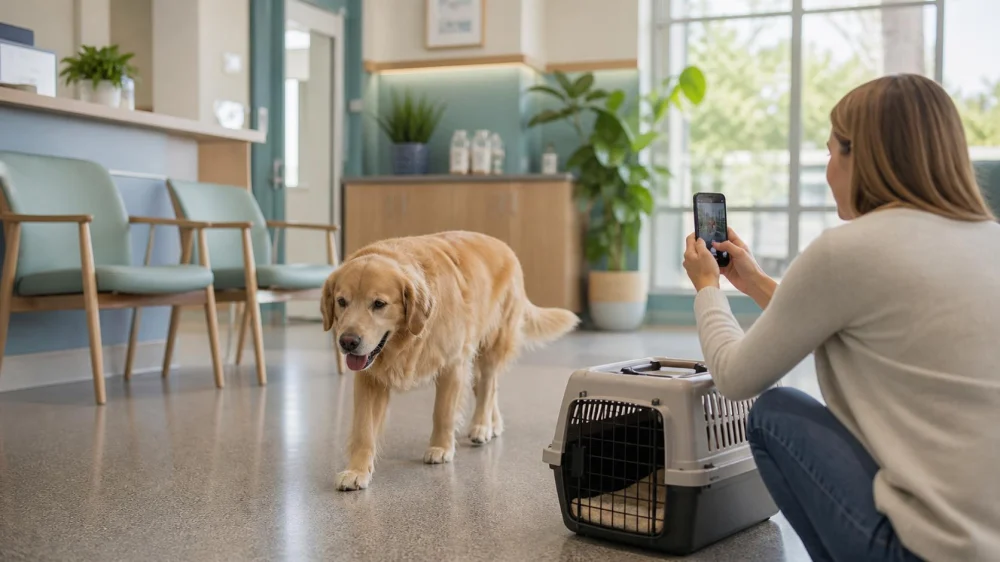
- Record a brief video on a flat, non-slip surface only if walking is comfortable and the vet has not advised strict rest.
- Write down onset, recent exercise or trauma, appetite, toileting, and any previous joint problems.
Keep cats indoors and dogs on a short lead for essential toileting unless the vet gives different instructions. Transport small pets in a secure carrier with soft bedding.
What not to do
- Do not force a painful limb through its range of motion.
- Do not massage, splint, or tightly bandage without veterinary direction.
- Do not give ibuprofen, paracetamol, aspirin, or another human pain medicine unless a vet specifically prescribes it for that animal.
- Do not wait for a planned routine visit if symptoms worsen.
- Do not provoke extra walking just to obtain a clearer video.
Urgent signs
Request emergency veterinary help after a road collision, serious fall, or crush injury; when the limb is at an abnormal angle; when bleeding will not stop; or when the pet cannot stand, cannot bear weight, cries out, pants heavily at rest, or shows severe distress. Sudden weakness or paralysis of one or both back legs in a cat is also an emergency.
Limitations
A video cannot reveal every fracture, ligament injury, joint problem, infection, or neurologic cause. Pets may bite or scratch when painful, even if normally gentle. The urgency and appropriate examination depend on species, age, body size, medical history, onset, and trauma. Follow your veterinary practice’s triage advice.
FAQ
Can a mild limp wait until tomorrow?
Call the practice for triage. PDSA advises contacting a vet for limping; sudden inability to bear weight or severe pain needs immediate assessment.
Should I check between the toes?
Only if your pet is relaxed and the area can be viewed without manipulating a painful limb. Stop if the pet resists.
Can I use leftover pet pain relief?
Not without veterinary approval. The medicine, dose, expiry, and interaction risk may not fit the current problem.
Why does my pet walk normally at the clinic?
Excitement and a different surface can alter movement. A safe home video can help show the original pattern.
Sources and evidence notes
- PDSA: Limping and stiffness in cats — signs and emergency thresholds.
- PDSA: Cruciate ligament damage in dogs — veterinary review for limping and possible knee injury.
Next steps
Restrict strenuous movement, call your UK veterinary practice, and prepare a concise onset and symptom history. Bring a short safe video if available, transport the pet securely, and follow the practice’s advice about urgency, food, medicines, and handling.


 Bridge Veterinary Group - Hartlepool4.0 (240 reviews)
 LK9 Raw Ltd5.0 (9 reviews)
 Vets for Pets - Gamston4.0 (337 reviews)
 RG Consultants0.0 (0 reviews)
 Vets4Pets - Sunderland4.0 (422 reviews)
 Pets at Home Sunderland4.0 (939 reviews)
 Vet-Approved Behaviour Training for Senior Pets: A Guide to a Happier, Healthier Pet
 Behaviour Training Tips for Senior Pets: What UK Pet Owners Need to Know
 UK Pet Owner's Guide to Parasite Prevention for Reptiles
 Expert Vet Advice on Seasonal Health Tips for Birds
 Vet-Approved Allergy Care for Guinea Pigs: Best Practices and Tips
 Why Does My Cat Yawn So Much? Causes and Signs to Watch