
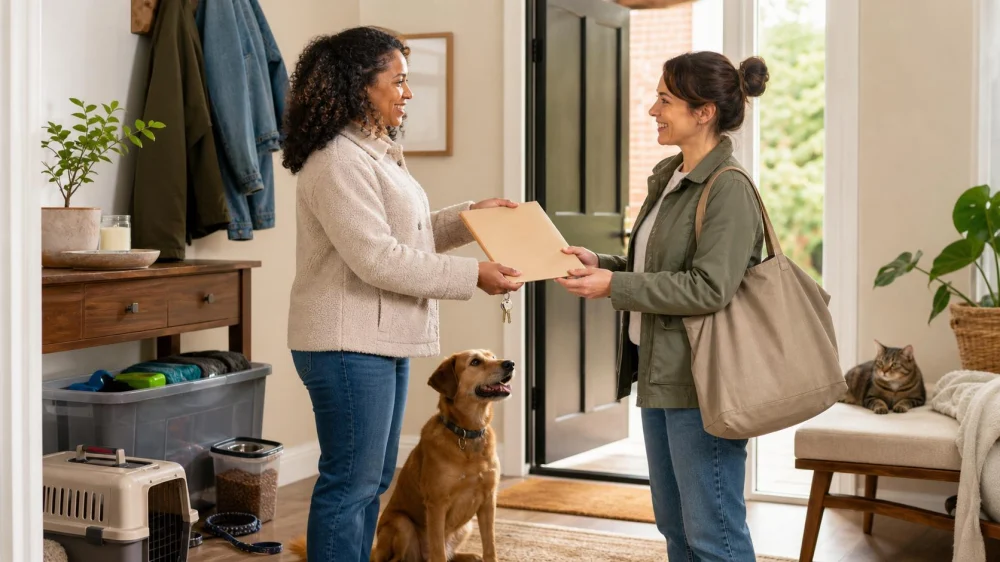
Pet Care Handover: Prepare a UK Household Backup Plan
On this page
- Why a pet care handover matters
- Choose the right backup carer
- Record essential contacts
- Write a clear daily routine
- Document food and medicines
- Explain behaviour and safety
- Prepare vet and emergency permission
- Organise access and supplies
- Plan for different pets
- Test the plan before you need it
- Keep the handover current
- Pet care handover checklist
A pet care handover gives another person the information they need to look after your animal when you cannot be there. It may be useful for a planned holiday, an unexpected hospital stay, a delayed journey home, or simply a long working day. A good handover is more than a list of feeding times. It connects the pet, the carer, the veterinary practice, the home, and the people who can make decisions.
This guide helps UK households prepare a practical backup plan without turning it into an unwieldy manual. The aim is to make everyday care easy to follow, reduce avoidable confusion, and help a trusted person respond calmly if something changes.

Why a pet care handover matters
People who know a pet well often carry dozens of small details in their heads: which door must stay closed, how much food is actually served, where the lead is kept, or what behaviour means the animal is uncomfortable. A temporary carer does not have that background. Written notes turn personal knowledge into instructions that another person can use.
The document also protects against memory gaps during a stressful handover. If plans change at short notice, you may not have time for a long conversation. A single current record can answer the first questions and show the carer whom to contact for anything it cannot answer.

Choose the right backup carer
Choose someone whose availability, confidence, and experience match the animal. A neighbour who is comfortable feeding a quiet indoor cat may not be suitable for walking a large reactive dog. A friend may be willing to help but unable to handle stairs, lift a carrier, give prescribed medicine, or visit at fixed times.
Discuss the role before naming the person in your plan. Confirm what they are and are not prepared to do, how quickly they can reach your home, whether they have transport, and who could replace them. Whenever possible, name a primary carer and a second contact. Give both people a chance to meet the pet while you are present.
Record essential contacts
Start the handover with names and telephone numbers that can be found quickly. Include your own contact details, another household decision-maker, the regular veterinary practice, and the practice's stated out-of-hours route. Add the pet insurance provider and policy number if relevant, but do not leave account passwords in an unsecured note.
Write the full address of the veterinary practice rather than relying on a familiar name. Note any preferred contact method and any times when you expect to be unreachable. If the pet is registered with a microchip database, identify the database and make sure your contact details are already current. The handover should point to records, not expose more personal information than the carer needs.
Write a clear daily routine
Describe a normal day in chronological order. Include waking, feeding, toilet breaks, walks or exercise, quiet periods, cleaning tasks, and bedtime. Use observable instructions such as “one level scoop from the labelled container” instead of “the usual amount.” Specify which rooms or outdoor spaces are allowed and whether doors, windows, gates, hutches, or tanks require a particular check.
Separate essential tasks from preferences. Fresh water, secure access, prescribed treatment, and required cleaning belong in the essential group. A favourite game or the exact position of a bed may be helpful but should not hide the critical steps. A simple table with morning, afternoon, evening, and as-needed tasks can be easier to scan than long paragraphs.
Document food and medicines
List the brand and variety of food, measured portion, frequency, storage location, and any foods that must not be offered. Mention how to manage opened tins or chilled products and what to do if supplies run low. If treats are used for training or enrichment, include them in the daily quantity rather than treating them as unlimited extras.
Copy medicine instructions from the current veterinary label and keep the original packaging available. Record the exact dose, route, timing, storage, and the veterinary practice to call if a dose is missed or the pet will not take it. Do not ask a carer to guess, change a dose, crush a tablet, or substitute a product. Check in advance that the person is genuinely able to give the medicine safely.
Explain behaviour and safety
Describe the pet's normal behaviour in neutral, specific language. Note common triggers, signs that the animal wants space, handling preferences, escape risks, and reactions to children, visitors, traffic, other animals, or loud noises. Include the walking equipment normally used and any areas or situations the carer should avoid.
Explain what “normal” looks like for eating, drinking, toileting, activity, and sleep, without asking the carer to diagnose a problem. Give them a low threshold for contacting you or the veterinary practice if they see a sudden change, injury, breathing difficulty, repeated vomiting, collapse, suspected poisoning, seizure, inability to pass urine, or another urgent concern. In an emergency, professional veterinary guidance should take priority over internet advice or home remedies.
Prepare vet and emergency permission
Ask your veterinary practice what information it needs when someone else brings in your pet. Practices may have their own procedures for consent, payment, record access, and telephone authorisation. A private note between you and the carer does not automatically replace those procedures, so confirm the arrangement directly with the practice before travel.
Write down how you want the carer to reach you, who may make decisions if you cannot be contacted, and how veterinary costs will be handled. Set a realistic spending or authorisation framework only after discussing it with the relevant people and practice. Keep insurance details accessible, but remember that a policy may require the owner to pay first or follow a particular claims process.
Organise access and supplies
Show the carer how to enter and secure the property. Test spare keys, key safes, alarms, gates, and communal entrances. Avoid putting a full home address on a loose key tag. If a code is shared, use a secure method and change it afterwards when appropriate.
Keep everyday supplies together and label them plainly: food, bowls, lead or carrier, litter or bedding, cleaning materials, waste bags, medicines, and basic grooming items. Leave enough for the planned period plus a modest delay. Store dangerous foods, chemicals, medicines, sharp tools, and spare leads safely away from the pet. Add instructions for bins, deliveries, heating, ventilation, and any camera or monitoring device the carer should know about.
Plan for different pets
A handover should reflect the species and individual rather than use a generic checklist alone. Dogs may need route guidance, secure handling, recall restrictions, and rules for meeting other dogs. Cats may need litter routines, hiding-place information, door discipline, and confirmation that the carer has visually checked each animal rather than assuming it is indoors.
Rabbits and other small mammals need clear feeding, enclosure, temperature, cleaning, and daily observation instructions. Birds may require precise cage or aviary security and household-air warnings. Fish and reptiles can depend on equipment, water, heat, humidity, lighting, and feeding schedules that a carer must understand before being left alone. For unusual or complex care, identify a specialist backup rather than expecting an untrained person to improvise.
Test the plan before you need it
Walk through the routine together. Let the backup carer unlock the door, locate supplies, prepare one meal, fit walking equipment, operate the enclosure, and find the emergency contacts. A short trial visit often exposes assumptions that are invisible on paper. It also gives the pet a familiar experience with the person who may later arrive without you.
Ask the carer to explain the important steps back to you. This is a useful check of the document, not a test of the person. Revise anything that can be misunderstood. If the plan depends on a mobile app, smart lock, feeder, camera, or other device, provide a manual fallback for loss of power, internet, or access.
Keep the handover current
Add a review date to the first page and update the plan after a move, new pet, medicine change, new veterinary practice, different diet, altered behaviour, or change in emergency contacts. Review it before every planned absence. Remove expired instructions so the carer cannot accidentally follow an old dose or ring an obsolete number.
Keep one printed copy with the supplies and one secure digital copy that the right people can reach. Tell the backup carer where the current version lives. If you replace it, retrieve or destroy outdated copies that contain personal information.
Pet care handover checklist
- Confirm a primary carer and a backup who have agreed to help.
- List owner, household, regular vet, and out-of-hours contacts.
- Write a timed routine with measured food and cleaning tasks.
- Use current veterinary labels for all prescribed medicines.
- Describe behaviour, handling limits, escape risks, and safe equipment.
- Confirm consent, decision, payment, and insurance arrangements.
- Test keys, codes, gates, carriers, enclosures, and essential equipment.
- Keep sufficient labelled supplies and a practical delay allowance.
- Run a trial visit and correct unclear instructions.
- Date the plan and review it whenever care circumstances change.
A useful pet care handover is short enough to use and detailed enough to prevent guessing. Prepare it while everything is calm, confirm the veterinary arrangements directly, and practise the routine with the person who may need to step in. That small investment gives the carer clearer choices and gives your pet more consistent care when plans change.





 The Town Vets4.0 (370 reviews)
 Tracey's Bunny Haven5.0 (9 reviews)
 Rainton Gate Luxury Cats' Hotel4.0 (56 reviews)
 Drumrainey Veterinary Surgery4.0 (81 reviews)
 Gortlands Veterinary Clinic4.0 (590 reviews)
 Lazy Days Cattery4.0 (19 reviews)
 The Importance of Spaying and Neutering for Dogs – UK Edition
 Top 10 Common Illnesses Every Fish Owner in the UK Should Know
 Expert Vet Advice on Travel Safety for Senior Pets in the UK
 How to Improve Rabbit's Emergency Vet Advice at Home
 Tips for Keeping Your Pet Hydrated and Healthy
 How to Spot Signs of Arthritis in Older Pets | RegPets