
Pet Microchip Details After Moving: Update the UK Database
On this page
Quick answer
After moving home or changing a phone number, update the keeper details on the approved microchip database that holds your pet’s record, then save confirmation. Do not assume a veterinary practice, breeder, rescue, or insurance company updates the database automatically. Check the microchip number against your paperwork, verify the new address and multiple contact methods, and ask a veterinary professional to scan the chip at a routine visit. Rules differ across the UK, especially for cats.

Why the database record matters
A microchip stores an identification number, not your address or live phone details. When an authorised person scans a found animal, they use that number to search a registered database and contact the recorded keeper.
If the phone number belongs to an old employer, the address is several moves behind, or the record still names a previous keeper, the chip may not reunite the pet quickly. The physical chip and the database record must work together.
Updating veterinary, insurance, council, and boarding records is useful, but those changes do not necessarily alter the microchip database.

Check which rules apply
GOV.UK states that all dogs in the UK must be microchipped and registered by eight weeks old. In England, owned cats must be microchipped and registered by 20 weeks, including indoor cats. Cat rules differ in Scotland, Wales, and Northern Ireland.
Legal responsibilities can depend on where you live, the animal, age, health exemption, and whether ownership or keepership changed. Use the current government page for your nation rather than relying on an old rescue leaflet or social post.
In England, keepers must keep required contact details current. Enforcement and penalties may apply when a pet is not properly microchipped and registered.
Identify the correct database
Start with the implantation or adoption certificate, database email, pet passport, or veterinary record. Locate the full chip number and database name.
If you know the number but not the database, use a recognised UK microchip lookup route or ask a veterinary practice, rescue, or local authority for help. Beware of copycat sites. Check that the operator is recognised under current rules before paying or entering personal data.
If you cannot find the number, ask a trained professional to scan the pet. Do not purchase or implant another chip merely because paperwork is missing; duplicate chips can complicate identification.
Update and verify every field
Follow the database’s secure update process. Confirm:
- keeper’s full name;
- complete current home address and postcode;
- primary mobile number and an alternative contact;
- current email address;
- pet name, species, sex, colour, breed description, and date of birth where held;
- neutering status and distinguishing features where appropriate; and
- the exact microchip number.
Save the confirmation email or screenshot and record the date. Check junk mail if confirmation does not arrive. Log in again or contact the operator to verify the change was accepted.
Some databases charge for particular update services. Review the stated fee and service terms before payment and keep the receipt.
Ask for a scan at the next visit
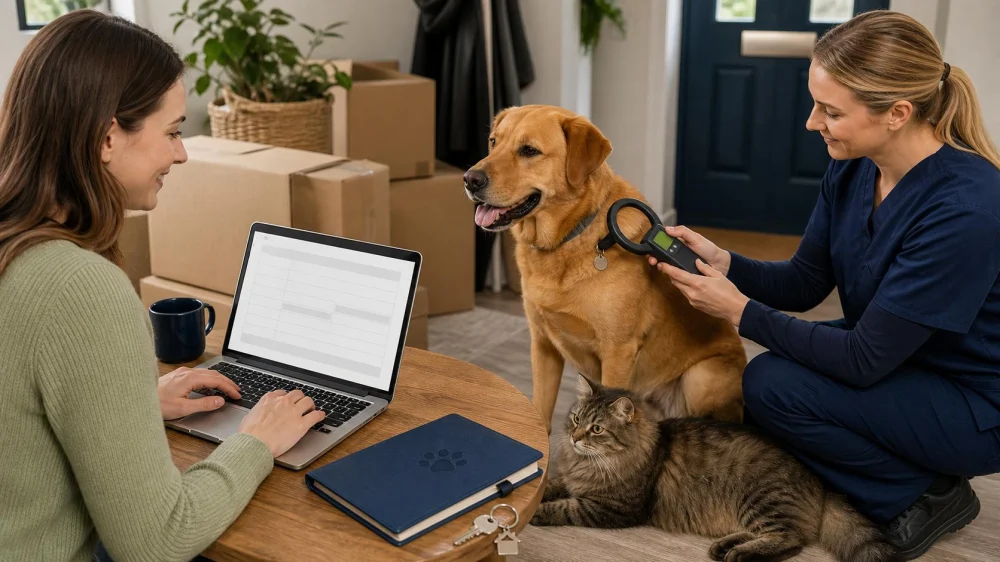
At a routine veterinary appointment, ask whether staff can scan the chip and read the number back to you. Compare every digit with the database confirmation.
A scan helps identify a failed, migrated, or mismatched chip. It does not reveal whether your database contact details are current, so complete both checks.
If the chip cannot be read or two chips are found, ask the vet to document the finding and explain the next step. Do not attempt to locate or manipulate a chip under the skin yourself.
Handle rehoming and disputes carefully
When acquiring a pet, complete the database transfer using the correct process and keep the sale, adoption, or transfer records. The previous and new keeper may each have steps to complete.
A microchip record can help identify a keeper but does not by itself settle every ownership dispute. Keep receipts, adoption contracts, veterinary records, correspondence, and photographs.
If a seller or former keeper will not cooperate, contact the database and seek advice from the relevant local authority, rescue, or legal professional rather than entering false details.
Limitations and important notes
This guide summarises general UK and England information and is not legal advice. Rules for cats vary by nation and regulations can change.
A collar tag remains useful where safe and required; a microchip does not broadcast location and is not a GPS tracker. Registering with an unrecognised website may not satisfy legal requirements.
Sources and evidence notes
GOV.UK sets out the current dog and cat microchipping requirements, approved database process, trained implanters, and potential penalty. Defra’s cat announcement emphasises that contact details must be stored and kept up to date.
Frequently asked questions
Does my vet update the database when I move?
Not automatically. Update the record directly with the database operator and keep confirmation.
Does the chip contain my address?
No. It contains an identification number linked to a separate database record.
Are cats required to be microchipped everywhere in the UK?
Current cat requirements differ by nation. In England, owned cats generally must be microchipped and registered by 20 weeks.
What if I do not know the database?
Use a recognised lookup route or ask a vet, rescue, or local authority for help with the chip number.
Should I implant a second chip?
Not without veterinary assessment. First scan the pet and resolve the existing record.
Next steps
Find the chip certificate, identify the approved database, update every contact field, save confirmation, and schedule a scan comparison at the next routine vet visit. Add a six-month reminder and repeat the check after every move or phone change.




 Sandgate aquatics4.0 (60 reviews)
 Newcastle-Upon-Tyne PDSA Pet Hospital4.0 (933 reviews)
 Gladwells Pet & Country Store5.0 (5 reviews)
 PetBuds5.0 (2 reviews)
 Vets4Pets Peterborough Bretton4.0 (320 reviews)
 The Cinchy Doggie Bag0.0 (0 reviews)
 The Importance of Behaviour Training for Hamsters – UK Edition
 Why Is My Dog Not Eating? Causes, Symptoms & What to Do Next
 How to Safely Trim Your Dog’s Nails at Home – UK Guide
 The Importance of Exercise and Fitness for Hamsters – UK Edition
 What Are the Benefits of FIV Testing for Cats? UK Feline Immunodeficiency Guide
 Top 10 Common Illnesses Every Fish Owner in the UK Should Know for Healthy Aquariums