
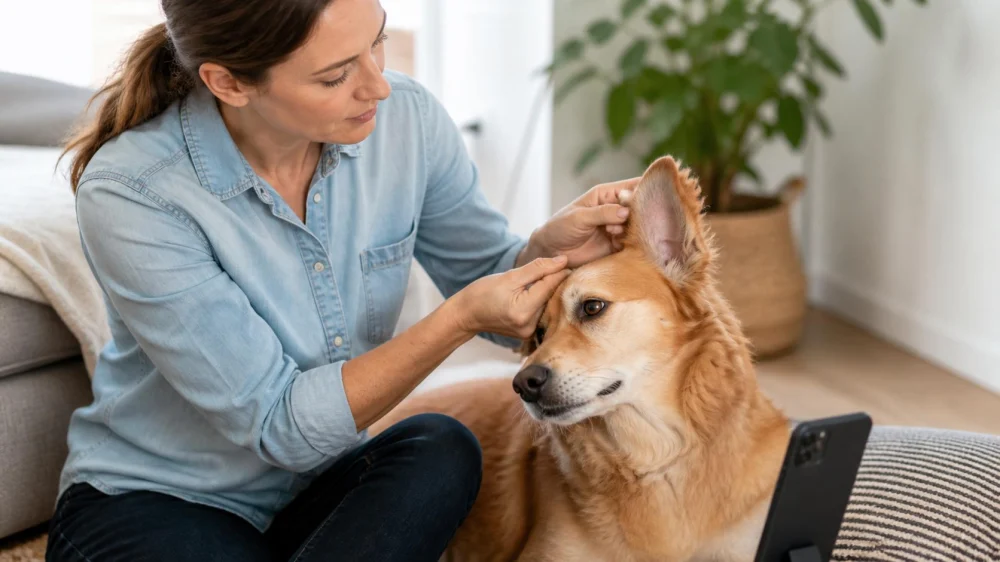
Pet Ear Changes: Observe, Don’t Probe, Call a UK Vet
On this page
Quick answer
Repeated head shaking, scratching, pain, redness, swelling, unusual smell, excess wax, discharge, blood, or a drooping ear flap can signal an ear problem. Do not probe the canal, use cotton buds, remove a suspected object, or start leftover or over-the-counter drops before veterinary advice. Contact your UK vet promptly; a new head tilt, loss of balance, flickering eyes, vomiting, or marked distress needs same-day guidance.

Observe the outside without trying to diagnose the cause
Similar signs can come from infection, allergy, mites, injury, excess wax, a foreign object, a swollen ear flap, growths, or deeper ear disease. PDSA notes that ear problems are painful and may worsen, and that head tilt or balance loss can indicate deeper involvement. A vet may need an otoscope and samples to identify the cause, so cleaning first can hide evidence, push material deeper, or add pain.
This guide is for UK owners of dogs and cats who notice a new ear change. Other species have different anatomy and handling needs. It is not a diagnosis or cleaning tutorial, and it does not replace a vet's examination or species-specific instructions.

Practical checklist
- Watch for repeated scratching, rubbing, head shaking, or avoidance of touch.
- Compare both outer ears for redness, heat, swelling, wounds, crusts, or a drooping flap.
- Notice unusual smell, wax, discharge, pus, or blood without inserting anything.
- Record head tilt, stumbling, circling, vomiting, flickering eyes, or hearing change.
- Take clear photos from outside only if the pet remains comfortable and safely restrained.
- Prevent self-trauma with calm supervision and ask the vet about safe temporary protection.
- Do not use cotton buds, household liquids, human medicine, or another pet's ear drops.
- Call the registered vet promptly and describe onset, side, severity, recurrence, and balance signs.
Step-by-step plan
- Move to good light and observe behaviour before touching the head.
- Look only at the visible ear flap and entrance; stop if the pet is painful, fearful, or likely to bite.
- Compare left and right and record smell or discharge without scraping or collecting it unless instructed.
- Check walking, balance, eye movement, appetite, vomiting, and general alertness from a safe distance.
- Phone the vet with the timeline, photos, medical history, swimming or grooming, allergies, and current medicines.
- Follow the appointment priority and pre-visit instructions; bring previous ear products rather than applying them.
- After treatment, give the full prescribed course and attend rechecks exactly as directed.
Record pet, species, affected side, first sign, scratching and shaking frequency, visible colour and swelling, smell, discharge, head position, balance, eye movement, vomiting, previous episodes, recent swimming or grooming, medicines, photos, and vet advice.
Limits and important notes
A small amount of wax can be normal, while colour and smell vary, so comparison with the pet's usual state helps but cannot rule disease in or out. Deep inspection risks injury. Ear cleaners and drops are not interchangeable; some may be unsuitable when the eardrum or canal is damaged. Do not delay an appointment because the surface looks temporarily cleaner.
Seek same-day veterinary advice for head tilt, balance loss, flickering eyes, vomiting with ear signs, severe pain, blood, sudden swelling, marked lethargy, or rapid deterioration. Call immediately for collapse, breathing difficulty, widespread facial swelling, seizure, or serious trauma. Protect yourself from bites and use the practice's out-of-hours instructions when closed.
Frequently asked questions
Can I use a cotton bud to see what is inside?
No. PDSA advises never using cotton buds in a dog's ears; probing can push material deeper or injure painful tissue.
Should I buy ear drops before the appointment?
No. Different causes need different treatment, and an unsuitable product may mask signs or worsen the problem. Ask the vet first.
Is head shaking enough reason to call?
Repeated or increased head shaking can indicate pain, itch, infection, allergy, mites, injury, or a foreign object. Contact the vet promptly.
Why is a head tilt more urgent?
A new head tilt or balance loss can occur with middle or inner ear disease and needs same-day veterinary assessment guidance.
Sources and evidence
PDSA's UK guidance on Ear Problems in Pets and Ear Infections in Dogs and Cats lists pain, scratching, head shaking, smell, discharge, swelling, head tilt, balance loss, and abnormal eye movement, recommends prompt veterinary contact, and warns against cotton buds and unassessed treatments. Your own veterinary practice controls individual triage and treatment.
Conclusion and next steps
Observe the visible ear and the pet's balance without cleaning or probing. Call the vet with a concise timeline and photos, and follow the advised priority. Keep all old products available for identification, then use only the prescribed method and complete the treatment and recheck plan.

 Vets for Pets Rotherham4.0 (417 reviews)
 Cattery in Lincoln Willow Tree Cat Hotel5.0 (26 reviews)
 Doggie Divider0.0 (0 reviews)
 Hyperthyroid Cat Centre4.0 (84 reviews)
 Tynemouth Seal Hospital4.0 (7 reviews)
 Penarth Pet Shop4.0 (31 reviews)
 What to Expect During Your Pet’s First Vet Visit: A Comprehensive Guide
 Expert Vet Advice on Exercise and Fitness for Rabbits
 Top 10 Travel Safety Tips Every Cat Owner in the UK Should Know
 How to Prevent Dog Slug Pellet Poisoning in UK Gardens
 Complete Guide to Mental Health for Kittens: Supporting Your Kitten's Well-Being
 How to Improve Kittens Dental Care at Home