
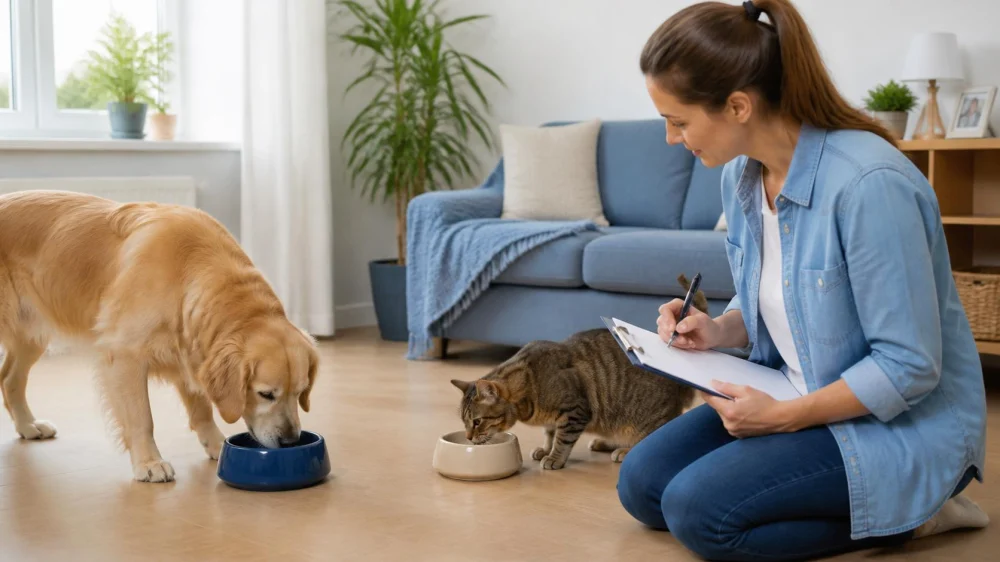
Pet Drinking More Water: What to Track for Your UK Vet
Table of contents
Quick answer
If your dog or cat is drinking or urinating more than usual, contact your vet rather than limiting access to water. Note when the change began, measure intake only if the practice advises it, and record appetite, weight, medicines, diet changes, vomiting, and toileting. Seek urgent advice if your pet is weak, collapsed, repeatedly vomiting, or unable to keep water down.
Hunter's Raw and natural doggy treats
11 Victoria Rd, Earby, Barnoldswick BB18 6UN, UK
Changes to notice
Normal water intake varies with body size, food moisture, exercise, weather, lactation, and health. A useful comparison is your pet’s own established pattern. Changes may include an empty bowl sooner than expected, seeking taps or puddles, larger urine volumes, more frequent trips outside or to the litter tray, or new indoor accidents.
Increased thirst and urination can have many causes, including diet or medicine changes and illnesses affecting the kidneys, urinary system, hormones, or metabolism. Observation cannot identify the cause, so arrange veterinary assessment.

Glengormley Vets
GlengormleyAntrim and NewtownabbeyNorthern Ireland
20 Portland Ave, Glengormley, Newtownabbey BT36 5EY, UK
Measure without restricting water
- Ask the practice whether measurement will help and for how long.
- Use a clean measuring jug to record how much fresh water goes into all bowls.
- Track top-ups and estimate what remains after the agreed period.
- Note shared bowls, fountains, outdoor water, wet food, and spills that make the total uncertain.
- Record the result with the pet’s weight and the exact dates and times.
Never withhold water to make measurement easier or reduce accidents. PDSA specifically advises keeping fresh water available and contacting a vet when increased drinking or urination is suspected.
What to tell the vet
- when the change started and whether it is steady or intermittent;
- changes in appetite, weight, energy, sleep, or behaviour;
- vomiting, diarrhoea, panting, urinary straining, blood, or unusual odour;
- all prescribed medicines, supplements, and recent treatments;
- a switch between wet and dry food or a change in treats;
- possible access to toxins, salty foods, ponds, or unfamiliar water sources.
Bring a urine sample only if the practice tells you how to collect, label, store, and transport it. A contaminated or old sample may not answer the intended question.
Urgent signs
Call the practice promptly for triage if your pet is very lethargic, collapses, seems confused, repeatedly vomits, cannot keep water down, struggles to urinate, produces no urine, has a swollen or painful abdomen, or may have swallowed a toxin. Use the out-of-hours number when the regular practice is closed.
Limitations
Home measurements are estimates and are especially unreliable with multiple pets. A single day does not establish a diagnosis. Do not change medicines, insulin, food, or water access based on an online threshold. Your vet may recommend examination and blood or urine tests based on the full clinical picture.
FAQ
Does hot weather explain extra drinking?
It can affect intake, but a clear or persistent change still deserves veterinary advice, particularly when urination or behaviour also changes.
Should I measure every day?
Only for the period your vet recommends. Ongoing tracking can become inaccurate or stressful and should not delay an appointment.
Can dry food increase thirst?
A move from wet to dry food can change drinking, but it should not be assumed to explain every increase.
May I flavour the water?
Ask your vet first. Ingredients may be unsuitable, add salt or calories, or complicate assessment.
Sources and evidence notes
- PDSA: Dogs drinking and urinating more than usual.
- PDSA: Cats drinking and urinating more than usual.
Both pages are written by veterinary teams for UK pet owners and emphasise veterinary assessment and unrestricted access to fresh water.
Next steps
Keep fresh water available, call your veterinary practice, and start a short, factual symptom log. Measure intake or collect a sample only according to the practice’s instructions, then bring the log and complete medicine list to the appointment.
 Bridge Veterinary Group - Hartlepool4.0 (240 reviews)
 LK9 Raw Ltd5.0 (9 reviews)
 Vets for Pets - Gamston4.0 (337 reviews)
 RG Consultants0.0 (0 reviews)
 Vets4Pets - Sunderland4.0 (422 reviews)
 Pets at Home Sunderland4.0 (939 reviews)
 Vet-Approved Behaviour Training for Senior Pets: A Guide to a Happier, Healthier Pet
 Behaviour Training Tips for Senior Pets: What UK Pet Owners Need to Know
 UK Pet Owner's Guide to Parasite Prevention for Reptiles
 Expert Vet Advice on Seasonal Health Tips for Birds
 Vet-Approved Allergy Care for Guinea Pigs: Best Practices and Tips
 Why Does My Cat Yawn So Much? Causes and Signs to Watch