
How to Collect a Pet Urine Sample for Your Vet
On this page
Quick answer
Ask your veterinary practice what container, amount, timing and storage it needs before collecting urine. Use a clean, dry, leakproof pot and avoid touching its inside. Catch a fresh free-flow sample without forcing or stressing the pet, label it with the pet and collection time, and deliver it promptly. Refrigerate only if the practice instructs you, and never delay urgent care to obtain a sample.

Before collecting a sample
A free-catch urine sample is urine collected while a pet passes it naturally, without a needle or catheter. It can help with some screening tests, but skin, fur, litter, floors and containers may contaminate it. For a sterile culture or certain diagnostic questions, a vet may need to collect urine directly at the clinic.
Call the UK veterinary practice first and ask:
- whether a home free-catch sample is appropriate;
- whether it needs the first urine of the morning or another timing;
- the minimum useful volume;
- which sterile or clean container to use;
- how soon it must arrive and whether to chill it;
- whether medicines, diet or a current condition change the plan.
Best option: a container supplied or approved by the practice. Not ideal: washed food jars, containers with detergent residue, cotton wool, absorbent pads or urine squeezed from litter.

How to collect urine from a dog
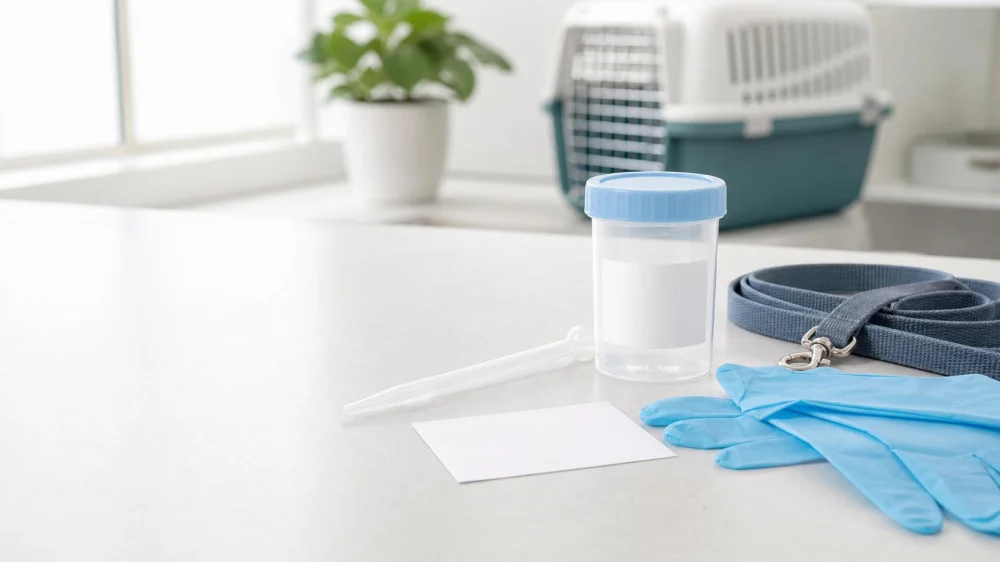
- Prepare the labelled pot, disposable gloves and a clean shallow ladle or collection tray if the vet approves it.
- Take the dog on its normal lead to a familiar toileting area. Keep the process calm.
- Wait for urination to begin, then move the clean collector briefly into the stream from the side. A midstream sample may reduce some external contamination.
- Transfer the urine into the pot without touching the inside of the lid or container.
- Close the lid firmly, wash your hands and reward the dog.
For small or low-squatting dogs, a long-handled shallow ladle can reduce bending and intrusion. Do not chase, restrain harshly or repeatedly interrupt toileting. Ask the practice for another approach if collection is unsafe for you or stressful for the dog.
How to collect urine from a cat
- Use a thoroughly clean, dry litter tray with no ordinary absorbent litter.
- Add only the non-absorbent collection litter or beads supplied or approved by the veterinary practice.
- Keep the cat in a calm familiar room with water, bedding and the prepared tray, following welfare advice from the vet.
- After the cat urinates, tip the tray carefully and use the supplied pipette or syringe without a needle to transfer urine.
- Seal and label the sample immediately.
Some cats will not use an altered tray. Do not withhold the tray for prolonged periods, restrict water, press the abdomen or try to express the bladder. A cat repeatedly straining with little or no urine, especially a male cat, needs urgent veterinary attention.
Rabbits and small pets
Collection methods vary by species and the test requested. A vet may suggest a clean, non-absorbent tray surface or another species-appropriate method. Urine can change colour naturally in some species, and litter or bedding can alter the sample, so do not interpret colour at home.
Never deprive a rabbit, guinea pig or other small pet of water or food to obtain urine. Avoid prolonged handling and slippery surfaces. Ask an exotics-aware veterinary professional for instructions, particularly if the animal is unwell or difficult to handle.
Label, store and deliver correctly
Write the pet’s name, your surname, collection date and exact time on the container or practice label. Add whether it was free-catch and mention visible contamination or collection difficulty. Put the sealed pot in a separate leakproof bag.
Deliver it as soon as the practice directs. Time and temperature can change cells, crystals and bacterial growth. If the clinic specifically tells you to refrigerate, keep the sealed sample away from food in a second container and never freeze it unless instructed. Tell staff when it was collected and how it was stored.
When a home sample is not suitable
A veterinary-collected sample may be required for bacterial culture, contamination concerns, a pet that cannot urinate normally, or a test needing a specific method. Do not attempt catheterisation, needle collection or bladder expression at home.
Seek urgent veterinary advice for repeated straining, producing little or no urine, crying while urinating, a painful or swollen abdomen, collapse, marked weakness, vomiting, significant blood, or sudden illness. Urinary obstruction can be an emergency. Do not wait to collect a perfect sample before calling.
Sources and evidence notes
This guidance reflects common veterinary sample-handling principles: correct collection method, clean equipment, accurate labelling, prompt delivery and recognition of contamination. Requirements vary with species, test and laboratory. Instructions from the treating veterinary practice take priority and determine whether the sample is diagnostically useful.
Frequently asked questions
How much urine does the vet need?
It depends on the tests. Ask the practice for a minimum rather than guessing; even a small amount may sometimes be useful.
Can I use a jam jar?
Only if the veterinary practice approves it. Residue from food, soap or disinfectant can affect results, so a supplied sterile pot is safer.
How long can I keep the sample?
Ask the clinic. Fresh delivery is generally preferable, and storage limits depend on the test. Always provide the collection time.
Can I mix urine from two attempts?
Do not combine samples unless the vet explicitly tells you to. Different collection times and contamination can make interpretation harder.
What if the sample touches litter or grass?
Tell the practice exactly what happened. It may still be useful for some purposes, or staff may request another sample or a clinic collection.
Conclusion and next steps
Start with the veterinary practice’s test-specific instructions. Prepare the approved container, keep collection calm, seal and label the sample, record the time and deliver it promptly. If collection fails, contact the practice rather than forcing the pet; if urination itself is difficult or the pet is unwell, prioritise care over the sample.
 Medivet Ramsbottom4.0 (388 reviews)
 Lucylou & Co1.0 (1 reviews)
 K9-Chaos5.0 (4 reviews)
 Cross Green Veterinary Centre4.0 (375 reviews)
 Sudells & Co Pet Supplies and Seed Merchant4.0 (137 reviews)
 Pets at Home Grantham4.0 (550 reviews)
 How to Handle Emergency Situations with Your Pet
 Expert Vet Advice on Travel Safety for Exotic Pets in the UK
 How to Treat Your Dog’s Dry, Itchy Skin: Home Remedies and Vet Care
 Top 10 Behaviour Training Every Guinea Pig Owner in the UK Should Know
 Top 10 Travel Safety Every Fish Owner in the UK Should Know
 The Importance of Behaviour Training for Hamsters – UK Edition