
Senior Pet Checkup: A Preparation Guide for UK Owners
On this page
- Quick answer
- When is a pet considered senior?
- Why later-life checkups matter
- What to observe before the visit
- Records and medicines to bring
- Plan for mobility and comfort
- What may happen at the checkup
- Questions about tests and monitoring
- Build a realistic home-care plan
- Changes that should not wait
- Frequently asked questions
- Conclusion and next steps
Quick answer
Before a senior pet checkup, record changes in appetite, thirst, toileting, weight, sleep, behaviour, breathing, mobility, and comfort. Bring the current medicine and supplement list, relevant records, insurance details, and short videos of intermittent problems. Ask the veterinary team which examinations or tests are being proposed, what each could change, and when results and follow-up will be discussed.
This guide is for UK pet owners preparing for routine later-life veterinary care. Age alone does not define health, and an individual pet’s breed, species, size, medical history, and current signs should shape the plan.

When is a pet considered senior?
There is no single birthday that makes every animal senior. Large dogs may show age-related changes earlier than small dogs, while cats, rabbits, and other species follow different patterns. Veterinary practices may also use age bands for preventive-care programmes rather than as a diagnosis.
Ask the vet what life stage applies to your pet and why. The useful question is not simply “Is my pet old?” but “Which risks, observations, and care decisions matter at this stage?”
Westway Veterinary Group, Wideopen
17 Canterbury Way, Wideopen, Newcastle upon Tyne NE13 6JQ, UK
Why later-life checkups matter
Gradual changes can be easy to attribute to ageing. Reduced jumping, altered sleep, increased thirst, weight change, bad breath, confusion, or reluctance to exercise may have several possible explanations. A checkup gives the veterinary team a structured chance to compare current findings with the pet’s previous baseline.
A visit can also review pain and comfort, nutrition, dental health, parasite control, vaccination needs, medicine safety, home adaptations, and quality of life. The purpose is not to order every available test; it is to choose monitoring or treatment that fits the animal’s risks and the owner’s practical circumstances.
What to observe before the visit
For one or two weeks, make brief dated notes rather than relying on memory at the appointment. Useful observations include:
- appetite, eating speed, chewing, and food dropped from the mouth;
- water intake and whether bowls need filling more often;
- urination, bowel movements, accidents, or difficulty posturing;
- weight or visible body-shape change;
- walking, stairs, jumping, rising, slipping, and exercise tolerance;
- coughing, breathing changes, vomiting, or diarrhoea;
- sleep, interaction, anxiety, confusion, and response to familiar routines;
- new lumps, skin changes, odour, or grooming difficulty.
Record frequency, duration, triggers, and recovery. A short video can help when a movement or behaviour happens only at home, but do not delay urgent advice to obtain one.
Records and medicines to bring
Prepare one current list with the name, strength, amount, timing, and reason for every prescribed medicine, non-prescription product, supplement, and parasite treatment. Note missed doses and any suspected side effects. Do not stop or change a prescribed medicine before the visit unless a veterinary professional advises it.
Bring records from other practices, laboratory reports, imaging summaries, vaccination history, diet details, and relevant insurance documents if the clinic does not already hold them. Include the exact food and treat names, approximate daily amounts, and recent changes.
Plan for mobility and comfort
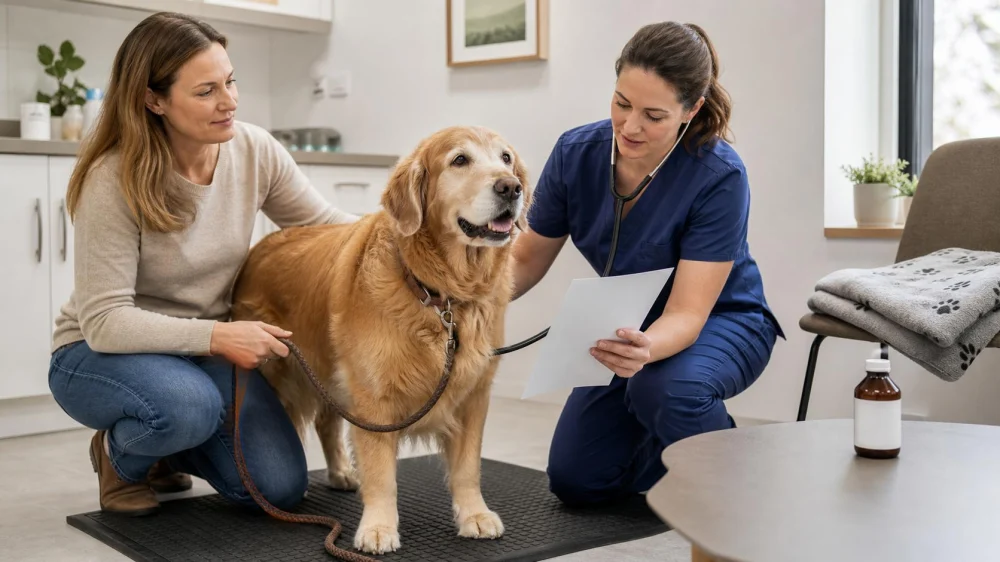
Tell the practice when booking if your pet struggles with stairs, slippery floors, waiting rooms, car travel, handling, sight, hearing, or standing for long periods. Ask whether step-free access, a quieter time, waiting in the car, a non-slip mat, or assistance from the car park is available.
Use a secure carrier or suitable restraint. Bring familiar bedding and any mobility aid the pet already uses. Avoid giving a sedative or pain medicine that was prescribed for a different situation unless the veterinary team has confirmed the plan for this visit.
What may happen at the checkup
The team may review history, weight and body condition, hydration, heart and lungs, mouth, eyes, ears, skin, abdomen, joints, movement, and neurological or behavioural changes. The exact examination depends on the animal and what can be performed safely.
Let the team know which problem matters most at the start. If your pet becomes distressed or painful, ask about pauses, modified handling, or completing lower-priority tasks later. A useful checkup balances information gained with the animal’s comfort and safety.
Questions about tests and monitoring
The veterinarian may discuss blood pressure measurement, blood or urine testing, imaging, dental assessment, or another investigation. Before deciding, ask:
- What question is this test intended to answer?
- What preparation, handling, sedation, or sample is required?
- What are the limitations and possible next steps?
- How could a normal or abnormal result change care?
- What is the estimated cost, including follow-up?
- When and how will results be communicated?
If several options are offered, ask which is most time-sensitive and whether a staged approach is reasonable.
Build a realistic home-care plan
Before leaving, confirm medicine instructions, diet changes, activity guidance, home monitoring, and the next review date. Ask for written instructions and clarify who to contact if you cannot carry out a recommendation.
Simple adaptations may improve daily comfort: non-slip runners, lower-sided litter trays, raised or repositioned resources, ramps, supportive bedding, better lighting, and more frequent opportunities to toilet. Introduce changes gradually and check that they do not create a fall, escape, or access hazard.
Agree on a few measurable markers—such as ease of rising, willingness to eat, enjoyable interaction, or comfortable toileting—to discuss at follow-up. Quality-of-life assessment should consider good and difficult periods over time, not one isolated moment.
Changes that should not wait
Routine appointments are not appropriate for every change. Seek prompt veterinary advice for breathing difficulty, collapse, repeated seizures, uncontrolled bleeding, severe pain, a swollen abdomen, inability to urinate, suspected poisoning, major trauma, persistent vomiting, or a rapid decline in awareness or mobility.
Call the practice or out-of-hours provider for triage if you are uncertain. State the pet’s age, diagnosed conditions, medicines, current signs, and how quickly the change developed. Do not assume a sudden problem is simply old age.
Frequently asked questions
How often should a senior pet have a checkup?
The suitable interval depends on species, life stage, health history, medicines, and current findings. Ask the veterinarian to recommend and explain an individual schedule.
Should my pet fast before the appointment?
Only if the practice gives specific instructions. Fasting may be unsafe or unnecessary for some animals, conditions, medicines, or planned procedures. Ensure water access unless told otherwise.
Can a normal checkup rule out every illness?
No. An examination and selected tests provide information at a point in time and have limitations. Continue monitoring and report new or worsening signs.
What if I am worried about the cost?
Say so early. Ask for estimates, priorities, alternatives, and which decisions can be staged safely. Insurance policies differ, so confirm coverage directly with the provider.
Conclusion and next steps
Prepare a concise change log, an accurate medicine list, useful records, and a safe transport plan. During the senior checkup, focus on the pet’s current comfort and the decisions each proposed test could support. Leave with written priorities, monitoring markers, result timelines, and clear instructions for changes that should trigger earlier veterinary advice.


 GR Veterinary Physiotherapy5.0 (9 reviews)
 Dogs danglies Ltd5.0 (9 reviews)
 The Tree House4.0 (8 reviews)
 Pets at Home Newcastle Byker4.0 (369 reviews)
 The Springs Cattery4.0 (56 reviews)
 Pottspetsupplies0.0 (0 reviews)
 Pet Dental Care: Why Regular Vet Visits Matter
 How to Prevent Your Dog from Drinking Toilet Water: Behavioural Modification
 How to Choose the Right Pet Food for Your Dog or Cat | UK Pet Guide
 How to Safely Trim Your Dog’s Nails at Home – UK Guide
 Seasonal Health Tips for Cats: What UK Pet Owners Need to Know
 Expert Vet Advice on Seasonal Health Tips for Guinea Pigs