
Pet Vet-Visit Transport: Carrier, Car, and Arrival Plan
On this page
Quick answer
Plan a veterinary journey by confirming the appointment and arrival instructions, using a secure species-appropriate carrier or vehicle restraint, controlling temperature and noise, and preventing escape at every door. Line the carrier, bring medicines and records, and call the practice from outside if your pet is contagious, severely distressed, or hard to move. Never transport a loose pet or leave one unattended in a parked car.
Transport is part of the clinical plan. A routine cat check-up, a large dog with limited mobility, an injured rabbit, and a breathing emergency require different handling. Ask the UK veterinary practice what it recommends for the specific animal and condition.

Ask the practice before travel
Confirm the time, location, parking, entrance, accessibility, waiting procedure, and who to call on arrival. Tell staff about suspected contagious illness, aggression or fear, collapse, breathing difficulty, major injury, or a pet that cannot walk.
Ask whether the pet should eat, drink, take medicine, wear a muzzle, remain in the car, or enter through another route. Do not withhold food or medicine unless the vet gives instructions for that pet and appointment.
Save the practice and out-of-hours numbers. Bring the medicine list, relevant records, insurance information if used, and any samples requested under the practice’s collection instructions.

Octopus 8 Aquatics
East Riding of YorkshireEngland
Unit 6a, Welton Business Park, Wiske Ave, Brough HU15 1ZQ, UK
Prepare the carrier or restraint
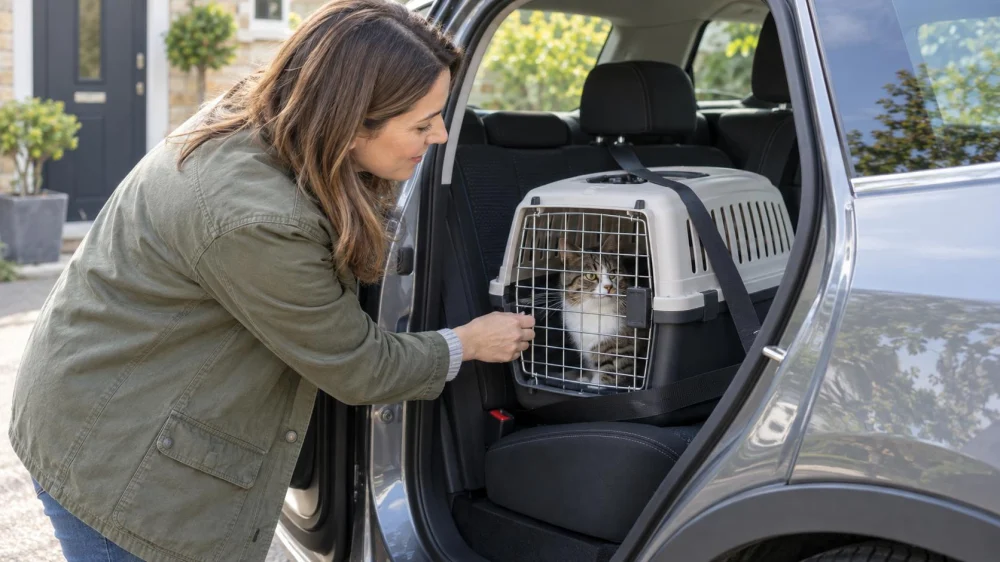
Use a secure, ventilated carrier sized for natural posture and safe movement. Check the base, door, zipper, latches, handle, seams, and fasteners before loading. Add a flat absorbent liner and familiar bedding only if it will not block ventilation or interfere with examination.
For cats and small animals, a top-opening or removable-top carrier can make handling easier when appropriate. Do not transport a cat loose in the car. Small mammals and birds need species-specific temperature, ventilation, and enclosure advice.
Dogs should use a suitable vehicle restraint or crate according to the product and vehicle instructions. A lead alone does not secure a dog in a moving car. Bring a separate lead or harness for controlled transfer without opening the restraint into an unsecured area.
Set up the vehicle safely
- Cool or warm the cabin before loading without leaving the pet unattended.
- Place and secure the carrier where it cannot slide, tip, or be struck by loose luggage.
- Keep it away from unsafe airbag deployment zones and direct heating vents.
- Use sun shades, ventilation, and quiet audio as appropriate.
- Drive smoothly, allowing extra braking distance and gentle turns.
- Never open the carrier during the journey or at an unsecured stop.
Plan the shortest practical route with a backup for closures. If possible, have another adult monitor the pet without distracting the driver. Stop safely and call the practice if the animal deteriorates.
Plan arrival and handover
Park before using the phone. Close vehicle doors and windows before opening an outer carrier cover or attaching a lead. Keep cats and small pets inside the closed carrier until staff direct otherwise.
If the waiting room is stressful or infection is possible, call from the car and ask whether you should wait outside. Keep distance from other animals and do not place carriers on unstable chairs or near dogs. Covering part of a carrier may help some pets, but do not block ventilation or overheat it.
Tell staff about any change during travel, vomiting, toileting, breathing, collapse, medicine given, or escape risk. Hand over the pet’s equipment and clear handling instructions without exaggerating or minimising behaviour.
Adapt for illness, injury, or anxiety
Do not force an injured animal into a small opening or lift by a painful limb. Call for instructions about a stretcher, blanket, rigid surface, or staff assistance. A painful pet may bite or scratch; protect yourself and avoid improvised restraint that affects breathing.
For predictable fear or travel sickness, contact the vet before the appointment. Behaviour training and prescribed medicine require advance planning. Never use a human sedative, leftover medicine, or non-prescribed calming product.
Practise carrier entry and short calm journeys for routine visits, but do not delay urgent care to train.
Limitations and urgent boundaries
Call the practice or emergency provider immediately for severe breathing difficulty, collapse, uncontrolled bleeding, seizures, major trauma, heat illness, paralysis, or rapid deterioration. Follow their transport instructions while prioritising human safety.
UK road, animal welfare, ferry, rail, taxi, and service-provider rules vary. Check the current applicable requirements. This article is not a substitute for veterinary triage.
Sources and evidence notes
This guide follows common veterinary transport principles: prevent escape, secure the animal and carrier, control temperature, reduce stress, call ahead for special handling, and never use unprescribed sedation.
Frequently asked questions
Should I let my cat out in the car?
No. Keep the cat inside a secure carrier until you are in a fully enclosed space and veterinary staff direct otherwise.
Can the carrier go on the front seat?
Airbags and movement can create risk. Follow the vehicle and carrier instructions for a secure position, often away from active airbags.
Should I feed my pet before travel?
Ask the practice. The answer depends on species, age, medical condition, travel sickness, and whether sedation, anaesthesia, or tests are planned.
What if my dog cannot get into the car?
Do not force or perform a risky lift. Call the practice for handling and assistance advice appropriate to the dog’s condition and size.
Can I use calming products?
Only use a product the vet considers appropriate for that pet. Some products interact with medicines or conditions and need advance timing.
Conclusion and next steps
Confirm the practice’s arrival plan, inspect and line the carrier, secure it in a comfortable vehicle, and control every transfer point. Call ahead for illness, injury, severe fear, or special handling. Smooth driving, escape prevention, and clear handover make the journey safer and more useful for the veterinary team.




 Home From Home4.0 (70 reviews)
 Vets4Pets Leicester Fosse Park4.0 (418 reviews)
 Vets for Pets - Grantham4.0 (410 reviews)
 Prime Veterinary Practice4.0 (243 reviews)
 The Reptile Hotel4.0 (262 reviews)
 Flynn Vets Balmoral4.0 (37 reviews)
 Complete Guide to Preventive Care for Cats: Ensuring a Healthy Life for Your Feline Friend
 UK Pet Owner’s Guide to Vaccination Guide for Kittens
 How to Improve Fish Behaviour Training at Home – Expert Tips for Success
 Common Illnesses Explained: Keeping Your Birds Healthy in the UK
 How to Improve Kittens Dental Care at Home
 Travel Safety Tips for Senior Pets: What UK Pet Owners Need to Know