
Pet Mobility Changes: What to Record for Your UK Vet
On this page
Quick answer
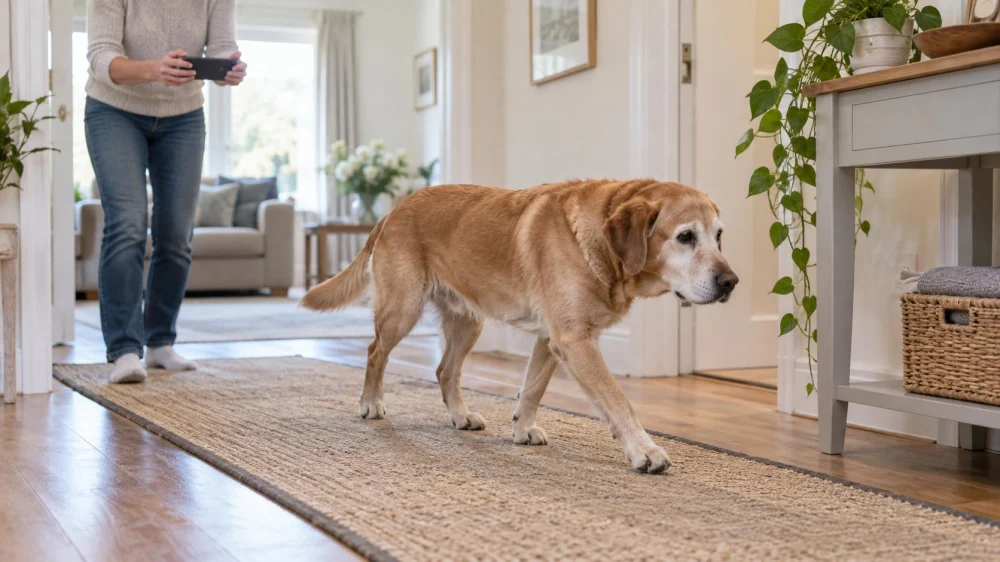
Record when your pet’s movement changed, whether it was sudden or gradual, which activities are harder, and what happens after rest or exercise. Note slipping, stiffness, limping, reluctance to jump, difficulty rising, posture, paw placement, and changes in toileting or behaviour. Short videos on a safe non-slip surface can help your UK vet, but do not force stairs, jumps, or painful movement to capture evidence.
A mobility change is any new difference in how an animal stands, walks, runs, climbs, jumps, lies down, rises, balances, or uses a limb. It can reflect pain, injury, joint or muscle problems, nerve or spinal disease, paw or nail issues, weakness, illness, or environmental factors. Observation cannot diagnose the cause.

What counts as a mobility change
Look beyond an obvious limp. Cats may stop using a favourite shelf or hesitate at the litter tray. Dogs may lag on walks, avoid slippery floors, sit unevenly, pause before stairs, or need more attempts to get into the car. Rabbits and other pets may move less, change posture, or struggle with normal grooming and toileting.
Behaviour can change before movement becomes dramatic. Irritability when touched, hiding, reduced play, altered sleep, panting at rest, appetite changes, or accidents may accompany discomfort. Tell the vet about the whole pattern.

Observe without provoking pain
Watch spontaneous movement during normal activities. Do not bend joints, press a painful area, repeatedly lift a limb, or make the pet perform stairs and jumps. A frightened or painful animal may bite or scratch, even if normally gentle.
When safe, observe on a well-lit non-slip surface from the front, side, and behind. Notice:
- Which limb or side appears different.
- Shortened steps, toe dragging, knuckling, hopping, crossing feet, or wobbling.
- Head or hip movement linked to steps.
- Time needed to rise, settle, turn, or toilet.
- Whether signs are worse after rest, exercise, or at a particular time.
Stop immediately if observation increases distress or instability.
Build a useful mobility record
- Write the first date and any event, fall, walk, play, grooming, or illness around that time.
- List the activities affected and whether the change is constant or intermittent.
- Record duration, progression, appetite, drinking, toileting, sleep, and behaviour.
- List all medicines and supplements, including recent doses and changes.
- Take brief videos only during natural movement, with the whole animal visible.
- Note the floor, speed, direction, and time of each video.
Do not delay the appointment just to collect more data. Send videos using the practice’s secure method and avoid posting identifiable clinical concerns publicly.
Make the home safer while waiting
Reduce slipping with stable non-slip mats and block access to unnecessary stairs or high jumps. Keep food, water, bedding, and toileting areas easy to reach. Support only as your vet advises; improvised slings can injure the pet or handler.
Shorten or pause strenuous exercise until you receive guidance, but do not impose strict cage rest without veterinary direction unless an emergency professional advises it. Keep dogs on a lead outdoors to prevent sudden running. Handle cats and small pets in a way that supports the whole body.
Never give human painkillers or another animal’s medicine. Many are dangerous to pets, and treatment can obscure or worsen the problem.
When to contact a vet urgently
Contact a veterinary practice promptly for a new mobility change, especially when pain or progression is present. Seek urgent or emergency advice for inability to stand, sudden paralysis or severe weakness, major trauma, uncontrolled pain, dragging limbs, loss of bladder or bowel control, difficulty breathing, collapse, or a limb that is cold, severely swollen, bleeding, or visibly deformed.
Use the practice’s out-of-hours instructions when closed. Transport an injured pet only as safely as possible and follow professional guidance; avoid unnecessary manipulation.
Sources and evidence notes
This guide reflects common veterinary triage principles: record onset and functional change, observe natural movement without provoking pain, prevent slips and jumps, avoid unprescribed medicine, and seek prompt care for severe neurological, trauma, or pain signs. Individual species and conditions differ.
Frequently asked questions
Should I walk my dog to see if the limp improves?
Do not use repeated exercise as a test. Keep movement controlled and ask the vet how much activity is appropriate.
Why does my pet move normally at the surgery?
Excitement, adrenaline, floor type, and intermittent signs can change behaviour. A safe home video may provide useful context.
Can long nails affect mobility?
They can affect stance or traction, but do not assume they explain a new change. Ask the vet and avoid painful trimming.
Should I massage a stiff area?
Not without a diagnosis and professional instruction. Massage or stretching can worsen some injuries or pain.
Can I use leftover veterinary medicine?
No. Doses, interactions, expiry, and the underlying problem may differ. Use only current instructions for that pet.
Conclusion and next steps
Record function rather than trying to diagnose: when the change began, which movements differ, how it progresses, and what other signs occur. Keep the pet on safe non-slip routes, prevent risky jumps, and call your UK vet. Severe weakness, trauma, paralysis, or uncontrolled pain needs urgent advice.


 Home From Home4.0 (70 reviews)
 Vets4Pets Leicester Fosse Park4.0 (418 reviews)
 Vets for Pets - Grantham4.0 (410 reviews)
 Prime Veterinary Practice4.0 (243 reviews)
 The Reptile Hotel4.0 (262 reviews)
 Flynn Vets Balmoral4.0 (37 reviews)
 Complete Guide to Preventive Care for Cats: Ensuring a Healthy Life for Your Feline Friend
 UK Pet Owner’s Guide to Vaccination Guide for Kittens
 How to Improve Fish Behaviour Training at Home – Expert Tips for Success
 Common Illnesses Explained: Keeping Your Birds Healthy in the UK
 How to Improve Kittens Dental Care at Home
 Travel Safety Tips for Senior Pets: What UK Pet Owners Need to Know