
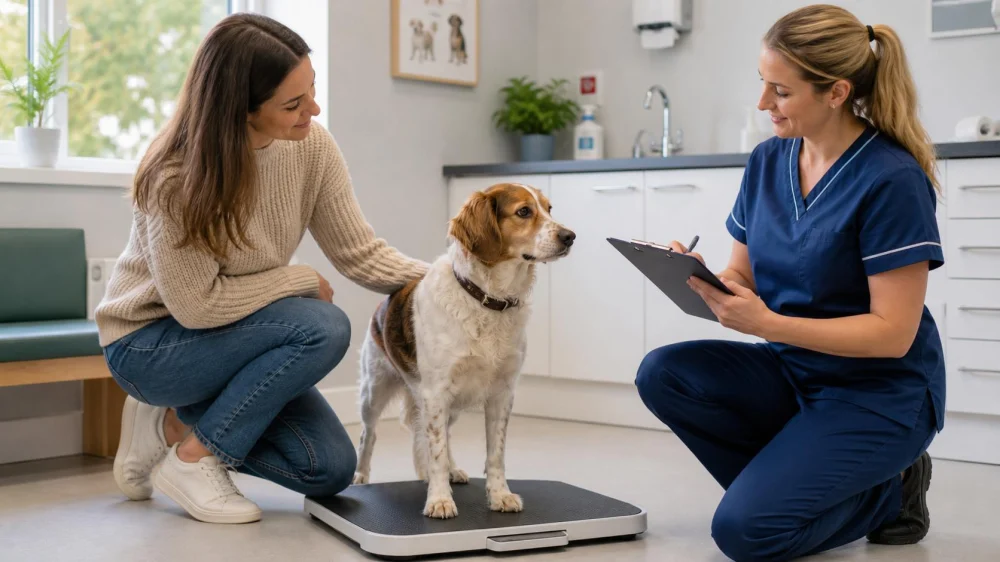
Pet Weight Change: A UK Owner’s Tracking Guide
On this page
Quick answer
Track pet weight with the same suitable scale, at a similar time and under similar conditions. Record the date, weight, appetite, food amount, treats, activity, drinking, toileting, medication changes, and visible body-condition changes. Do not put a pet on a diet or increase food sharply without veterinary guidance. Contact your UK vet for unexplained loss or gain, especially when rapid or accompanied by weakness, vomiting, breathing change, swelling, or altered thirst.
Weight tracking is a trend tool. One measurement can be affected by the scale, movement, food, water, bladder, coat, and technique.

Set a baseline
Ask the veterinary practice for the last measured weight, target monitoring interval, and appropriate scale. A baby or bathroom scale may be unsafe or inaccurate for some animals. Clinics, pet shops, and veterinary nurses may offer suitable weighing support.
Do not rely on a remembered “usual weight.” Record the date and device.

Measure consistently
- Place the scale on a level stable surface.
- Use a nonslip layer only if it does not alter calibration.
- Zero the scale as instructed.
- Keep the pet calm and still without force.
- For a carrier method, weigh the carrier separately and use the same setup.
- Repeat an implausible reading once, then stop if the pet becomes stressed.
Never hold a large, painful, frail, or struggling pet on a human scale. Arrange a clinic weigh-in.
Record useful context
- date, time, weight, scale, and method;
- measured daily food and treats;
- appetite and chewing or swallowing changes;
- activity, mobility, sleep, and breathing;
- drinking, urination, stool, vomiting, or diarrhoea;
- medications, illness, surgery, season, or coat changes.
Use the same units and avoid rounding away small trends in tiny animals.
Look beyond the number
Body condition considers ribs, waist, abdominal shape, and fat cover. Muscle condition considers loss over the spine, shoulders, skull, or hips. Ask the vet or veterinary nurse to teach species-appropriate assessment; thick coat can hide changes.
Photograph from consistent angles only as a supplement, not a diagnosis.
When to call the vet
Contact the practice for a repeated unexplained trend, failure to grow, obesity concerns, or weight change alongside appetite, thirst, toileting, pain, dental, mobility, or behaviour changes. Seek urgent help for collapse, breathing difficulty, a swollen abdomen, inability to eat, repeated vomiting, severe weakness, or rapidly worsening illness.
Important notes
This is general pet-care information, not veterinary or nutrition advice. Safe weight change depends on species, breed, life stage, pregnancy, disease, and medication. Cats and other animals can become seriously ill with inappropriate food restriction. Follow an individual veterinary plan.
Evidence notes
The method reflects common veterinary monitoring practice: use consistent measurements, assess trends with body and muscle condition, record related symptoms, and investigate unexplained change. The treating veterinary practice is the primary source for targets.
FAQ
How often should I weigh my pet?
Ask the vet. Frequency depends on health, size, age, and purpose.
Can I weigh myself holding the pet?
Only if safe and accurate enough for the pet. It is unsuitable for many animals.
Does a thick coat affect weight?
It adds some weight and can hide body changes; consistency and hands-on assessment matter.
Should I reduce food after one high reading?
No. Confirm the trend and obtain veterinary nutrition guidance.
What if two scales differ?
Track on one device when possible and tell the vet which scale was used.
Next steps
Find the last veterinary weight, choose a safe consistent weighing method, and make one baseline record with food and symptom context. Contact the practice before changing diet and promptly report an unexplained or rapid trend.


 Manta Rea Aquatics Ltd5.0 (61 reviews)
 The Town Vets4.0 (370 reviews)
 Greengates Boarding Cattery4.0 (55 reviews)
 Vets4Pets - Lincoln South4.0 (278 reviews)
 Gleno Veterinary Centre Ltd4.0 (141 reviews)
 Eastside Vet Clinic (ACE Vets)4.0 (85 reviews)
 UK Pet Owner’s Guide to Travel Safety for Rabbits
 Vet-Approved Exercise and Fitness for Reptiles
 Top 10 Travel Safety Tips Every Guinea Pigs Owner in the UK Should Know
 Complete Guide to First Aid Tips for Dogs: Essential Steps Every Pet Owner Should Know
 Puppy and Kitten Care Tips for Dogs: What UK Pet Owners Need to Know
 Why Does My Dog Stretch So Much? Understanding Normal Stretching vs Abdominal Pain