
Pet Drinking More Water: What UK Owners Should Record
Table of contents
Quick answer
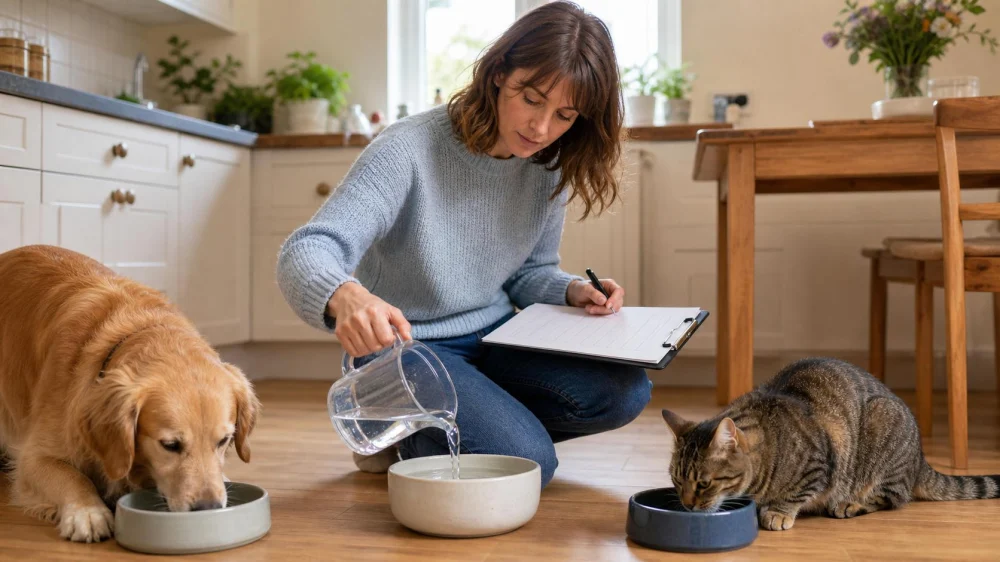
If your pet suddenly drinks more than usual, keep fresh water freely available and contact your veterinary practice for advice. Record when the change started, food type, medicines, urination, appetite, weight, vomiting, and behaviour. If practical, measure water offered and remaining over 24 hours without restricting access. A vet must assess the cause; do not diagnose diabetes, kidney disease, or another condition from thirst alone.
Why a change matters
Drinking varies with species, size, diet, weather, activity, pregnancy or nursing, and health. Wet food provides more moisture than dry food, so a diet change can alter what you see at the bowl. Warm weather and exercise can also increase intake.
However, a clear change from an individual pet’s normal pattern may signal illness or a medicine effect. PDSA notes that increased drinking and urination can have several possible causes and advises veterinary assessment. Observation helps the vet triage and plan tests, but it cannot reveal the cause by itself.

What to observe
- Date and approximate time the change began
- Whether the bowl empties faster or the pet seeks taps, toilets, puddles, or baths
- How often and how much the pet urinates
- Indoor accidents or litter-tray changes
- Food type, appetite, recent treats, and diet changes
- Vomiting, diarrhoea, panting, lethargy, restlessness, or pain
- Current weight and any recent weight loss or gain
- All medicines and supplements, including recent changes
- Weather, exercise, and access to other water sources
Photographs or a short video can document behaviour, but do not delay calling the practice to collect perfect data.
How to measure safely
- Ask the veterinary practice whether a 24-hour measurement would be useful.
- Use a measuring jug to record the total water placed in clean bowls.
- Keep normal access throughout the day and add measured water as needed.
- At the same time next day, measure what remains and subtract it from the total offered.
- Note spills, fountain reservoirs, outdoor sources, wet food, and water added to meals.
- Write the pet’s current weight if known and safe to obtain.
Never withhold water to make the measurement easier. A shared bowl, evaporation, play, and spillage can make the number inaccurate; label it as an estimate.
When to call the vet
Contact your practice when drinking or urination is noticeably more or less than normal, particularly if the change is sudden, persistent, or accompanied by other symptoms. The Royal College of Veterinary Surgeons advises owners to act promptly when concerned and to contact their practice if in doubt.
Tell the practice the species, age, symptom timeline, drinking estimate, urination pattern, medicines, and general condition. Let the veterinary team decide whether the pet needs a routine, same-day, or emergency appointment.
Prepare for the appointment
- Bring your written 24-hour record and symptom timeline.
- Bring medicine containers or an accurate medication list.
- Take diet details, including brand, wet or dry form, and recent changes.
- Ask whether the practice wants a urine sample and exactly how to collect and store it.
- Use a secure carrier or lead and plan transport.
- Check the practice’s out-of-hours number before you need it.
A urine sample collected incorrectly may be unsuitable for some tests. Follow practice instructions rather than improvising.
What not to do
- Do not restrict water unless a vet gives specific instructions.
- Do not give human medicine or another pet’s prescription.
- Do not stop steroids or other prescribed medicine suddenly.
- Do not add supplements, salt, broth, or flavoured products without checking safety.
- Do not assume warm weather explains severe or persistent thirst.
- Do not wait for a routine check-up when the pet is deteriorating.
Multi-pet homes
Shared bowls make it hard to identify which animal is drinking. If your vet agrees, offer several monitored stations or temporarily observe pets separately without causing distress or reducing access. Record who uses each bowl. Do not make an abrupt confinement change that prevents a cat or other pet from reaching water, food, or toileting areas.
Limits and emergencies
This article cannot diagnose or treat a pet. Seek urgent veterinary advice for collapse, breathing difficulty, seizures, repeated vomiting, inability to keep water down, severe weakness, suspected poisoning, a swollen or painful abdomen, inability to urinate, or rapid deterioration. RCVS states UK practices must ensure access to 24-hour emergency first aid and pain relief, though the provider and location may differ. Call ahead and follow transport instructions.
Frequently asked questions
How much water is too much?
There is no single home threshold suitable for every pet. Size, species, diet, environment, and health matter. Ask your vet to interpret a measured intake.
Should I remove the bowl overnight?
No. Keep fresh water available unless a vet gives individual instructions.
Can a new medicine increase thirst?
Some medicines can affect drinking or urination. Report the change, but do not stop prescribed treatment without veterinary advice.
Do I need a urine sample?
It can be useful, but ask first. The practice will explain whether, how, and when to collect one.
Official sources
PDSA’s veterinarian-written resource Is my cat drinking and weeing too much? supports free water access, recording 24-hour intake, and veterinary review. RCVS provides official owner guidance on emergency and out-of-hours care and shared responsibilities.
Next steps
Refresh the water, start a simple symptom record, and call your veterinary practice. Measure intake only if it will not delay care or restrict access, then bring the record and medicine details to the appointment.
 H V S Animal Health5.0 (7 reviews)
 Vets for Pets - Barnsley Cortonwood4.0 (254 reviews)
 Lagan Valley Vets4.0 (72 reviews)
 Breeder Imaging Services4.0 (23 reviews)
 The Dam Veterinary Centre - Selby4.0 (152 reviews)
 Furballs Cattery4.0 (34 reviews)
 Can Dogs Eat Soy Sauce? Sodium Poisoning Risks Every Pet Owner Should Know
 How to Improve Reptiles Behaviour Training at Home
 Complete Guide to Health Checkups for Reptiles
 Top 10 Behaviour Training Every Guinea Pig Owner in the UK Should Know
 Top 10 Common Illnesses Every Fish Owner in the UK Should Know
 Best Practices for Spaying and Neutering in Cats | RegPets