
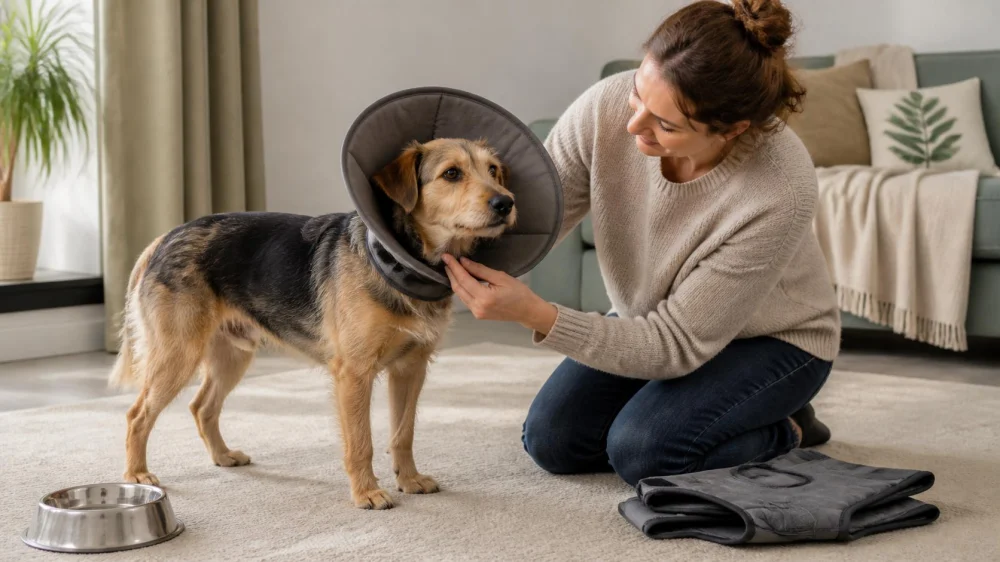
Pet Recovery Cone or Suit: Check Fit and Supervise
On this page
Quick answer
Use the cone, collar, or recovery suit recommended by your UK veterinary team for the specific wound or procedure. It must stop the pet reaching the protected area without restricting breathing, swallowing, vision, movement, toileting, or circulation. Check fit, skin contact, cleanliness, and wound protection several times daily. Do not remove it unsupervised, substitute another style, or shorten a cone unless the vet approves.

Bradgate View Luxury Cat Hotel
ThurcastonLeicestershireEngland
175 Leicester Rd, Thurcaston, Leicester LE7 7JL, UK
Match protection to the purpose
A rigid or soft cone can block access to many body areas, while inflatable collars and recovery suits protect only some locations. A determined pet may still reach around a short device. The right choice depends on species, body shape, wound site, activity, and the veterinary plan.
Ask how long protection is required, whether it stays on for sleep and meals, how to manage lead walks or litter use, and what to do if the pet cannot settle. Comfort matters, but access prevention is the main purpose.
The Lancashire Dog Company
Great HarwoodLancashireEngland
9, Palatine Buildings, Glebe St, Great Harwood, Blackburn BB6 7HG, UK
Fit and function checks
- Confirm the attachment. Use the collar loops, fasteners, or suit closures exactly as demonstrated.
- Check neck space. It should be secure without pressing the airway; use the vet’s fitting method rather than a universal guess.
- Check reach. Observe safely whether the pet can touch the protected area with mouth or paws.
- Inspect edges. Look for rubbing at neck, ears, shoulders, legs, tail, and suit seams.
- Test daily functions. The pet should breathe, swallow, walk, lie down, eat, drink, and eliminate as the vet expects.
- Adapt the environment. Clear narrow gaps, stairs, low furniture, and objects that catch the device.
Daily supervision routine
- Inspect the device for cracks, wetness, chewing, loose fasteners, or deformation.
- Check the skin under contact points and keep it clean and dry as directed.
- Examine the protected site only according to veterinary instructions.
- Use stable bowls and a quiet nonslip area; ask before changing bowl height.
- Supervise other pets and children so they do not pull or play with the device.
- Record appetite, drinking, toileting, sleep, attempts to lick, and medicine administration.
If the vet permits brief removal, maintain direct attention and replace protection before distraction, sleep, or leaving the room.
When to call the vet
Contact the practice if the pet repeatedly reaches the site, cannot eat or drink, panics, collapses, injures itself, vomits into the cone, or develops skin damage. Also report increasing redness, swelling, heat, discharge, odour, bleeding, wound opening, worsening pain, marked lethargy, or loss of appetite.
Breathing difficulty, severe bleeding, collapse, or a rapidly worsening condition needs emergency veterinary help. Do not wait for the next scheduled check.
Limitations and safety notes
This guide cannot select or fit a device for an individual pet. Cats, flat-faced breeds, long-bodied dogs, eye procedures, limb wounds, and neurological or respiratory conditions may need special planning.
Do not apply bitter spray, cream, bandage, or home-made restraint near the site unless the vet directs it. Products and tight materials can irritate tissue or hide complications.
Sources and evidence notes
The routine reflects common postoperative veterinary care: prevent self-trauma, preserve breathing and daily function, maintain cleanliness, monitor the wound and behaviour, and escalate loss of protection or healing concerns to the treating team.
Frequently asked questions
Can my pet sleep in a cone?
Many pets are instructed to wear it continuously, but follow the treating vet’s plan and ensure the environment does not catch the device.
Can I trim the cone?
Not without approval. Shortening can let the pet reach the wound and can create sharp edges.
Is a recovery suit always more comfortable?
Comfort varies, and a suit may not protect the relevant site. It can also trap moisture or interfere with toileting if poorly fitted.
What if my pet refuses food with the cone?
Contact the vet for feeding setup or device guidance. Do not leave the pet unprotected without a supervised approved plan.
Next steps
Ask the vet to demonstrate fit, feeding, cleaning, duration, and emergency contacts. Photograph the correct setup for reference, prepare a clear nonslip recovery area, and log fit, function, wound appearance, and behaviour each day.

 Fintastic aquariums limavady co derry5.0 (2 reviews)
 Oakhill Equine Vets4.0 (16 reviews)
 Peak Vets - Sheffield4.0 (760 reviews)
 White Oak Vets - Peterlee4.0 (174 reviews)
 Kennedy Wild Bird Food & Pet Supplies4.0 (262 reviews)
 Smith's Aquatics0.0 (0 reviews)
 Essential Tips for Caring for Senior Pets
 Register a New Pet With a UK Vet: What to Prepare
 How to Introduce a New Kitten to Your Cat Safely
 Preventive Care Tips for Rabbits: What UK Pet Owners Need to Know
 How to Improve Fish Behaviour Training at Home
 How to Tell If Your Dog Has an Undescended Testicle: Cryptorchidism Signs