
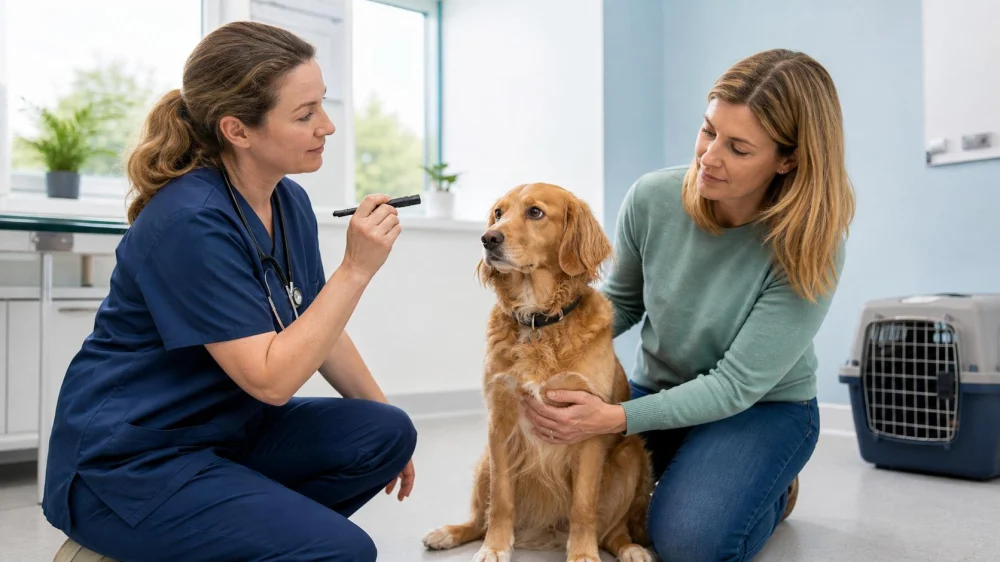
Pet Eye Redness or Discharge: Call Your UK Vet Early
On this page
- Quick answer
- Why eye symptoms need prompt care
- Emergency eye signs
- What to observe safely
- Protect the eye before the appointment
- Chemical or irritant exposure
- Prepare for the veterinary call
- What to avoid
- Limitations and important notes
- Sources and evidence notes
- Frequently asked questions
- Conclusion and next steps
Quick answer
Contact your veterinary practice promptly when a pet has a red eye, persistent discharge, squinting, rubbing, cloudiness, swelling, or keeps an eye closed. Eye problems can be painful and may worsen quickly. Prevent rubbing, keep the pet calm, and do not use human eye drops, leftover veterinary medicine, or home remedies. Seek emergency help for trauma, chemical exposure, a bulging eye, sudden vision change, or severe pain.
This guide is for dog and cat owners in the United Kingdom. Similar-looking eye signs can have very different causes, and examination may be time-sensitive.

Why eye symptoms need prompt care
Redness and discharge can arise from eyelid, tear-film, corneal, pressure, inflammatory, infectious, allergic, foreign-body, or injury problems. A scratch, ulcer, glaucoma, dry eye, eyelash problem, or deeper inflammation may not be distinguishable at home.
Eye pain can appear as squinting, hiding, rubbing, light avoidance, reluctance to eat, or unusual quietness. Cats may show only subtle behaviour change.
Waiting for discharge colour to change is not a safe triage method. Clear, white, yellow, green, red, or brown material each requires context, and colour alone does not identify infection or choose a medicine.

Emergency eye signs
Contact an out-of-hours or emergency veterinary service immediately for:
- Eye trauma, bite, scratch, puncture, blunt impact, or foreign object
- Chemical, cleaning product, shampoo, fuel, plant sap, or irritant exposure
- An eye that looks bulging, displaced, collapsed, or visibly ruptured
- Sudden cloudiness, blue appearance, marked swelling, or blood in or around the eye
- Sudden loss of vision, bumping into objects, or unequal pupils with illness
- Severe pain, inability to open the eye, or constant frantic rubbing
- Eye signs with collapse, severe weakness, breathing difficulty, seizure, or major trauma
Do not press on the eye or attempt to remove an embedded object. Transport the pet as the emergency team directs.
What to observe safely
- Compare both eyes. Note redness, pupil size, eyelid position, swelling, cloudiness, and discharge without shining a bright light directly into the eye.
- Record timing. Note when the change began and whether it is sudden, intermittent, or worsening.
- Watch behaviour. Record squinting, rubbing, light avoidance, sleep, appetite, navigation, and activity.
- Photograph from a distance. Use ordinary room light, no flash close to the eye, and do not force the eyelids open.
- Note exposures. Include grooming, shampoo, dust, plants, play, fighting, travel, and recent procedures.
- List medicines. Include all eye, ear, skin, and systemic products, even if used for another pet.
A photo cannot rule out an ulcer, pressure problem, or internal inflammation. It supports the history but does not replace examination.
Protect the eye before the appointment
Keep the pet indoors or in a safe, dim, calm area. Prevent rubbing with close supervision. Ask the veterinary practice whether to use a properly fitted collar; an unsuitable device can create distress or fail to protect the eye.
If discharge has dried on surrounding fur, ask the practice whether and how to soften it. Do not scrape the eyelid margin, cut hair near a moving pet’s eye, or let cloth fibres touch the eye surface.
Use a secure carrier for cats and a lead or harness for dogs. Avoid head pressure and keep other animals from licking or pawing the affected eye.
Chemical or irritant exposure
Call the veterinary practice or emergency service immediately with the product name, ingredient list, time, and amount. Keep the package or photograph it. The team may direct urgent flushing with a specific method while travel is arranged.
Do not neutralise one chemical with another. Do not use contact-lens solution, household saline mixture, milk, oil, or eye medication unless the professional instructs it. Protect yourself from the substance and avoid contaminating the other eye.
For severe exposure, begin the advised first aid without delaying transport. Eye damage can progress even when the pet seems more comfortable after rinsing.
Prepare for the veterinary call
Provide species, breed or type, age, medical history, medicines, which eye is affected, timing, pain behaviour, discharge, vision change, trauma or exposure, and photographs. Mention flat-faced anatomy, prior eye disease, surgery, or a single functioning eye immediately.
Ask whether the pet should be seen now, the same day, or at another specified time; whether any first aid is appropriate; and how to prevent rubbing. Follow the practice’s arrival and isolation instructions.
The vet may need stain tests, tear assessment, pressure measurement, eyelid examination, magnification, or other procedures. Do not apply drops before the visit unless directed because they can affect findings or be harmful in some conditions.
What to avoid
- Do not use human redness-relief, allergy, antibiotic, or steroid eye drops.
- Do not use leftover veterinary eye medicine; the wrong product can worsen some injuries.
- Do not use tea, herbal preparations, essential oils, or homemade saline.
- Do not force eyelids open, press the eyeball, or pull at an object.
- Do not wait several days when the pet is squinting, rubbing, or painful.
- Do not assume discharge is a simple infection based on colour.
Limitations and important notes
- Some eye diseases threaten vision before dramatic external changes appear.
- Steroid-containing drops can be dangerous when certain corneal injuries are present.
- Flat-faced breeds and pets with prominent eyes may have additional exposure and injury risks.
- Eye and neurologic signs can overlap; sudden vision or pupil changes need prompt triage.
- Treatment must be completed and rechecked as the vet directs, even if the eye looks better.
Sources and evidence notes
This article reflects broad veterinary ophthalmic triage: painful, traumatic, chemically exposed, cloudy, displaced, or vision-impaired eyes require prompt assessment; unprescribed drops and home remedies should be avoided.
Use your veterinary practice and its out-of-hours service for case-specific instructions. No diagnosis, eye drop, flushing formula, or safe waiting period is prescribed here.
Frequently asked questions
Can I clean discharge with water?
Ask the veterinary practice first. Cleaning surrounding fur may be appropriate in some cases, but rubbing or introducing non-sterile material can worsen others.
Is green discharge always an infection?
No. Colour alone does not determine the cause or correct medicine. The eye needs veterinary assessment.
Can I use old drops prescribed for the same pet?
No, not without current veterinary direction. The new problem may differ, the bottle may be contaminated or expired, and some drops are harmful with corneal injury.
What if the redness disappears?
Tell the practice if pain, squinting, discharge, cloudiness, trauma, or recurrence occurred. Intermittent signs can still need examination.
Should I stop my pet rubbing the eye?
Yes, with safe supervision and a vet-recommended protective method. Rubbing can worsen injury.
Conclusion and next steps
Eye redness, discharge, squinting, and rubbing deserve an early veterinary call. Keep the pet calm, prevent self-injury, record safe observations, and avoid all unprescribed drops. Trauma, chemical exposure, severe pain, cloudiness, bulging, or sudden vision change requires emergency help.



 Jollyes - The Pet People Belfast Connswater4.0 (51 reviews)
 Rutland Veterinary Centre Ltd4.0 (203 reviews)
 Pets at Home Rotherham4.0 (925 reviews)
 Myerscough Veterinary Group, St Annes4.0 (88 reviews)
 UK Jellyfish4.0 (3 reviews)
 The Paddocks - Luxury Cat Hotel4.0 (35 reviews)
 The Importance of Skin and Coat Care for Senior Pets in the UK
 Seasonal Health Tips for Keeping Your Kittens Healthy in the UK
 How to Introduce a New Kitten to Your Cat Safely
 Complete Guide to Puppy and Kitten Care for Dogs | RegPets
 UK Pet Owner’s Guide to Travel Safety for Rabbits
 Top 10 Common Illnesses Every Fish Owner in the UK Should Know for Healthy Aquariums