
Pet Ear Scratching or Head Shaking: Call Your UK Vet
On this page
Quick answer
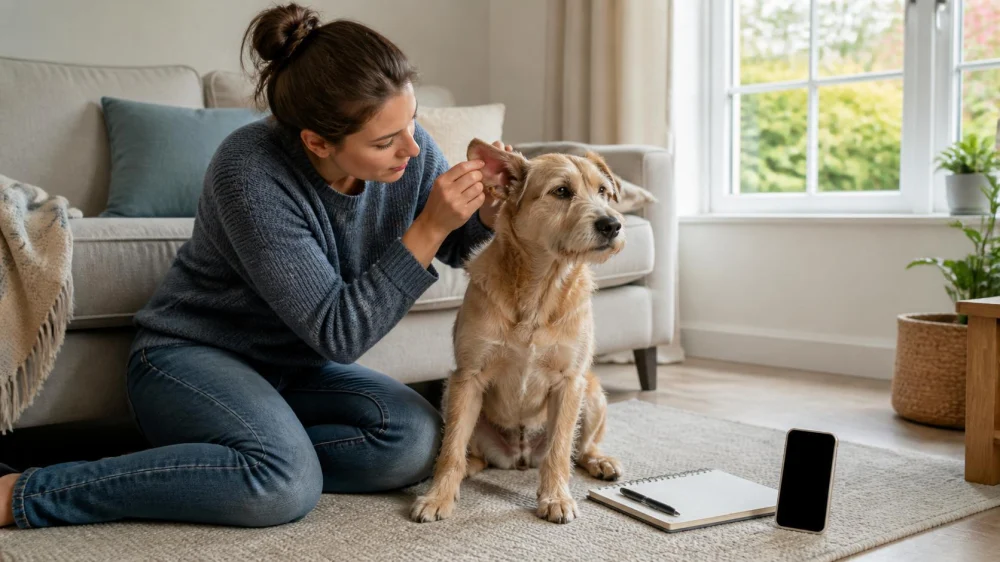
If your pet repeatedly scratches an ear or shakes the head, contact your UK veterinary practice and describe when it began, one or both ears, pain, smell, discharge, swelling, balance changes, swimming or grooming, parasites, allergies, and previous treatment. Do not insert cotton buds, clean deeply, or use leftover drops. Urgent signs include severe pain, head tilt, loss of balance, collapse, or sudden neurologic change.
This guide is for UK dog, cat, and companion-animal owners preparing a veterinary call. Ear symptoms can have different causes and need examination; the article does not diagnose infection, mites, allergy, foreign material, injury, or neurologic disease.

Observe without probing the ear
Watch the pet at rest. Note scratching frequency, head shaking, rubbing on furniture, sensitivity to touch, ear position, sleep disruption, and whether normal eating, walking, play, and interaction have changed.
Look only at the outer ear and entrance when the pet allows this calmly. Do not pull forcefully or push into the canal. Visible redness, swelling, crusts, discharge, blood, debris, odour, or a narrowed opening are useful observations for the vet.
Compare sides without assuming the better-looking ear is healthy. A pet may show symptoms mainly on one side while both ears need assessment.

Springfield Veterinary Surgery - Crystal Peaks
16 Peaks Mount, Sheffield S20 7HZ, UK
Record useful details
Write the start date and whether symptoms were sudden, gradual, intermittent, or rapidly worsening. Record recent bathing, swimming, grooming, grass seeds, outdoor activity, new bedding, food or skin problems, parasite products, ear cleaning, and any injury.
List all medicines and ear products used, including name, amount, date, and who prescribed them. Keep packaging. Tell the practice about prior ear disease, allergy, surgery, hearing problems, neurologic conditions, and adverse medication reactions.
A short video of head shaking or balance change may help when safely recorded, but do not delay urgent care to obtain one or provoke the behaviour.
What not to put in the ear
Do not use cotton buds, tweezers, hairpins, fingers, syringes, or other objects in the canal. They can push material deeper, injure tissue, or trigger pain and defensive behaviour.
Do not use human ear drops, oils, vinegar, alcohol, peroxide, essential oils, home mixtures, or a previous pet's medicine. The eardrum and cause are unknown, and some substances may be painful or unsafe.
Even a veterinary ear cleaner may be inappropriate before examination when the ear is very painful, swollen, bleeding, neurologically abnormal, or the eardrum status is unknown. Ask the practice what to do before the appointment.
UK vet-call checklist
- Name the pet. Give species, breed or type, age, weight if known, and relevant medical history.
- Describe timing. State onset, frequency, progression, and one or both ears.
- List visible signs. Report redness, swelling, discharge, smell, blood, crusts, or outer-ear change.
- Report pain and behaviour. Include crying, hiding, aggression, sleep change, appetite, and reluctance to chew.
- Screen balance. Mention head tilt, circling, falling, abnormal eye movement, weakness, or vomiting.
- Review exposures. Include swimming, grooming, grass seeds, trauma, skin flare, parasites, and new products.
- List every treatment. Give prescribed, over-the-counter, and home products already used.
- Confirm next step. Ask when and where the pet should be seen and what not to do meanwhile.
Prepare for the appointment
Follow the practice's transport advice. Use a secure carrier for cats and suitable small pets, or a well-fitted lead or harness for dogs. Tell staff in advance if pain makes handling or biting more likely.
Do not clean away discharge or give unapproved medication just before the visit. Samples and the untreated appearance may help the examination. Bring current medicines, product packaging, previous records when requested, and videos made without provoking symptoms.
The vet may need to examine the canal, assess the eardrum when possible, take a sample, check skin and general health, or discuss sedation when pain or movement prevents a safe examination. Testing and treatment depend on findings.
Urgent and emergency signs
- Contact a vet urgently for marked pain, rapidly increasing swelling, bleeding, a foreign object, severe discharge, or continuous head shaking.
- Seek prompt assessment for head tilt, falling, circling, loss of balance, repeated vomiting, abnormal eye movements, weakness, collapse, seizure, or sudden behaviour change.
- Use an out-of-hours veterinary service when the regular practice is closed and symptoms cannot safely wait.
- Do not give human painkillers; several are dangerous to pets.
- Protect yourself from a pain-related bite or scratch and avoid forceful restraint.
- If poisoning or chemical exposure is possible, call a veterinary professional before attempting first aid.
Frequently asked questions
Can I clean the ear before calling the vet?
Ask first. Cleaning can worsen pain, hide useful findings, or be unsafe when the eardrum and cause are unknown.
Are head shaking and scratching always an ear infection?
No. Infection is one possibility among parasites, allergy, foreign material, trauma, masses, skin disease, and other problems. Examination is needed.
Can I use leftover prescription ear drops?
No unless the vet directs you for this episode. The cause, eardrum status, expiry, contamination, and required medicine may differ.
Why does the vet need a sample?
Microscopic or other testing can help identify the type of material or organism and guide appropriate treatment rather than guessing from colour or smell.
Should I stop my pet scratching?
Preventing self-injury may be important, but ask the vet about a safe method and do not improvise tight bandages or restraints around the head.
Sources and evidence notes
This article reflects common veterinary triage and ear-care practice: obtain history, observe outer signs without probing, avoid unprescribed products, assess pain and balance, and examine and sample when indicated.
Use advice from your registered veterinary practice, out-of-hours provider, and prescribed product instructions for the individual pet.
Conclusion and next steps
Call the veterinary practice with a short timeline, side, pain, visible changes, balance signs, exposures, and every product used. Leave the canal untouched unless the vet specifically directs cleaning. Ear problems can become more painful through scratching and shaking, so early, accurate information is more useful than a home remedy or a deep look with a cotton bud.

 Vets4Pets - Middlesbrough Cleveland Park4.0 (213 reviews)
 Oak House Veterinary Centre - Carlton Surgery4.0 (89 reviews)
 Myerscough Veterinary Group, Padiham4.0 (131 reviews)
 River Veterinary Care5.0 (76 reviews)
 Sore Paws Veterinary Clinic4.0 (343 reviews)
 Baildon Veterinary Centre4.0 (267 reviews)
 Vet-Approved Dental Care for Senior Pets
 UK Pet Owner’s Guide to Preventive Care for Guinea Pigs
 UK Pet Owner’s Guide to Travel Safety for Birds
 How Often Should You Take Your Pet for a Health Checkup? | UK Pet Care Guide
 Top 10 First Aid Tips Every Hamster Owner in the UK Should Know
 How Often Should You Take Your Pet for a Health Checkup in the UK?