
Change Pet Food Gradually With a UK Vet-Informed Plan
On this page
Quick answer
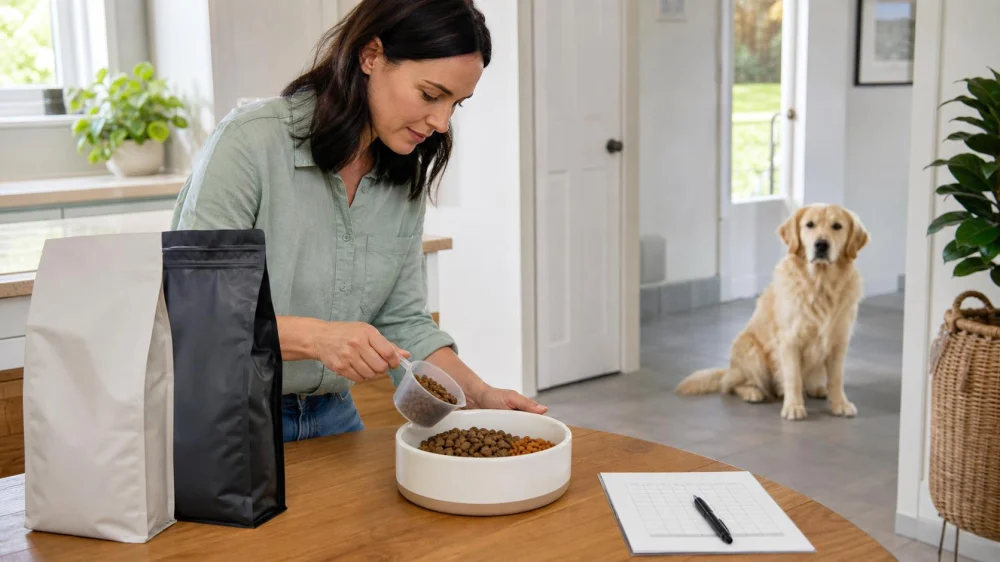
Change pet food only after confirming the reason, nutritional suitability, feeding amount, and transition schedule with your UK veterinary practice when health or a therapeutic diet is involved. Unless the vet or manufacturer gives a different plan, introduce the new food in increasing proportions over several days while recording appetite, stool, vomiting, weight, and behaviour. Stop and call the vet for significant or persistent problems.
This guide is for UK dog and cat owners changing routine food. Puppies, kittens, pregnant animals, pets with disease, food allergy, pancreatitis risk, prescription diets, poor appetite, or recent illness need individual veterinary guidance.

Check why the food is changing
A move from puppy to adult food, product discontinuation, cost change, preference, suspected intolerance, weight plan, or veterinary diagnosis each requires a different decision. Do not switch repeatedly in response to one loose stool or a social-media claim.
Ask whether the current food is actually responsible for the concern. Vomiting, diarrhoea, itching, weight loss, increased thirst, dental pain, parasites, stress, and other conditions can need examination. A food change may delay diagnosis.
If the pet is stable and the change is elective, choose a time without travel, boarding, vaccination stress, or another major routine disruption. Keep enough old food to complete the planned transition.

Compare the old and new foods
- Confirm the product is complete for the pet's species and life stage as stated on the UK label.
- Compare daily feeding amounts by weight and energy, not scoop volume alone.
- Check texture, moisture, ingredients, allergens, and treat allowance.
- Review storage, use-after-opening, and measuring instructions.
- Confirm whether the new food is therapeutic and must be fed exclusively.
- Record product name, batch details, and opening date.
Two foods with similar front-label descriptions can have different energy density. Feeding the old volume of a more energy-dense food may unintentionally change calorie intake.
Build a gradual transition plan
- Measure the pet's full daily allowance accurately.
- Begin with mostly old food and a small proportion of new food.
- Keep each stage long enough to observe tolerance according to veterinary or manufacturer direction.
- Increase the new proportion while reducing the old; do not simply add extra food.
- Keep treats, table food, supplements, and feeding times as consistent as possible.
- Move to fully new food only when the pet is eating and passing stool normally for the plan.
There is no universal percentage schedule. Some pets need a slower change, while certain medical diets may require a specific or immediate switch. Follow the prescriber's direction.
Monitor appetite, stool, and wellbeing
Use a simple daily log for amount offered and eaten, stool frequency and consistency, vomiting, gas, itching, energy, drinking, and body weight when requested. Photograph a product label or concerning stool for the vet if helpful, but do not post identifiable veterinary records publicly.
Mild brief change can occur, but persistent diarrhoea, repeated vomiting, refusal of food, marked lethargy, abdominal pain, blood, swelling, breathing difficulty, or collapse needs prompt veterinary contact. Cats that stop eating can become seriously ill; call the practice rather than waiting through a transition schedule.
When a standard transition may not apply
A veterinary elimination diet must be followed exactly, including treats, flavoured medicines, chews, and access to other pets' bowls. A prescription diet should not be diluted with ordinary food unless the vet directs it.
Raw feeding creates additional pathogen and nutritional considerations for pets and people. Discuss it with a vet and follow current UK public-health and food-safety advice, especially in households with young, older, pregnant, or immunocompromised people.
For multi-pet homes, feed separately and supervise so one animal cannot consume another's food. Identify bowls and storage clearly.
UK owner checklist
- Reason for change is clear.
- Vet has advised when health is involved.
- New food is suitable for species and life stage.
- Daily amount is recalculated.
- Old food supply is sufficient.
- Transition stages are written down.
- Treats and extras remain controlled.
- Appetite, stool, vomiting, and wellbeing are logged.
- Practice and out-of-hours numbers are available.
Frequently asked questions
How many days should a food transition take?
It depends on the pet, products, and reason. Follow the vet or manufacturer plan rather than a universal number, and slow down or call when problems occur.
What if my pet picks out the new pieces?
Ask whether another texture or mixing method is appropriate. Do not withhold food for prolonged periods to force acceptance, especially for cats or medically vulnerable pets.
Can I change flavour within the same brand immediately?
Do not assume formulas are identical. Compare labels and transition as recommended for the products and pet.
Should I add probiotics?
Only when the vet recommends a suitable product and schedule. Supplements vary and can complicate identifying the cause of symptoms.
Can I return to the old food if diarrhoea starts?
Contact the vet for persistent, severe, bloody, or otherwise concerning diarrhoea. They can advise whether to pause, step back, stop, or investigate another cause.
Sources and evidence notes
This article reflects common veterinary nutrition practice: confirm suitability, transition gradually when appropriate, control total intake, and monitor gastrointestinal and general signs. The pet's vet and current product label determine a specific plan.
Next steps
Write down why you are changing food, photograph both labels, and ask the practice about suitability and pace if health is involved. Calculate the new daily amount, keep extras stable, and prepare a one-page observation log. A deliberate transition provides better information than repeatedly switching whenever the pet has one unusual day.

 The Cattery @ Cherry Tree Farm5.0 (26 reviews)
 Lahbah petshop0.0 (0 reviews)
 Aquatic Finatic4.0 (417 reviews)
 Gilmoor Vets, Durham4.0 (480 reviews)
 Vets4Pets - Rotherham Parkgate4.0 (403 reviews)
 Fraser Veterinary Physiotherapy5.0 (2 reviews)
 Complete Guide to Vaccination Guide for Rabbits in the UK
 Recognising Allergy Symptoms in UK Dogs and Cats: What to Watch For
 Complete Guide to Nutrition Tips for Hamsters: What Your Pet Needs to Stay Healthy
 Top 10 Allergy Care Every Hamster Owner in the UK Should Know
 Seasonal Health Tips for Keeping Your Kittens Healthy in the UK
 Pet Coughing: What UK Owners Should Record for the Vet