
Pet Urine Sample: Ask Your UK Vet How to Collect It
On this page
Quick answer
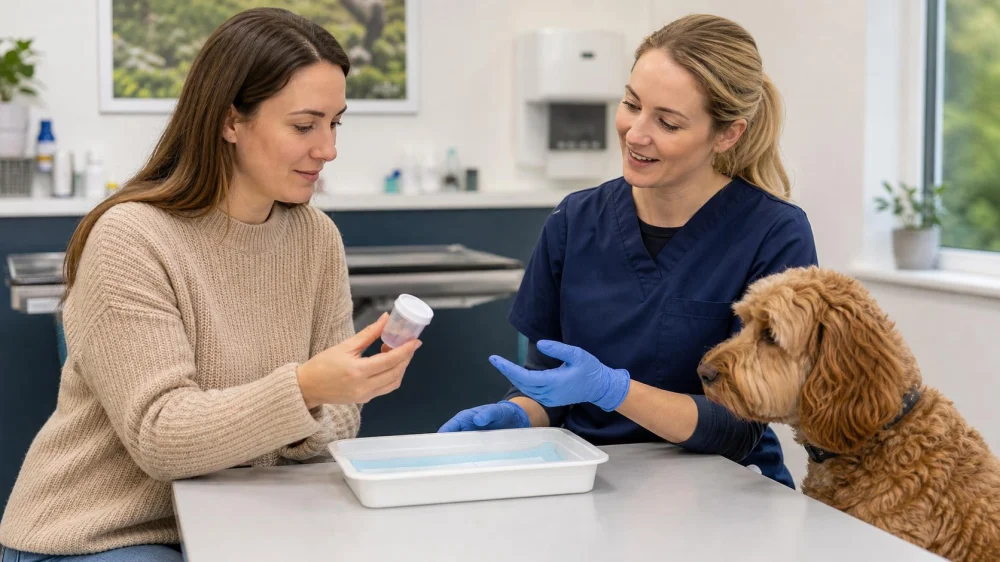
Ask your UK veterinary practice whether it needs a free-catch urine sample, a clinic-collected sterile sample, or no home sample at all. Confirm timing, container, amount, fasting or medication instructions, refrigeration, and delivery deadline. Use a clean dry veterinary-approved container, avoid touching the inside, label it, and deliver promptly. Never delay urgent care to collect urine from a pet that cannot urinate, strains repeatedly, is in severe pain, collapses, or becomes very unwell.
A free-catch urine sample is collected while a pet urinates naturally. It can be useful for some tests but is not sterile and may not suit culture or every diagnostic question.

Ask before collecting
- What test is planned?
- Does the practice want a first-morning or fresh sample?
- How much is needed?
- Can the pet eat, drink, and take normal medication?
- Which container is acceptable?
- How soon must it arrive and should it be chilled?
- What should you do if collection fails?
Do not withhold water or medication unless the vet specifically directs it.
Barry's Vets
Armagh City, Banbridge and CraigavonNorthern Ireland
Unit 7, Old Business Station Park, Co. Down, 98 Church St, Dromore BT25 1AA, UK
Prepare clean equipment
- sealed sample pot supplied or approved by the practice;
- clean disposable collection tray, ladle, or other species-appropriate device;
- gloves and handwashing supplies;
- label and leakproof transport bag;
- a cool pack if the practice instructs refrigerated transport.
Do not reuse food jars, chemical containers, or anything with detergent residue.
Collection approaches
Dogs: keep the dog on a lead in a safe quiet area and slide the clean device into the urine stream without touching the body or ground. Do not startle or restrain forcefully.
Cats: use only non-absorbent litter or a clean tray method approved by the vet. Separate the cat from other pets only for the shortest safe period and preserve normal litter access.
Other species: ask for specific guidance. Do not improvise collection from bedding, soil, cages, or pooled surfaces unless the vet accepts it.
Label and transport
Transfer the sample without touching the inside of the pot or lid. Label the pet’s name, owner surname, collection date and time, and collection method. Seal it in a separate leakproof bag. Follow the practice’s exact refrigeration and delivery instructions; delays and temperature can change results.
Tell staff about visible blood, debris, contamination, spillage, or a sample mixed with litter or cleaning product.
Urgent warning signs
Contact a vet urgently if a pet repeatedly tries but produces little or no urine, cries while urinating, has a swollen painful abdomen, passes clots, vomits, collapses, becomes weak, or is rapidly deteriorating. Urinary blockage can be life-threatening, especially in male cats. Do not press the abdomen or attempt to express the bladder.
Important notes
This is general pet-care information, not veterinary diagnosis. Collection, storage, and interpretation differ by species and test. A free-catch result may require confirmation with a clinic-collected sample. Follow the veterinary practice’s instructions.
Evidence notes
The workflow reflects common veterinary laboratory practice: match sample type to the test, minimise contamination, record time and method, control storage, and prioritise urinary emergencies. The treating veterinary practice is the primary source for exact requirements.
FAQ
Can I use a household jar?
Only if the practice explicitly approves it. A supplied sterile pot is safer for many tests.
Can I refrigerate the sample overnight?
Ask the practice. Some tests need a very fresh sample and delayed storage can alter results.
What if litter touches it?
Tell the practice; it may request another sample.
Should I collect the first urine of the day?
Only when instructed. The preferred timing depends on the test.
What if my pet will not urinate?
Do not force or dehydrate the pet. Ask the practice about clinic collection.
Next steps
Call the veterinary practice, confirm the sample type and deadline, and collect only with approved clean equipment. Label the time and method and deliver promptly. If your pet strains without producing urine or becomes acutely unwell, seek urgent veterinary care instead of continuing collection attempts.
 Manta Rea Aquatics Ltd5.0 (61 reviews)
 The Town Vets4.0 (370 reviews)
 Greengates Boarding Cattery4.0 (55 reviews)
 Vets4Pets - Lincoln South4.0 (278 reviews)
 Gleno Veterinary Centre Ltd4.0 (141 reviews)
 Eastside Vet Clinic (ACE Vets)4.0 (85 reviews)
 UK Pet Owner’s Guide to Travel Safety for Rabbits
 Vet-Approved Exercise and Fitness for Reptiles
 Top 10 Travel Safety Tips Every Guinea Pigs Owner in the UK Should Know
 Complete Guide to First Aid Tips for Dogs: Essential Steps Every Pet Owner Should Know
 Puppy and Kitten Care Tips for Dogs: What UK Pet Owners Need to Know
 Why Does My Dog Stretch So Much? Understanding Normal Stretching vs Abdominal Pain