
Pet Stool Samples: Collect and Store for Your UK Vet
On this page
Quick answer
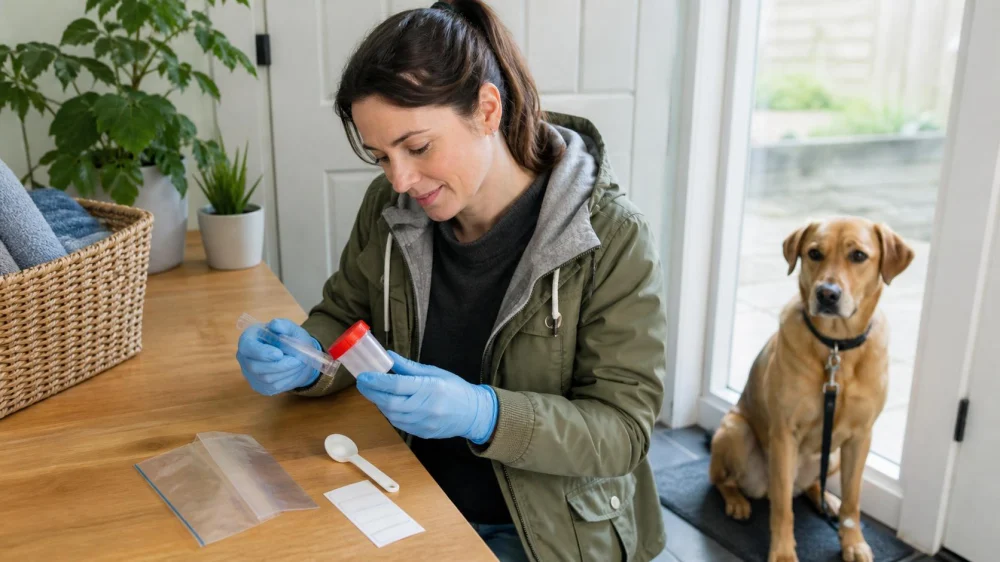
Ask your veterinary practice whether it needs a fresh stool sample, how much, which container to use, and how soon it must arrive. Collect without touching the sample, avoid soil, litter, water, and household contamination, seal and label it, then store and transport exactly as instructed. Do not delay veterinary care for a very ill pet just to obtain a sample.

Parklands Veterinary Group, Portglenone
PortglenoneMid and East AntrimNorthern Ireland
26 Townhill Rd, Portglenone, Ballymena BT44 8AD, UK
Why it matters
A pet stool sample is a small faecal specimen used by a veterinary team to investigate parasites, infection, digestion, bleeding, or other gastrointestinal concerns. Test choice affects freshness, quantity, and storage requirements.
This UK guide is for household sample collection after veterinary advice. Dogs, cats, rabbits, birds, reptiles, and other animals need different methods and tests. The practice's instructions override generic advice.
Maidenhead Aquatics Grantham
Belton Garden Centre, High Rd, Belton, Grantham NG32 2LN, UK
Practical checklist
- Call the practice for the required test, quantity, collection window, container, and storage.
- Use a clean leakproof container supplied or approved by the practice.
- Wear disposable gloves or use a clean collection tool and wash hands afterwards.
- Avoid mixing the sample with litter, soil, grass, water, cleaning chemicals, or another animal's stool.
- Label pet name, owner name, date and time, and any practice-requested details.
- Keep the sealed sample away from food, children, and other animals.
- Deliver promptly and tell staff about medication, diet changes, travel, scavenging, and other symptoms.
Step-by-step plan
- Get instructions first. A routine parasite check may have different requirements from diarrhoea testing or a multi-day collection.
- Prepare before toileting. Have the approved container, gloves, disposable scoop, label, and outer bag ready so the sample is not left exposed.
- Collect the cleanest representative portion possible. For a litter tray, ask the practice about non-absorbent collection methods rather than guessing.
- Seal immediately. Clean the outside if necessary without letting disinfectant enter, then place it in a separate leakproof outer bag.
- Label accurately. Include time because sample age can affect usefulness; never rely on memory at reception.
- Store only as directed. Some samples may need cool storage while others have special requirements. Do not freeze or refrigerate unless instructed.
- Complete the clinical handover. Report stool appearance, frequency, straining, vomiting, appetite, drinking, behaviour, weight change, and exposure risks.
Photograph the stool when safe and useful before collection, and note time, colour, consistency, mucus, visible foreign material, frequency, and related symptoms. Do not handle suspected parasites unnecessarily.
Limits and warning signs
One negative result may not exclude every parasite or disease, and appearance alone cannot diagnose the cause. Old, contaminated, tiny, dried, or incorrectly stored samples may be unsuitable and require recollection.
Contact a vet promptly for repeated diarrhoea, blood or black tar-like stool, vomiting, pain, marked lethargy, dehydration, toxin or foreign-body concern, or symptoms in a young, elderly, pregnant, or medically vulnerable pet. Use emergency care for collapse or severe deterioration.
Frequently asked questions
How much stool should I collect?
Ask the practice because tests differ. A small representative amount is often enough, but the veterinary team should specify it.
Can I use a household jar?
Only if the practice approves it. A purpose-provided sterile or clean leakproof container may be required.
Should I refrigerate the sample?
Do so only under the practice's instructions. Storage depends on the test and expected delivery time.
What if I cannot collect a sample?
Keep the appointment or call the practice. The vet may still need to assess the pet and can advise another collection plan.
Sources and evidence
The process reflects common veterinary diagnostic-sample principles: use the correct container, minimise contamination, record time, preserve as directed, and pair laboratory material with the animal's clinical history.
Conclusion and next steps
Phone the practice before collection and write the container, amount, storage, and delivery deadline. Prepare the kit before your pet toilets, label the sample immediately, and prioritise veterinary assessment over obtaining a perfect specimen when the pet is unwell.
 Jollyes Pet Clinic - Halifax0.0 (0 reviews)
 Westmorland Veterinary Group4.0 (168 reviews)
 Cavendish Cattery Boarding House4.0 (64 reviews)
 Kilwaughter Cattery5.0 (35 reviews)
 Simply Treats5.0 (1 reviews)
 The Charlesworth Veterinary Surgery4.0 (193 reviews)
 Vet-Approved Allergy Care for Guinea Pigs: Best Practices and Tips
 How to Improve Guinea Pigs Adoption Guide at Home: Expert Tips and Advice
 Best Practices for Seasonal Health Tips in Senior Pets
 Best Practices for Nutrition Tips in Cats
 Pet Recovery Cone or Suit: Check Fit and Supervise
 Best Practices for Allergy Care in Guinea Pigs: Tips for a Healthy Pet