
- -understanding-why-cats-ignore-scratching-posts
- -health-issues-that-affect-scratching-behavior-in-cats
- -stress-environmental-and-behavioral-causes
- -choosing-the-wrong-scratching-post-and-placement-errors
- -how-to-check-your-cat-health-before-training
- -step-by-step-ways-to-encourage-scratching-behavior
- -common-training-mistakes-cat-owners-make
- -real-life-stories-of-cats-refusing-scratch-posts
- -long-term-enrichment-for-indoor-cat-wellbeing
- -professional-cat-care-guidance-and-regpets-resources
Why Your Cat Might Be Avoiding the Scratch Post
When a cat refuses to use a scratching post, most owners assume it is simply “being stubborn.” In reality, feline scratching behavior is deeply tied to instinct, environment, and physical comfort. Understanding why cats avoid scratching posts requires looking beyond training and into the cat’s overall well-being.
Scratching is not random behavior—it serves multiple biological purposes: marking territory, stretching muscles, and maintaining claw health. If a cat is not engaging with a scratching post, something in its environment or health status is usually interfering with these instincts.
A common scenario involves new cat owners who invest in expensive scratching towers, only to see their cats continue using furniture. This mismatch often signals either discomfort, confusion, or unmet behavioral needs rather than disobedience.

Hidden Health Problems That Affect Scratching Behavior
Before focusing on training, it is essential to consider potential health issues. Cats experiencing joint pain, arthritis, or claw discomfort may avoid scratching because it causes pain. Even subtle paw injuries can significantly change behavior.
Fungal infections, overgrown claws, or inflammation in the paw pads can also discourage scratching. In older cats, reduced mobility often leads to decreased interest in vertical scratching surfaces.
One veterinarian shared a case involving a senior cat who stopped using its scratching post entirely. The owner assumed it was behavioral, but an exam revealed early-stage arthritis. Once treatment began, the cat gradually resumed normal scratching behavior.

Vets4Pets - Barry
Inside Pets at Home, Waterfront Retail Park, Heol Ceiniog, Barry CF63 4BA, UK
Stress, Environment, and Emotional Triggers Behind Avoidance
Cats are highly sensitive to environmental changes. Moving homes, new pets, loud noises, or even changes in furniture layout can disrupt their comfort zone. Stress can directly reduce normal scratching behavior or redirect it to hidden or less appropriate areas.
In multi-cat households, competition can also influence scratching habits. A dominant cat may monopolize the scratching post, leaving others to find alternative surfaces.
A real-life example involves a rescue cat adopted into a busy household. The cat avoided the scratching post entirely until a second post was introduced in a quiet room. Once environmental stress decreased, scratching behavior normalized.
Wrong Scratching Post Type or Placement Mistakes
Not all scratching posts are appealing to cats. Texture, height, stability, and material all influence usage. Some cats prefer vertical posts, while others prefer horizontal scratching pads. A wobbly or unstable post can discourage use entirely.
Placement is equally important. A scratching post hidden in a corner or far from social areas is less likely to be used. Cats often prefer scratching in high-traffic areas where they naturally mark territory.
A common mistake owners make is placing the scratching post after unwanted scratching behavior has already developed, rather than proactively integrating it into the cat’s daily environment.
Health Check Before Training Your Cat to Use a Scratch Post
Before beginning behavioral training, a basic health check is essential. Look for signs such as limping, paw sensitivity, excessive licking of paws, or reluctance to jump or stretch. These symptoms may indicate pain that interferes with scratching behavior.
Inspect claws regularly. Overgrown claws or ingrown nail conditions can make scratching uncomfortable. Gently examine paw pads for redness or swelling.
If any abnormal signs are present, veterinary evaluation should come before training attempts. Addressing health concerns first ensures that behavioral training efforts are not wasted and that the cat is not experiencing discomfort.
How to Encourage Healthy Scratching Behavior Effectively
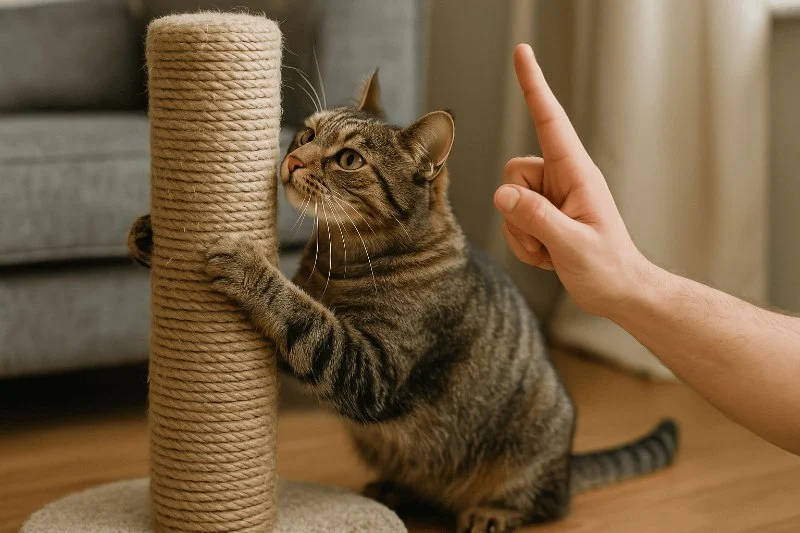
Once health issues are ruled out, training can begin. One effective method is positive reinforcement. Rewarding the cat with treats or affection when it uses the scratching post reinforces the behavior.
Another technique involves scent attraction. Cats are naturally drawn to familiar smells, so placing the scratching post near their resting areas or using catnip can increase engagement.
Redirecting behavior is also key. When a cat scratches furniture, gently move it to the scratching post rather than punishing it. Punishment often increases stress and worsens the problem.
Common Mistakes That Prevent Success
One major mistake is inconsistency. Cats require repetition and stable reinforcement to build habits. Changing post locations frequently can confuse them and delay learning.
Another issue is using punishment-based training. Yelling or physically discouraging scratching behavior can increase anxiety and lead to avoidance behaviors.
Some owners also underestimate the importance of multiple scratching options. A single post is often not enough, especially in multi-room homes.
Real-Life Case: When a Cat Refused Every Scratch Post
A cat named Milo, adopted from a shelter, consistently avoided all scratching posts in his new home. His owners tried multiple materials—sisal, carpet, cardboard—but nothing worked. They assumed behavioral stubbornness was the issue.
After consultation, a vet discovered mild paw sensitivity due to a previous untreated injury. Once treated and paired with a low, horizontal scratching pad placed near his favorite sleeping spot, Milo gradually began using it daily.
This case highlights how behavior and health are often deeply interconnected, and why addressing physical well-being first is critical.
Long-Term Enrichment for Healthy Scratching Habits
Scratching behavior is part of a broader need for environmental enrichment. Indoor cats especially benefit from stimulation such as climbing structures, interactive toys, and multiple scratching surfaces.
Rotating enrichment tools prevents boredom and keeps cats mentally engaged. A stimulated cat is less likely to develop destructive scratching habits.
Many cat behavior specialists recommend creating “scratching zones” throughout the home rather than relying on a single designated object.
When to Seek Professional Help and Trusted Resources
If your cat continues to avoid scratching posts despite environmental changes and training, professional evaluation may be necessary. Behavioral specialists and veterinarians can identify deeper medical or psychological causes.
For structured guidance, product recommendations, and expert-backed behavioral tools, :contentReference[oaicite:0]{index=0} provides valuable resources designed to help owners better understand feline behavior and improve daily care routines.
By combining health awareness, environmental adjustments, and consistent training, most cats can successfully transition to healthy scratching habits that benefit both their well-being and your home.




 Golden Back Shrimps5.0 (1 reviews)
 Galloways Vets LTD4.0 (56 reviews)
 Mav & Annie’s Pet Store4.0 (22 reviews)
 Grange Vets4.0 (306 reviews)
 RH DOG PENS0.0 (0 reviews)
 Pawsome Pad5.0 (10 reviews)
 Travel Safety Tips for Puppies: What UK Pet Owners Need to Know
 UK Pet Owner’s Guide to Adoption Guide for Guinea Pigs
 How to Handle Anxiety and Stress in Pets: Vet Advice
 Complete Guide to Mental Health for Kittens: Supporting Your Kitten's Well-Being
 UK Pet Owner’s Guide to Nutrition Tips for Dogs
 Vet-Approved Parasite Prevention for Kittens: Essential Tips for Pet Owners