
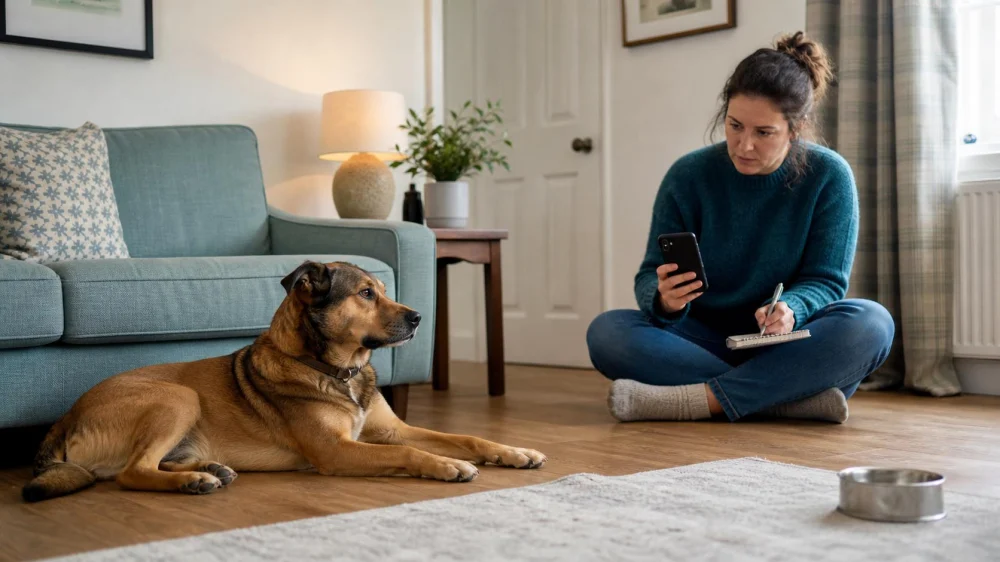
Pet Seizure First Aid: A Calm UK Owner Checklist
Quick answer: Start a timer, clear hazards, reduce noise and light, and keep your hands away from your pet’s mouth. Do not restrain, shake, wrap, feed, or medicate them unless a vet has given a specific rescue plan. PDSA advises calling your vet immediately if a seizure lasts more than two minutes or if there is more than one in 24 hours; call for advice after any seizure.
Watching a dog, cat, or other pet have a seizure is frightening. A simple plan helps protect both of you and gives the vet useful information. This UK-focused guide supports—not replaces—instructions from your own veterinary practice.
1. Recognise a Possible Seizure
A generalised seizure may include collapse, loss of awareness, stiffening, jerking, paddling limbs, drooling, jaw movements, or loss of bladder or bowel control. A focal seizure can be subtler, with repeated twitching in one area, unusual facial movement, staring, or a brief change in awareness.
Other problems—including fainting, vestibular episodes, pain, toxin exposure, low blood sugar, or heart and breathing emergencies—can look similar. Do not diagnose epilepsy from one event. Check from a safe distance whether your pet is responsive and breathing, and describe exactly what you see to the vet.

Maidenhead Aquatics Cardiff
Pughs Garden Centre, Ty-Nant Rd, Morganstown, Road, Cardiff CF15 8LB, UK
2. Protect Your Pet From Nearby Hazards
Start by protecting yourself, children, and other animals. Clear hard or sharp objects from around the pet. Block access to stairs, water, fire, traffic, and furniture edges without crowding them. If they are on a sofa or bed and can be moved before or at the very start without putting hands near the head, guide them carefully to the floor; otherwise cushion nearby hazards and ask the vet for advice.
Dim bright lights, reduce noise, close curtains if helpful, and keep the room cool and ventilated. A seizure can increase body temperature, so do not surround the pet with blankets or people.

Pets & Aquatics at Plantsplus
Plantsplus Garden Centre, Berwick Hill Rd, Newcastle upon Tyne NE13 6BU, UK
3. Know What Not to Do
- Do not hold the pet down or try to stop the movements.
- Do not put fingers, a spoon, or any object in the mouth.
- Do not pull the tongue or try to prevent “swallowing” it.
- Do not shout, shake, hit, or splash the pet to wake them.
- Do not wrap them up; overheating can add risk.
- Do not offer food, water, or oral medicine during the seizure.
- Do not give a human medicine or an extra pet dose without veterinary instruction.
Even a normally gentle animal can bite unintentionally during or after a seizure. Keep faces and hands away from the mouth.
4. Time and Record the Episode
Use a phone timer from the first sign you notice until active seizure movements stop. An episode often feels much longer than it is, and the exact duration changes the urgency. If another adult is present, one person can call the vet while the other maintains a safe environment.
If it is safe, record a short video from a distance. Include the whole body and a clock or spoken time marker without using flash. Note what happened immediately before the event, the body parts involved, awareness, breathing or colour changes, urine or stool, and how recovery begins. Do not delay an urgent call to capture perfect footage.
5. Know When to Call the Vet Urgently
For UK owners, PDSA advises calling the vet straight away when a seizure lasts more than two minutes or when the pet has more than one seizure in 24 hours. Follow your own vet’s emergency plan if it sets an earlier threshold. Also seek urgent advice for a first seizure, suspected poison exposure, recent head injury, pregnancy, breathing difficulty, collapse without recovery, severe overheating, or any feature that worries you.
Call once the pet starts to recover even after a short episode. A prolonged seizure or repeated episodes can become life-threatening. If your usual practice is closed, use its recorded message or website to identify the out-of-hours provider.
6. Manage the Recovery Period
After the movements stop, a pet may be confused, restless, temporarily unsteady, hungry, thirsty, clingy, or apparently unable to see normally. Keep the area quiet, cool, dim, and free of stairs. Separate other pets and supervise from a safe distance.
Do not force interaction. Let the vet tell you when it is safe to offer water, food, or routine medication, especially if the pet is still disorientated or may need sedation or tests. Continue timing the recovery and report failure to return toward normal.
7. Prepare Safe Transport
PDSA advises not transporting during active seizure activity unless the vet specifically directs otherwise. Call first so the practice can prepare and tell you where to go. When the seizure has stopped, use a carrier for a cat or small animal if it can be done without struggle. For a larger dog, ask how to use a blanket, board, or second person safely.
Keep the vehicle cool and quiet. Have another adult drive if possible so someone can observe the pet. Bring medications and their packaging, the seizure video, your notes, any suspected toxin packaging, and the vet’s instructions. Do not place an unrestrained, disorientated animal on a seat.
8. Give the Vet a Useful Report
Tell the vet the pet’s species, breed, age, weight, diagnoses, current medicines, and whether this is the first known event. Report the start time, duration, number of episodes, recovery time, exact movements, possible exposure to medicines or toxins, recent illness or injury, appetite, and behaviour changes.
Mention missed or late anti-seizure medication, but do not double a dose unless the prescribing vet instructs you. If the pet has a prescribed rescue medicine, say whether it was given, the amount, route, time, and response.
9. Build a Seizure Plan
After assessment, ask the vet for a written plan. It can define your pet’s usual pattern, the call threshold, emergency clinic, transport method, prescribed rescue medicine, dosing instructions, and when routine medicines should be reviewed. Store the plan with carrier details and the practice’s day and out-of-hours numbers.
Maintain a seizure diary with date, time, duration, possible triggers, medication timing, recovery, and video links. The pattern helps the vet assess frequency and response; it does not replace examination or testing. Never stop an anti-seizure medicine suddenly unless the vet directs it.
10. Review Common Owner Questions
Should I stop my pet biting their tongue?
No. Do not put anything in the mouth. The Royal Veterinary College notes that there is no need to hold a seizuring animal or prevent tongue biting.
Can I cool my pet with ice?
Keep the room cool and avoid wrapping, but ask the vet before active cooling. Ice or very cold water is not a substitute for emergency veterinary care and can create other problems.
Does one seizure mean epilepsy?
No. Seizures have many possible causes, and epilepsy describes a recurring seizure disorder after veterinary assessment. A vet may recommend examination, blood or urine tests, imaging, or other investigation depending on the animal and history.
What if the seizure has already stopped?
Call your vet for advice anyway. Note the duration and recovery, preserve video, and follow the practice’s triage instructions.
Calm checklist: start the timer; clear hazards; lower light and noise; keep cool; do not restrain; stay away from the mouth; video only if safe; call urgently at the vet’s threshold; protect the confused recovery period; and bring a precise record.
Evidence notes: This checklist follows UK guidance from PDSA’s veterinary team and the Royal Veterinary College first-aid guide. The two-minute and repeated-seizure thresholds above reflect those UK sources; your vet may give an individual plan with different instructions.
This article is educational and cannot assess an animal in real time. Contact a veterinary practice whenever a pet has a seizure or you are concerned.




 Spen Corner Veterinary Centre4.0 (128 reviews)
 Pets Corner4.0 (352 reviews)
 Barn View Cattery5.0 (69 reviews)
 Melton Vets4.0 (260 reviews)
 Calder Vets in Mirfield4.0 (43 reviews)
 Abbey House Vets in Halton4.0 (108 reviews)
 UK Pet Owner’s Guide to Adoption for Reptiles
 Top 10 Weight Management Tips for Exotic Pets Owners in the UK
 Best Practices for Puppy and Kitten Care in Cats: A Complete Guide
 Behaviour Training Tips for Puppies: What UK Pet Owners Need to Know
 How to Handle Emergency Situations with Your Pet | Pet Safety Tips
 Why Is My Cat Hiding Under the Bed All Day? Fear or Illness Explained