
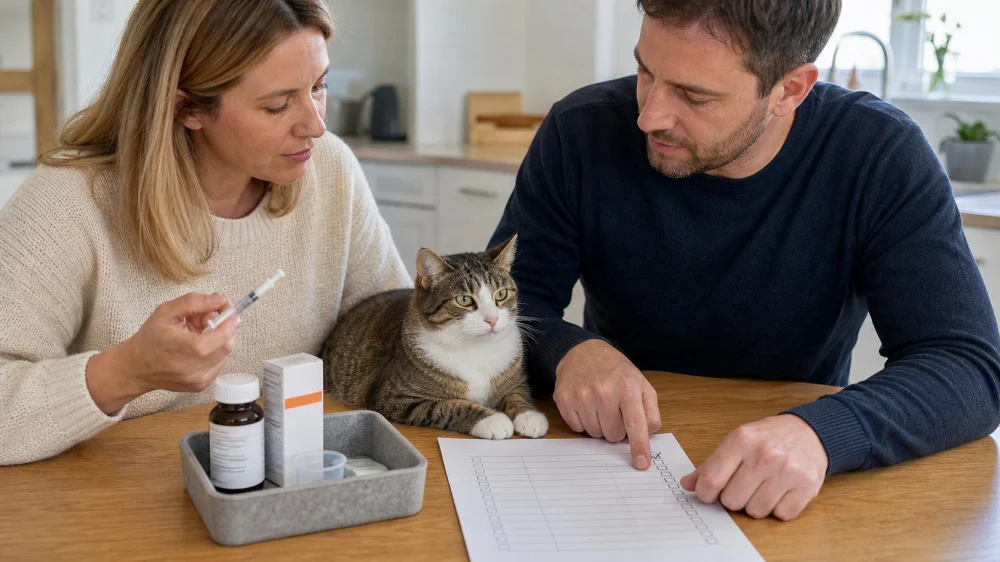
Pet Medication Log: Prevent Missed or Double Doses
On this page
Quick answer
Keep one current log for every medicine, supplement, flea or worm product, and medicated food your pet receives. Copy the exact product name, strength, dose, route, frequency, purpose, start and stop dates, storage instructions, prescribing practice, and what to do if a dose is late or missed. Record each dose immediately after it is given. If a dose may have been missed, repeated, vomited, spilled, or given to the wrong animal, call the prescribing veterinary practice or out-of-hours service before giving more.
Do not use this article to calculate a dose. Instructions must come from the vet, dispensing label, or authorised product information for the exact pet and product.
Jollyes - The Pet People Coleraine
Causeway Coast and GlensNorthern Ireland
Units 1-2, 24 Beresford Ct, Coleraine BT52 1SU, UK
Build one medicine list
Create a paper sheet or shared digital record that works during a power, phone, or internet failure. For each product, record:
- Pet's name, species, current weight, allergies, and relevant conditions
- Brand and generic name, formulation, and strength exactly as labelled
- Amount per dose, route, schedule, and relationship to food
- Reason prescribed and which practice or clinician supplied it
- Start date, planned review, stop date, and repeats remaining
- Storage, shaking, measuring, handling, and disposal instructions
- Expected effects, known warnings discussed, and urgent contact signs
- Batch number and expiry when relevant to a suspected problem
Photograph both sides of the label and leaflet, but keep the physical packaging. Update the master list when the vet changes a dose; do not merely add a handwritten note beside an obsolete instruction.

Grace Lane Vets
KirkbymoorsideNorth YorkshireEngland
Weighbridge Cl, Kirkbymoorside, York YO62 6FD, UK
Create a dose routine
- Read the label every time, especially when two packages look alike.
- Confirm the correct pet, medicine, strength, amount, route, and time.
- Use the supplied or recommended measuring device; kitchen spoons are not precise.
- Prepare one animal's medicines at a time in good light.
- Give the dose exactly as instructed without crushing, splitting, opening, or mixing unless approved.
- Watch that the medicine was swallowed or applied correctly.
- Mark date, time, amount, and initials immediately after administration.
- Return the product to its required childproof, pet-proof, temperature-controlled storage.
Do not pre-fill unlabelled syringes or move tablets into an unidentified container. Keep human and animal medicines separate and out of reach.
Manage household handovers
Choose one dose record shared by all carers. A text message alone can be missed or delayed. At a handover, point to the most recent logged dose and the next scheduled dose. Use a simple status such as “not yet given” and “given at 08:05 by AB,” never a pre-ticked box.
For boarding, pet sitters, travel, or hospital admission, provide the current list, labelled original containers, written veterinary instructions, prescribing practice details, and consent for emergency contact. Do not leave a loose assortment of pills.
What to do after a problem
Call the vet promptly if the wrong amount, product, route, or pet may be involved; if the dose was repeated; if medicine was chewed or spilled; if the pet vomited after dosing; or if an unexpected sign appears. Tell them the exact product and strength, possible amount, time, pet's weight, symptoms, and other medicines. Keep packaging nearby.
Do not induce vomiting, repeat the dose, skip future doses, or give a counteracting product unless a veterinary professional instructs you. If the pet collapses, has trouble breathing, seizures, severe weakness, marked swelling, or rapidly worsening signs, use the emergency service immediately.
The UK Veterinary Medicines Directorate accepts reports of suspected adverse events and lack of expected effect. Clinical advice should come first from the vet responsible for the animal; ask whether the practice, owner, or manufacturer will submit the report so it is not duplicated.
Medication checklist
- Master list matches every current label
- Exact strength, route, and schedule recorded
- Missed-dose instructions confirmed with the vet
- Each dose logged only after administration
- All carers use the same live record
- Original packaging and leaflets retained
- Storage and disposal instructions followed
- Repeat and review dates scheduled
- Vet and out-of-hours numbers available
- Adverse signs and reporting plan documented
Limitations
Species, weight, formulation, concentration, and medical condition can radically change safe use. Products with similar names may have different strengths. Some medicines need tapering and must not be stopped suddenly; others have special handling or disposal rules. Pharmacy, internet, and imported products may fall under different controls. Verify questions with the prescribing practice or qualified supplier.
Frequently asked questions
Should I repeat a dose if my pet vomits?
Not without veterinary advice. Absorption depends on the medicine, timing, and what was seen in the vomit, and repeating it could cause an overdose.
Can two pets share the same prescription?
No unless a vet has specifically prescribed and labelled the medicine for each animal. Weight and health differences matter.
May I use an old leftover medicine?
Do not reuse it without veterinary direction. The condition may differ, the product may be expired, and interrupted courses can be harmful.
Is a phone reminder enough?
A reminder signals that a dose is due; it does not prove it was given. Pair reminders with a dose-completed log.
Where can I check current product information?
The VMD Product Information Database contains current authorised veterinary medicine information for Great Britain and Northern Ireland. Ask the vet about any difference from your label.
Evidence notes
The Veterinary Medicines Directorate says product information can change and maintains an official database of authorised medicine information. Its pharmacovigilance guidance tells owners to contact the vet responsible for clinical advice and allows anyone to report an unexpected reaction or suspected lack of effect. See the VMD Product Information Database and VMD medicine-safety guidance.
Conclusion
A reliable medication system is one exact list plus one dose record used by everyone. Verify the label, log only after giving, keep packaging, and call the vet before correcting any uncertain or mistaken dose.


 Oakhill Veterinary Centre4.0 (199 reviews)
 The K9 Chiro5.0 (17 reviews)
 Crookedstone Cattery0.0 (0 reviews)
 Northern Ireland Veterinary Specialists4.0 (112 reviews)
 Richmond House Veterinary Centre4.0 (956 reviews)
 Westway Veterinary Group, Whickham4.0 (38 reviews)
 Understanding Kitten Behaviour Training: Essential Tips and Solutions
 Common Cat Health Problems: Dental Disease, Obesity and Skin Conditions Explained
 Complete Guide to Mental Health for Kittens: Supporting Your Kitten's Well-Being
 Complete Guide to First Aid Tips for Cats: Essential Care for Your Feline
 Expert Vet Advice on Nutrition Tips for Fish
 How to Perform a Cat Dental Check at Home: Pink Gums and Tartar Inspection Guide