
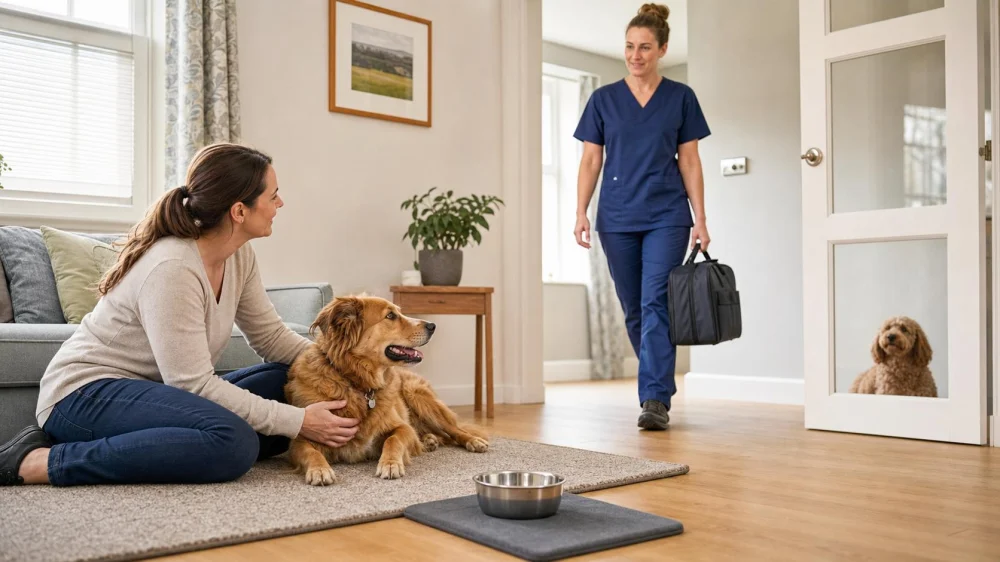
How to Prepare Your Home for a Mobile Vet Visit
On this page
Quick answer
Prepare for a mobile vet by confirming the service and equipment expected, choosing a quiet escape-proof room with good light and a clear floor, and gathering the pet's medication, history, and symptom notes. Keep other animals and visitors separate, secure gates and doors before arrival, and let the veterinary professional direct handling. Know in advance how emergencies or tests beyond the mobile service will be referred.
This guide is for pet owners in the United Kingdom arranging a home veterinary visit. Providers, fees, coverage areas, and clinical capabilities vary. Follow the veterinary practice's instructions.
Confirm what the service can do
Ask whether the visit is routine, palliative, behavioural, preventive, or urgent and describe the main concern accurately. Confirm which species the service sees, its travel area, expected arrival window, fees, payment method, and cancellation process.
Ask what cannot be done at home. Imaging, surgery, hospital monitoring, some tests, and emergency stabilisation may require a practice or hospital. Obtain the referral and out-of-hours plan before the visit.

Choose a safe examination room
Select a small, quiet room where the pet cannot disappear behind heavy furniture or escape through an exterior door. Provide bright adjustable light, a stable clear surface only if the practice requests it, and enough floor space for the vet and owner.
- Close windows, cat flaps, gates, and exterior doors.
- Remove fragile objects, food, toys, cords, and floor clutter.
- Provide a nonslip mat for dogs or other suitable footing.
- Keep cleaning chemicals and human medicine away.
- Tell the service about stairs, parking limits, or access barriers.
Do not use a bathroom, garage, or garden automatically; temperature, surfaces, chemicals, and exits may make them unsuitable.
Prepare records and observations
Have the pet's name, age, microchip information when relevant, usual practice, medical history, allergies, current medicines, supplements, diet, and recent treatment available. Keep medicines in original labelled packaging.
Write when the concern began, what changed, and whether eating, drinking, toileting, movement, breathing, or behaviour differs from normal. Save relevant photos or videos, but do not delay urgent care to collect them.
List two or three questions and identify any form, insurance document, prescription request, or travel certificate you expect; not every mobile service can provide every document.
Prepare the pet without forcing
Follow the practice's feeding, medication, and confinement instructions. Do not withhold food, give a calming product, or change medicine unless the vet directs it for that pet.
Bring the pet into the prepared room before the doorbell or vehicle arrival when this can be done calmly and safely. Leave a familiar carrier open for a cat if the vet agrees. For a dog, use the normal secure lead or harness as instructed.
Tell the service about fear, aggression, bite history, escape behaviour, pain, or handling triggers before arrival. Do not conceal risk or attempt restraint beyond your ability.
Manage arrival and other animals
Place other pets in separate secure areas so they cannot interrupt, compete, or escape. Ask another adult to manage children and the front door. Keep the route from entrance to examination room clear.
Let the veterinary professional decide positioning and handling. Ask before filming. After the visit, obtain written instructions, prescriptions, test plans, referral details, warning signs, and a contact route for questions.
Mobile-vet checklist
- Confirm scope, fees, arrival window, and referral plan.
- Report species, symptoms, behaviour risks, and access barriers.
- Secure windows, doors, gates, and other pets.
- Clear and light a quiet nonslip room.
- Gather original medicine packaging and concise records.
- Follow feeding and medication instructions exactly.
- Let the vet direct handling and restraint.
- Save the written aftercare and emergency contacts.
Limitations and important notes
- A home visit is not a substitute for emergency hospital care when advanced support is needed.
- Trouble breathing, collapse, uncontrolled bleeding, major trauma, seizures that do not stop, or rapidly worsening illness need urgent veterinary direction.
- Mobile coverage and out-of-hours arrangements differ across the UK.
- Do not place staff or household members at risk to avoid using a carrier or muzzle that the practice has recommended.
- Prescription and certificate decisions require the vet's clinical and regulatory assessment.
Frequently asked questions
Should I put my cat in a carrier?
Ask the service. A carrier may support safe containment and transfer, but the timing and setup depend on the cat and visit.
Can the vet examine my pet outdoors?
Only if the vet agrees it is clinically suitable and escape, weather, privacy, and handling risks are controlled.
What if my pet hides before arrival?
Do not move heavy furniture or chase the pet into danger. Tell the service immediately and follow its handling advice.
Can a mobile vet prescribe medicine?
That depends on the clinical examination, service, medicine, and current professional requirements. Ask the provider directly.
Should other pets watch the visit?
Usually it is easier and safer to separate them unless the vet requests otherwise.
Sources and evidence notes
The preparation reflects common veterinary home-visit practice: define scope, control exits, preserve safe footing, provide accurate history, disclose handling risks, and plan referral. The attending practice supplies patient- and service-specific instructions.
Set up one calm room
Choose the room now, close escape routes, clear the floor, and place records and original medicine packaging together. Then call the mobile service to confirm its arrival process, handling instructions, and the plan if your pet needs care that cannot be delivered at home.




 Vets for Pets - Grimsby4.0 (464 reviews)
 Park View Veterinary Hospital4.0 (393 reviews)
 Marine World Aquatics4.0 (230 reviews)
 Westway Veterinary Group, Dog Clinic4.0 (8 reviews)
 Catnaps5.0 (48 reviews)
 Microchipping implanter0.0 (0 reviews)
 How to Manage Your Pet’s Weight and Prevent Obesity: A Complete Guide
 The Importance of Travel Safety for Birds – UK Edition
 Why Do Dogs Eat Poop? Coprophagia Explained & Solutions
 htmlCopy codeHow to Improve Dogs Adoption Guide at Home
 Top 10 Travel Safety Every Fish Owner in the UK Should Know
 Seasonal Health Tips for Cats: What UK Pet Owners Need to Know