
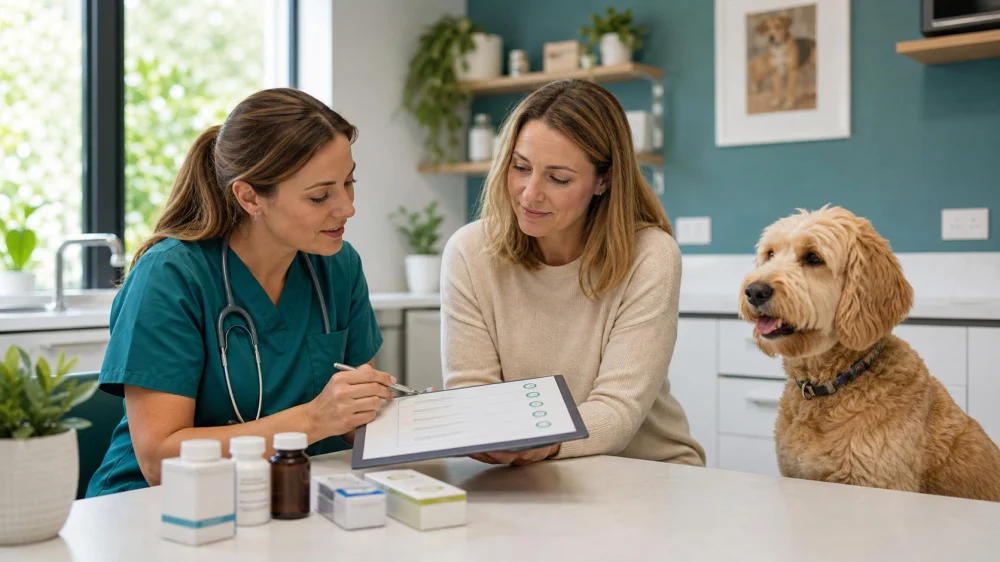
How to Prepare a Pet Medication Record for the Vet
On this page
- Quick answer
- Why one medication record matters
- Include more than prescriptions
- Record the details a vet can use
- Build a treatment timeline
- Prepare for the appointment
- If you suspect a medicine problem
- Store and handle medicines safely
- Simple medication record template
- Limits and urgent situations
- Sources and evidence notes
- Frequently asked questions
- Conclusion and next steps
Quick answer
Create one current list of everything your pet receives: prescription and non-prescription medicines, parasite products, supplements, creams, drops, and medicated food. Record the exact product, strength, amount actually given, route, time, reason, prescriber, and response. Bring labels or clear photographs to the vet, but do not stop, restart, combine, or change a dose without veterinary advice.

Why one medication record matters
A pet may receive treatment from a general practice, emergency clinic, referral hospital, pharmacy, online supplier, and products bought without a prescription. No single provider automatically sees every item. A current owner-held record helps a vet identify duplication, possible interactions, administration problems, adverse events, and changes in the animal’s response.
The list is also useful during an urgent visit, while travelling, when a regular vet is closed, or when another person cares for the pet. It should describe what was actually given, which may differ from the original plan after missed or delayed doses.
A record supports clinical care; it does not replace the prescription, medicine label, or the vet’s instructions.

Include more than prescriptions
List any product intended to affect health or symptoms, including:
- Tablets, capsules, liquids, injections, inhalers, and transdermal products.
- Eye or ear drops, skin creams, shampoos, and wound products.
- Flea, tick, worm, and other parasite treatments.
- Supplements, vitamins, herbal or complementary products, and calming aids.
- Medicated diets, dental additives, and products mixed into food or water.
- Human medicines or another animal’s medicine accidentally or intentionally given.
Do not assume “natural” means irrelevant. Ingredients, concentration, species, formulation, and concurrent treatment can matter. Never give a human medicine unless a vet responsible for the animal has directed it.
Record the details a vet can use
For each item, copy information from the current label or packaging rather than memory:
- Brand and active ingredient, if shown.
- Strength or concentration and dosage form.
- Amount actually given and route, such as by mouth, on skin, in an eye, or in an ear.
- Frequency, most recent date and time, and any missed or repeated administration.
- Reason it was started and the prescriber or supplier.
- Start date, planned end date, and remaining quantity.
- Observed benefit, difficulty giving it, and any unwanted change.
- Batch number and expiry date when a product problem or reaction is suspected.
Write “2.5 millilitres” or “half of a 20-milligram tablet” when that is what the label and actual administration show. Avoid entries such as “one pain pill,” because the product and strength remain unclear.
Build a treatment timeline
A short timeline helps a vet compare medicines with symptoms. Note when the health problem began, when each product started or stopped, when a dose changed, when improvement appeared, and when any unwanted event occurred. Include vomiting, diarrhoea, appetite or thirst change, sedation, agitation, weakness, itching, swelling, breathing change, collapse, or other observations without deciding the cause yourself.
If administration was irregular, record it honestly. A missed dose is clinically useful information. Do not double the next dose unless the prescribing vet or written instructions specifically say to do so.
For a long-term medicine, update weight measurements, monitoring tests, and review dates when the practice provides them. Keep the old entry marked “stopped” rather than deleting it, so the history remains visible.
Prepare for the appointment
Send the list in advance if the practice requests it. Bring the original packaging or clear photographs showing the front, ingredient, strength, directions, pharmacy label, batch, and expiry. Keep medicines secured during travel and do not hand loose tablets to staff in an unlabelled bag.
Before the visit, write down:
- The main question about each medicine.
- Which doses were difficult, late, missed, vomited, or possibly repeated.
- What changed after treatment and how quickly.
- Any new product from another clinic, shop, or household.
- Refills needed and the amount remaining.
- Upcoming travel, surgery, tests, diet change, or pregnancy concerns.
Ask the vet to reconcile the list: what to continue, change, stop, monitor, and review. Request updated written instructions when the plan changes.
If you suspect a medicine problem
Contact a vet promptly for advice. For severe breathing difficulty, collapse, seizures, major swelling, profound weakness, or another emergency, use an emergency veterinary service immediately. Do not wait to complete a form.
Record the animal’s species, breed, age, sex, weight, relevant conditions, every product involved, the amount actually administered, route, dates and times, what happened, treatment received, and outcome. Preserve packaging and photographs.
The UK Veterinary Medicines Directorate allows owners and others to report adverse events, including known or unexpected reactions, suspected lack of effect, off-label use, and animal exposure to human medicine. The VMD states that it cannot give clinical advice; owners should speak to the vet responsible for the animal or the product company. Avoid submitting duplicate reports through multiple routes unless instructed.
Store and handle medicines safely
Keep products in original labelled containers, separated by animal, and out of reach of children and pets. Follow label instructions for temperature, light, refrigeration, and safe handling. Do not move tablets into an unlabelled organiser unless the veterinary practice confirms a safe method and the identity remains clear.
Prevent mix-ups between pets with similar packaging. Mark the animal’s name clearly and check the label before every administration. Use the measuring device supplied or recommended for a liquid; kitchen spoons are not reliable measuring tools.
Ask the veterinary practice or pharmacy how to dispose of unused, expired, damaged, or recalled medicine. Do not share it with another animal or save it for a later illness without veterinary approval.
Simple medication record template
Use one row per product and update it whenever the plan changes:
- Pet: name, species, breed, date of birth, current weight.
- Product: brand, active ingredient, form, strength.
- Directions: prescribed amount, route, frequency.
- Actual use: amount and most recent date and time.
- Purpose: condition or symptom and prescriber.
- Dates: started, stopped, and next review.
- Response: benefit, difficulty, possible adverse event.
- Product trace: supplier, batch, expiry, quantity left.
Add an emergency contact and the regular practice’s phone number, but keep private data protected.
Limits and urgent situations
This guide is general UK pet-owner information, not a dosing tool or veterinary diagnosis. Only use a medicine for the animal and purpose directed by the responsible vet or authorised instructions. Species differences can make a product safe for one animal and dangerous for another.
Contact a vet urgently after suspected overdose, accidental ingestion, exposure to a human medicine, use of the wrong product or animal, or a serious reaction. Have the packaging and estimated amount ready, but do not induce vomiting unless a veterinary professional directs you.
Regulation and reporting routes can change. Use current VMD and veterinary-practice instructions.
Sources and evidence notes
This article reflects current UK Veterinary Medicines Directorate guidance on adverse-event reporting. The VMD asks for detailed information about the animal, product, actual dose, event, treatment, and outcome, and advises owners to seek clinical advice from their vet rather than the regulator.
The practical record fields are designed to support accurate communication and medicine reconciliation. They do not establish that a medicine caused an event; that assessment requires veterinary and regulatory review.
Frequently asked questions
Should I include flea and worm treatments?
Yes. Record the exact product, species indication, amount, route, date, and who recommended it.
What if I cannot remember the dose?
Do not guess. Photograph the packaging, contact the dispensing practice or pharmacy, and tell the vet what is uncertain.
Can I stop a medicine before the appointment?
Ask the prescribing vet. Abruptly stopping or changing some medicines can be harmful.
Should I report a known side effect?
Discuss it with your vet. The VMD accepts reports even when an effect is already listed or the link is uncertain.
Is a phone note enough?
Yes if it is current, detailed, backed by label photographs, and accessible during an emergency. A shared printed copy can help other carers.
Conclusion and next steps
Gather every product your pet receives, copy the exact label details, and record what was actually given and what happened next. Bring packaging or photographs and ask the vet to reconcile the full list. Update the record after each change and keep it available to carers and emergency practices; for suspected overdose or a serious reaction, contact a vet immediately.



 Browtop Cattery5.0 (1 reviews)
 Shield Aquatics4.0 (28 reviews)
 The Ings Luxury Cat Hotel5.0 (79 reviews)
 Natural treats for wiggle butts5.0 (2 reviews)
 Herdman Country Club for Cats4.0 (9 reviews)
 Oakhill Export Vets5.0 (2 reviews)
 Can Guinea Pigs Eat Corn Husks? Safe Fibrous Treat Guide for Small Pets
 Vet-Approved Dental Care for Senior Pets
 Vet-Approved Exercise and Fitness for Reptiles
 Expert Vet Advice on Travel Safety for Exotic Pets
 How to Improve Reptiles Parasite Prevention at Home
 How to Tell If Your Dog Has a Nasal Tumor: Signs to Watch