
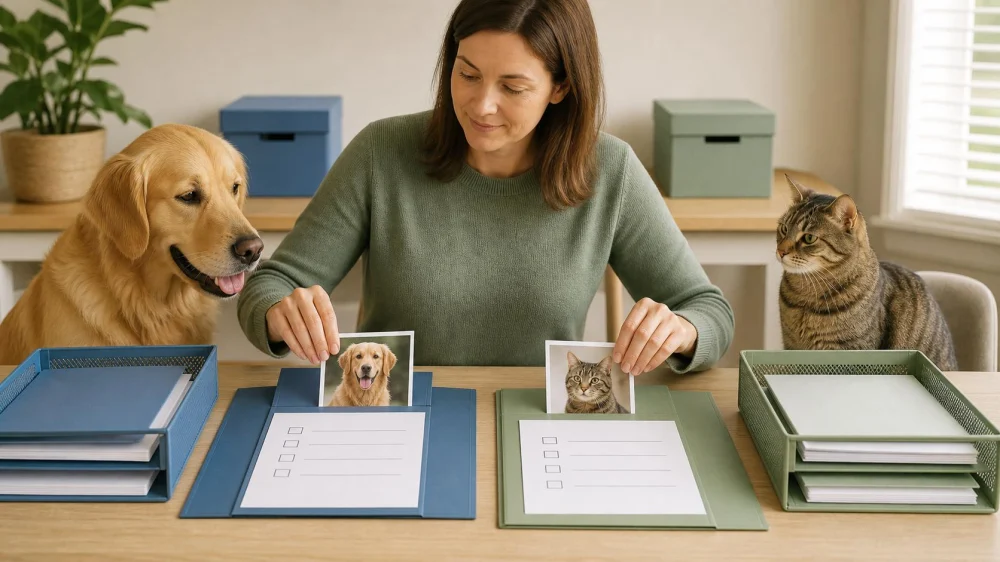
How to Keep Health Records Separate for Multiple Pets
On this page
Quick answer
Keep one clearly named health file and one medicine zone for each pet. Include a current photo, species, breed or description, date of birth or estimated age, microchip number when applicable, veterinary practice, allergies, medicines, insurance, and an appointment timeline. Confirm the pet's full identity before giving medicine, collecting a sample, uploading a document, or discussing results with the practice.
This guide is for multi-pet households in the United Kingdom. Veterinary practices, insurers, microchip databases, and medicine instructions use their own systems. Follow each provider's requirements.

Ash Tree Vets, Desborough
DesboroughNorth NorthamptonshireEngland
3 Station Rd, Desborough, Kettering NN14 2RL, UK
Create a clear identity record
Similar names, littermates, same-colour animals, and shared appointment dates increase mix-up risk. Create an identity header for each pet with a recent full-body photo and distinguishing feature.
Record the exact name used by the veterinary practice, species, sex, neuter status when relevant, breed or description, colour, date of birth or estimate, microchip number, and practice patient number if provided.
Do not rely on collar colour alone. Collars can move between animals. Verify microchip information through the appropriate registered database and update contact details when needed.

Dronfield Veterinary Clinic (Hunters Bar Veterinary Clinic)
Unit 5a, 39 Pentland Rd, Dronfield Woodhouse, Dronfield S18 8ZQ, UK
Use one file per pet
Create a separate physical folder or digital directory for each animal. Use the pet's name plus another non-sensitive identifier in filenames, followed by an unambiguous date.
- consultation summaries and clinical notes;
- vaccination and preventive-care records;
- test results and referral letters;
- insurance policy and claim documents;
- weight and symptom timelines;
- diet and allergy information; and
- current and discontinued medicine lists.
Keep original files unchanged. If a document belongs to two pets, save a clearly identified copy in each file and note that it covers multiple animals.
Separate medicines and instructions
Store each pet's medicine in its original veterinary or pharmacy-labelled packaging and in a separate assigned container. Never combine tablets in an unlabelled jar or transfer labels between packages.
Create a current schedule that states pet, medicine, strength, amount, route, time, start date, end or review date, and prescriber. Check the label at three points: when removing the package, before administering, and before returning it.
Do not share leftover medicine between animals, even when the product name appears the same. Dose, condition, contraindications, and current health may differ.
Control appointments and samples
When booking, state which pets are attending and the reason for each. Use separate calendar entries or clearly separate lines. Bring each animal's questions on its own page.
Label sample containers only as the practice instructs, immediately after collection and before leaving the animal. Keep samples physically separate and record collection time. If identity is uncertain, do not guess; ask the practice whether recollection is needed.
At check-in and before treatment, confirm the pet's name and purpose of visit. Review discharge instructions one pet at a time.
Prepare for handoffs and emergencies
Give pet sitters or family a separate one-page sheet for each animal with photo, routine, medicine, vet, emergency contact, insurance, and handling notes. Store detailed records securely rather than overwhelming a sitter with the full archive.
Use separate carriers or leads with safe identification. In an emergency, say which animal has which symptom and medicine. Do not let urgency collapse two histories into one.
Multi-pet record checklist
- Create a photo identity header for every pet.
- Use separate folders, timelines, and calendar entries.
- Keep medicines in original packaging and individual zones.
- Verify identity before medicine, sample, upload, or call.
- Label samples using practice instructions immediately.
- Review discharge papers one animal at a time.
- Give carers separate concise handoff sheets.
- Back up digital records securely.
Limitations and important notes
- Do not add or change medicine based only on another pet's record.
- Contact the vet promptly after a medicine or identity mix-up; report exact product, amount, pet, and time.
- Severe reactions, collapse, trouble breathing, seizures, or rapidly worsening illness require urgent veterinary help.
- Protect policy numbers, addresses, microchip details, and clinical records on shared devices.
- Record retention and access processes vary by provider.
Frequently asked questions
Can littermates share one health folder?
Separate files reduce confusion because each animal can develop different weights, medicines, tests, and insurance claims.
How should I name digital files?
Use a consistent pet identifier, date in year-month-day order, and document type without changing the original content.
Can two pets use the same prescription?
Only when a vet has prescribed and labelled it appropriately for each animal. Never assume sharing is safe.
What if I gave medicine to the wrong pet?
Contact the veterinary practice or out-of-hours service promptly with the package, amount, time, and both pets' details. Do not induce vomiting unless instructed.
Should I keep paper or digital records?
Use the format you can keep accurate, secure, and accessible. A protected digital backup can complement essential paper documents.
Sources and evidence notes
The system reflects common medication and veterinary record-safety practice: use two identifiers, preserve original labels, separate patients, verify before action, and document handoffs. Veterinary practices and medicine labels provide patient-specific instructions.
Build the first two files
Choose two pets and create a photo identity header for each. Move their documents into separate folders and medicines into separate labelled zones without covering original packaging. Finish by checking the next appointment and current medicine schedule against the practice's records.



 Vets for Pets - Grimsby4.0 (464 reviews)
 Park View Veterinary Hospital4.0 (393 reviews)
 Marine World Aquatics4.0 (230 reviews)
 Westway Veterinary Group, Dog Clinic4.0 (8 reviews)
 Catnaps5.0 (48 reviews)
 Microchipping implanter0.0 (0 reviews)
 How to Manage Your Pet’s Weight and Prevent Obesity: A Complete Guide
 The Importance of Travel Safety for Birds – UK Edition
 Why Do Dogs Eat Poop? Coprophagia Explained & Solutions
 htmlCopy codeHow to Improve Dogs Adoption Guide at Home
 Top 10 Travel Safety Every Fish Owner in the UK Should Know
 Seasonal Health Tips for Cats: What UK Pet Owners Need to Know