
Top 10 Weight Management Tips Every Guinea Pig Owner in the UK Should Know
- 1. Understanding Guinea Pig Weight Management
- 2. The Importance of a Balanced Diet
- 3. What is the Ideal Weight for Guinea Pigs?
- 4. How to Monitor Your Guinea Pig's Weight Effectively
- 5. Meeting Your Guinea Pig's Nutritional Needs
- 6. Portion Control: Key to Preventing Overweight Guinea Pigs
- 7. The Role of Exercise and Play in Weight Management
- 8. How to Avoid Obesity in Guinea Pigs
- 9. What to Do if Your Guinea Pig Becomes Overweight
- 10. Common Weight-Related Health Issues in Guinea Pigs
1. Understanding Guinea Pig Weight Management
Weight management is one of the most important aspects of caring for a guinea pig, especially for pet owners in the UK where seasonal changes can affect a guinea pig's diet and exercise routine. Keeping your guinea pig at a healthy weight is crucial for preventing obesity and maintaining overall health. Unlike some other pets, guinea pigs are prone to weight-related issues if their diet and lifestyle are not properly managed.

2. The Importance of a Balanced Diet
Hay as the Foundation
A guinea pig’s diet should primarily consist of high-quality hay, which provides essential fiber for digestion. The majority of their food intake should be hay, as it helps keep their teeth healthy, supports gut health, and aids in weight management. A variety of hay types like timothy, meadow, or orchard hay should be offered to ensure a balanced diet.
Abbeymoor Veterinary Centres
Wadsley BridgeSouth YorkshireEngland
110-116 Halifax Rd, Wadsley Bridge, Sheffield S6 1LH, UK
Fresh Veggies and Fruits
In addition to hay, guinea pigs need a variety of fresh vegetables and limited fruits. Vegetables like bell peppers, cucumber, and leafy greens are excellent choices for providing the nutrients they need. However, fruits should be given in moderation as they contain natural sugars that could contribute to weight gain if overfed.
3. What is the Ideal Weight for Guinea Pigs?
The ideal weight for a guinea pig varies depending on their breed, age, and gender. On average, adult guinea pigs typically weigh between 900 grams and 1.2 kilograms. However, it’s important to remember that each guinea pig is different, and some may be slightly larger or smaller. Regularly monitoring their weight will help ensure they are within a healthy range.
4. How to Monitor Your Guinea Pig's Weight Effectively
Regular Weigh-Ins
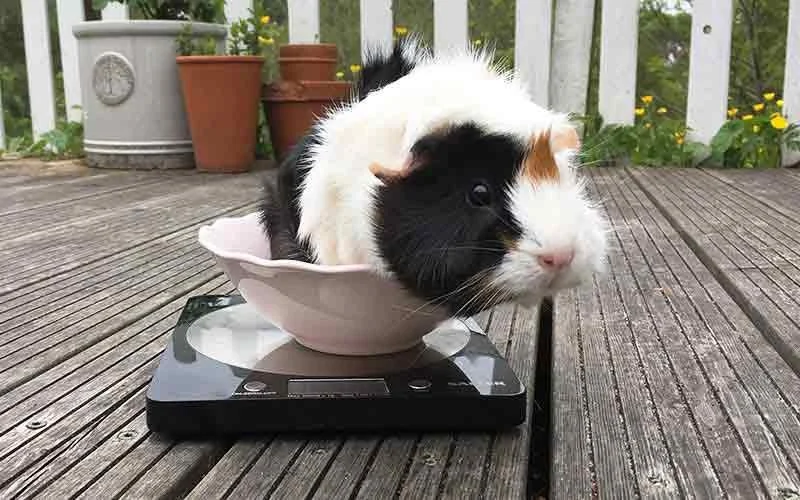
Weigh your guinea pig weekly or bi-weekly using a small pet scale. Keeping track of changes in weight can help you spot any early signs of weight gain or loss. If you notice a sudden increase or decrease in weight, consult a vet to rule out any underlying health issues.
Body Condition Score
In addition to weighing your guinea pig, assess their body condition score (BCS). A healthy guinea pig should have a firm, round belly, with a visible but not excessive amount of fat on the sides. You should be able to feel their ribs without pressing too hard, and their backbones should not be prominent.
5. Meeting Your Guinea Pig's Nutritional Needs
Guinea pigs require specific nutrients, including Vitamin C, which they cannot produce on their own. A deficiency in Vitamin C can lead to serious health issues, including scurvy. Provide them with fresh vegetables like kale, spinach, and bell peppers, or offer a good-quality Vitamin C supplement designed for guinea pigs.
6. Portion Control: Key to Preventing Overweight Guinea Pigs
Portion control is essential in preventing your guinea pig from becoming overweight. Guinea pigs should be given measured amounts of food to ensure they are eating the right amount without overindulging. Avoid free-feeding pellets and provide them with a controlled portion of veggies to keep their calorie intake in check.
7. The Role of Exercise and Play in Weight Management
Encouraging Active Play
Exercise is key to helping your guinea pig maintain a healthy weight. Provide a spacious cage and encourage them to move around with toys, tunnels, and ramps. Regular exercise not only helps with weight management but also reduces stress and keeps them mentally stimulated.
Outdoor Playtime
If you have the space, consider allowing your guinea pig to play outside in a safe, enclosed area. This allows them to explore, graze on fresh grass, and get some natural exercise. However, always supervise outdoor play to prevent accidents or escape.
8. How to Avoid Obesity in Guinea Pigs
Obesity is a serious health risk for guinea pigs and can lead to conditions such as diabetes, heart disease, and joint problems. To avoid obesity, ensure they are not consuming too many high-calorie treats or fatty foods. Additionally, encourage regular exercise and limit their access to sugary fruits and fatty pellets.
9. What to Do if Your Guinea Pig Becomes Overweight
Adjust Diet and Exercise
If you suspect your guinea pig is overweight, start by adjusting their diet. Cut back on high-calorie foods, such as pellets and fruits, and increase the amount of hay and fresh vegetables. Ensure they are getting plenty of exercise through toys and free-range playtime.
Consult a Veterinarian
If your guinea pig’s weight continues to be a concern, consult a vet. A professional can help you devise a tailored weight management plan and check for any underlying health issues that may be contributing to the weight gain.
10. Common Weight-Related Health Issues in Guinea Pigs
Overweight guinea pigs are at risk for several health problems, including:
- Diabetes: Excess weight can lead to insulin resistance.
- Arthritis: Carrying extra weight can strain their joints.
- Respiratory Issues: Obesity can make it harder for guinea pigs to breathe.
By managing their weight carefully, you can help prevent these issues and ensure your guinea pig lives a long, healthy life.
At RegPets, we offer a variety of products to help with your guinea pig’s weight management, including healthy snacks, high-fiber hay, and exercise toys. Visit us for more information on how to support your guinea pig’s health!

 Vets4Pets - Newcastle4.0 (449 reviews)
 Chine House Veterinary Hospital4.0 (830 reviews)
 MD Aquatics4.0 (110 reviews)
 The Town Vets4.0 (370 reviews)
 Gordon Lochrie B.V.M.S M.R.C.V.S3.0 (127 reviews)
 Maidenhead Aquatics Chesterfield4.0 (298 reviews)
 Top 10 Puppy and Kitten Care Every Kitten Owner in the UK Should Know
 UK Pet Owner’s Guide to Preventive Care for Rabbits: Tips for a Healthy Pet
 The Importance of Parasite Prevention for Rabbits – UK Edition
 What Every UK Pet Owner Should Know About Parasite Control
 Preventive Care Explained: Keeping Your Exotic Pets Healthy in the UK
 Flea and Tick Prevention for Pets in the UK: Essential Guide