
- 1-Understanding Puppy Behaviour and Training Needs
- 2-Essential Elements for Effective Puppy Behaviour Training
- 3-The Power of Positive Reinforcement in Puppy Training
- 4-Common Behaviour Issues and How to Correct Them
- 5-Creating a Consistent Puppy Training Routine
- 6-Where to Find Puppy Training Resources and Support
1-Understanding Puppy Behaviour and Training Needs
Bringing a puppy into your home is an exciting experience, but it also comes with the responsibility of shaping its behaviour from the beginning. Understanding your puppy's natural instincts and temperament is crucial when embarking on behaviour training. Puppies, like human babies, are learning to navigate the world around them. They are naturally curious, energetic, and often playful, which can sometimes lead to misbehaviour if not properly guided.
Training your puppy not only helps address behaviour issues but also strengthens your bond with them. It's important to remember that a well-trained puppy is not just a well-behaved dog but also a happier and more confident one. By creating an environment that encourages positive behaviour, you'll see noticeable improvements in your puppy's actions over time.

2-Essential Elements for Effective Puppy Behaviour Training
Effective puppy behaviour training at home involves more than just teaching commands. It requires patience, consistency, and a clear understanding of the essential elements that make training successful:
- Patience and Consistency: Puppies are not born with an understanding of human rules. Training takes time, and consistency is key. It’s important to be patient with your puppy and avoid expecting perfection too soon.
- Clear Communication: Use simple and consistent commands that your puppy can easily understand. Repetition is crucial to help them grasp the connection between the command and the action.
- Proper Socialisation: Expose your puppy to different people, animals, and environments early on. Socialisation helps reduce anxiety and fear, making your puppy more adaptable and well-behaved in various situations.
- Appropriate Timing: Puppies respond best when training is done at the right time. Immediate reinforcement of good behaviour helps your puppy connect the action with the reward, making learning more effective.
3-The Power of Positive Reinforcement in Puppy Training
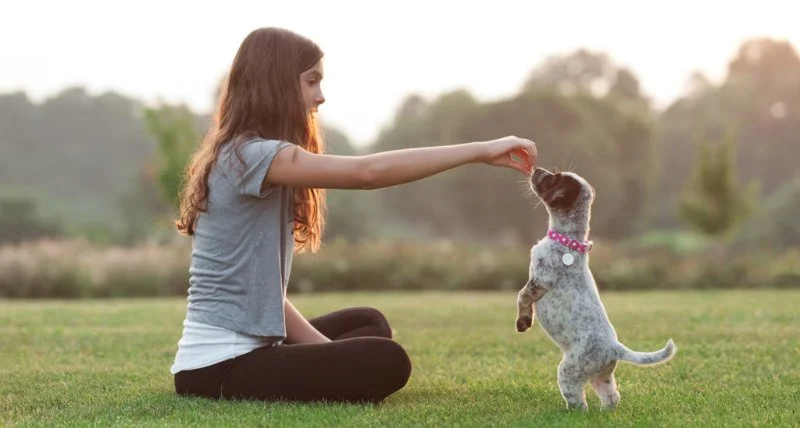
One of the most effective ways to improve your puppy’s behaviour is through positive reinforcement. This training method involves rewarding your puppy when they exhibit good behaviour. By doing so, you encourage them to repeat these actions in the future.
Positive reinforcement can take many forms, including:
- Treats: Offering your puppy a small treat immediately after they perform a desired action is one of the most common forms of reinforcement.
- Affection and Praise: Simple verbal praise like "Good boy!" or "Well done!" along with petting or a belly rub can also serve as rewards.
- Playtime: If your puppy enjoys playing with a specific toy or engaging in a fun activity, offering this as a reward can motivate them to behave well.
The key to successful positive reinforcement is timing. Make sure to reward your puppy immediately after they display the desired behaviour so they can make the connection between the action and the reward. This approach is highly effective in building good habits and a positive relationship with your puppy.

4-Common Behaviour Issues and How to Correct Them
Puppies, like children, go through phases where they exhibit challenging behaviours. Understanding these issues and knowing how to correct them is an important part of training. Here are a few common behaviour problems and how to address them:
- Chewing: Puppies explore the world with their mouths, so chewing is a natural behaviour. However, it can become destructive if left unchecked. Provide chew toys and redirect your puppy’s attention to them when they start chewing on furniture or shoes.
- Jumping Up: Jumping up on people is a common puppy behaviour, but it can be overwhelming, especially as your dog grows. Teach your puppy to sit or stay when greeting people, and reward them for keeping their paws on the ground.
- Barking: Excessive barking can be a sign of boredom or anxiety. Address this by providing enough exercise and mental stimulation, and teach the "quiet" command to stop barking on cue.
- Potty Training: Housebreaking a puppy can be challenging, but it’s important to be consistent with potty breaks and praise your puppy when they go outside. Crate training is also a helpful method for potty training, as puppies tend to avoid soiling their sleeping area.
By recognizing these common behaviours and responding appropriately, you can create a more harmonious living environment for both you and your puppy.
5-Creating a Consistent Puppy Training Routine
Consistency is crucial when training a puppy. A structured routine helps your puppy understand expectations and feel secure in their environment. Here’s how to create an effective training schedule:
- Short Sessions: Keep training sessions short—around 5 to 10 minutes. Puppies have short attention spans, and longer sessions can lead to frustration.
- Regular Timing: Train your puppy at the same times each day, so they know when to expect training. Early morning or after a walk are good times to practice basic commands.
- Incorporate Play: Use playtime as part of the training process. Play allows your puppy to burn off excess energy and provides an opportunity to reinforce commands in a fun and interactive way.
- Socialisation Activities: Include socialisation activities in your daily routine, such as meeting new people or introducing your puppy to other dogs. This will help with their behavioural development.
By incorporating a structured, consistent routine, you will help your puppy become more focused and better behaved.
6-Where to Find Puppy Training Resources and Support
If you're struggling with your puppy's behaviour or need more training ideas, there are plenty of resources available to help. Consider the following options:
- Online Training Courses: There are many reputable online platforms offering puppy training courses, including video tutorials, expert advice, and community support.
- Local Training Classes: Many pet stores, vets, and animal shelters offer group or private puppy training classes in your area.
- Books and Guides: Numerous books provide in-depth training techniques and behaviour management advice for new puppy owners.
- Professional Trainers: If you're facing significant behaviour challenges, consider consulting a professional dog trainer who can offer tailored guidance for your puppy.
For more training tools, products, and professional services, visit RegPets to find the best resources for your puppy’s training needs.






 The Park Vet Group in East Leicestershire4.0 (375 reviews)
 Bark to basics Ltd4.0 (15 reviews)
 Total Pet5.0 (3 reviews)
 Quarrydale Lodge Cattery0.0 (0 reviews)
 Discount Pet Warehouse ltd4.0 (320 reviews)
 Tropical Supplies Limited4.0 (487 reviews)
 Vet-Approved Dental Care for Senior Pets
 Dealing with Anxiety and Stress in Pets: Vet Advice for UK Pet Owners
 Top 10 Weight Management Tips Every Dog Owner in the UK Should Know
 Health Checkup Tips for Cats: What UK Pet Owners Need to Know
 Complete Guide to Nutrition Tips for Hamsters
 Common Illnesses Explained: Keeping Your Cats Healthy in the UK