
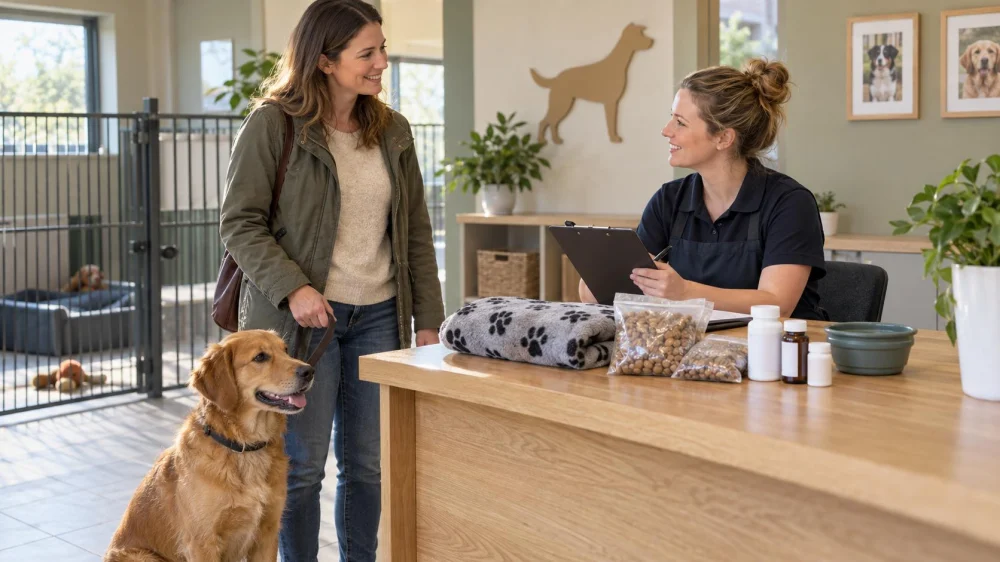
UK Pet Boarding Handover: Records, Medicines, and Routine
On this page
- Quick answer
- Check the provider before booking
- Ask how care and emergencies are handled
- Build a one-page care sheet
- Hand over medicines without ambiguity
- Use a trial and pack familiar items carefully
- Document check-in and return
- Know when boarding may need to change
- Frequently asked questions
- Sources and evidence notes
- Conclusion and next steps
Quick answer
Before a UK pet boarding stay, confirm the provider’s licence or registration where applicable, vaccination and parasite requirements, insurance, supervision, emergency vet arrangements, and medicine policy. Give a written care sheet with feeding, toileting, behaviour, triggers, mobility, and contact details. Supply medicines in original labelled packaging, follow the vet’s instructions, and agree how illness, injury, refusal to eat, escape, or service disruption will be reported.

Just For Pets Nuneaton
8 Horeston Grange Shopping Centre, Camborne Dr, Nuneaton CV11 6GU, UK
Check the provider before booking
A boarding handover transfers day-to-day responsibility for an animal to a kennel, cattery, home boarder, sitter, or other provider for a defined period. The setting must match the pet's species, health, behaviour, and welfare needs.
This guide is for UK pet owners. Licensing, registration, inspection, vaccination, and insurance requirements differ across England, Scotland, Wales, Northern Ireland, local authorities, and service types. Verify current rules with the relevant authority and provider.

Ask how care and emergencies are handled
- Who supervises animals overnight and during staff changes?
- How are pets separated by species, size, household, temperament, and feeding needs?
- Which vaccinations, parasite control, tests, and documents are required?
- Which veterinary practice provides routine and out-of-hours care?
- Who can authorise treatment, and how are costs handled if you cannot be reached?
- What are the fire, escape, heating, cooling, power, water, and evacuation plans?
- How and when will the provider send updates or report concerns?
Build a one-page care sheet
- List the pet's name, species, breed or type, age, sex, microchip number, and current photo.
- Add owner, backup contact, usual vet, insurer, and travel details.
- Write exact food, portions, times, treats, allergies, and feeding separation.
- Describe toileting, sleep, exercise, grooming, and rest routine.
- Note handling preferences, fears, bite or escape risks, guarding, reactivity, and social limits.
- Explain normal behaviour so staff can recognise a meaningful change.
Hand over medicines without ambiguity
Confirm before booking that the provider can accept and administer each medicine. Supply it in the original dispensed container with the veterinary label, enough quantity plus an agreed contingency amount, and written timing and administration instructions. Include storage needs and what to do after a missed, refused, spilled, or vomited dose.
Do not combine different medicines in an unlabelled organiser or change the dose for convenience. Ask the vet and provider to resolve unclear or complex instructions before check-in.
Use a trial and pack familiar items carefully
For a pet that has not boarded before, consider an introductory visit or short trial when the provider and pet's health support it. Observe how staff gather information and whether the environment matches the description.
Label food, lead, harness, carrier, bedding, and approved comfort items. Avoid irreplaceable objects and confirm what can be washed or discarded. Do not send toys, chews, or bedding the provider considers unsafe for unsupervised use.
Document check-in and return
- Review the care sheet aloud and correct last-minute changes.
- Count medicines and portions with staff.
- Record current appetite, stool, mobility, skin, injuries, and recent symptoms.
- Confirm collection identity, time, fees, and late-return arrangements.
- At pickup, ask about food, water, toileting, sleep, behaviour, medicine doses, incidents, and veterinary contact.
- Check the pet and belongings before leaving, then monitor the return to normal routine.
Know when boarding may need to change
Tell the provider and vet promptly about vomiting, diarrhoea, coughing, breathing changes, fever, wounds, parasites, contagious exposure, pain, appetite loss, or medication changes before arrival. A pet who is unwell, recently operated on, highly distressed, or medically complex may need veterinary boarding, home care, postponement, or another arrangement.
Seek urgent veterinary help for breathing difficulty, collapse, seizures, severe bleeding, suspected poisoning, major trauma, or another emergency rather than proceeding with routine check-in.
Frequently asked questions
Can boarding staff give prescription medicines?
Provider policy, staff competence, licence conditions, medicine type, and veterinary instructions all matter. Confirm in writing before booking.
Should I change my pet's food before boarding?
A sudden change can cause digestive upset. Ask the provider whether to supply the usual food and discuss any medically required diet with the vet.
What if my return is delayed?
Contact the provider as soon as possible and confirm continued care, food, medicine, emergency authorisation, collection, and fees in writing.
Sources and evidence notes
This article uses general animal-welfare, medicine-handover, and continuity-of-care principles. Current licensing and inspection rules, provider policies, veterinary instructions, insurer terms, microchip records, and official UK or local authority guidance govern a specific boarding arrangement.
Conclusion and next steps
Visit or interview the provider, verify current requirements, and prepare the care sheet before packing. Resolve medicine questions with the vet and count supplies at handover. At collection, obtain a factual report and monitor the pet. A good boarding plan makes normal routine, warning signs, authority, and communication clear before separation begins.




 Just For Pets Nuneaton4.0 (180 reviews)
 Meadowview Chickens4.0 (100 reviews)
 Mutt & Moggy5.0 (8 reviews)
 Pets at Home Hinckley4.0 (711 reviews)
 The Pet Store4.0 (46 reviews)
 Abbeywood Pet Foods5.0 (64 reviews)
 Pet Vaccination Records: Build a Clear UK Vet Timeline
 UK Pet Boarding Handover: Records, Medicines, and Routine
 Pet Vet-Visit Transport: Carrier, Car, and Arrival Plan
 Pet Mobility Changes: What to Record for Your UK Vet
 Pet Insurance Claim Pack: Records, Receipts, and Deadlines
 Pet Emergency Contact Sheet: Build It Before You Need It