
Pet Vaccination Reviews: Questions for Your UK Vet
On this page
- Quick answer
- What a vaccination review does
- Records and history to bring
- Questions for the veterinary team
- Missed or unknown vaccination history
- Monitor after vaccination
- Vaccination-review checklist
- Limitations and urgent reactions
- Sources and evidence notes
- Frequently asked questions
- Conclusion and next steps
Quick answer
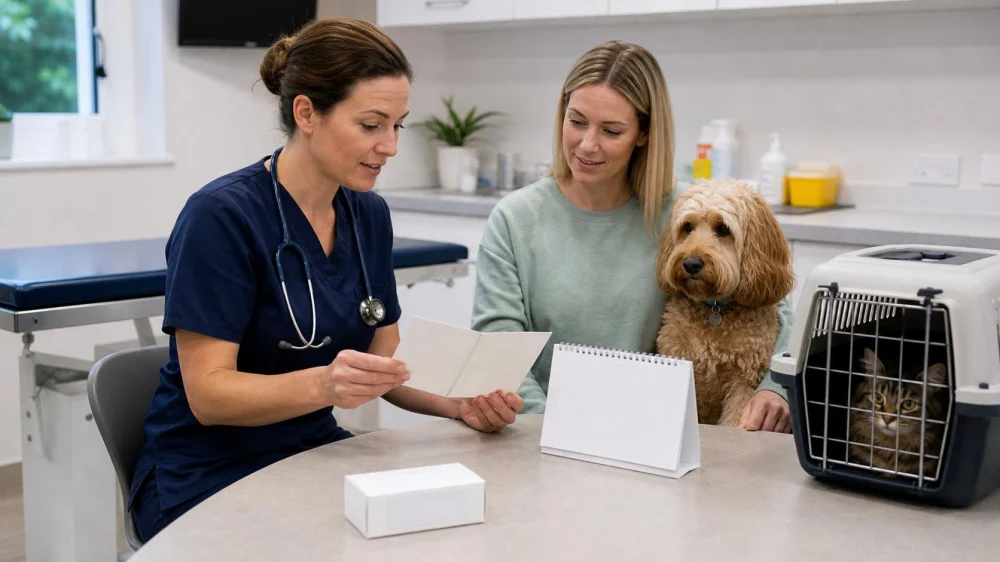
At a UK pet vaccination review, bring the full vaccine record and ask which diseases matter for this animal's species, age, health, location, lifestyle, travel, and boarding plans. Confirm the exact vaccine, schedule, evidence for timing, expected effects, important risks, and what happens if a dose is late. Do not repeat or skip a vaccine based only on memory or a reminder message.
A vaccination review is a veterinary assessment of an individual pet's disease exposure, previous doses, medical status, and current requirements. It may lead to vaccination, a later appointment, record verification, testing in selected situations, or a reason not to vaccinate that day.
What a vaccination review does
Vaccines are often discussed as core and non-core. Core recommendations address serious widespread disease risks for the species, while non-core choices depend more heavily on exposure. The categories and intervals are not a substitute for examining the animal and reviewing the specific product history.
Risk can change with age, pregnancy, immune disease, medicines, prior reactions, local outbreaks, boarding, daycare, shows, hunting, multi-pet homes, contact with wildlife, and international travel. A good review explains why a vaccine is recommended now and what changes would alter that recommendation.

Records and history to bring
- Vaccination card, veterinary record, rescue documents, breeder documents, and pet passport or health certificate where relevant.
- Vaccine names, batch details when available, dates, administering practice, and next-due information.
- Previous reactions, including timing, signs, treatment, and the product involved.
- Current medicines, supplements, allergies, chronic conditions, pregnancy status, and recent illness.
- Home and outdoor lifestyle, household animals, boarding, daycare, shows, work, and wildlife contact.
- Planned UK or international travel with destination and dates.
- Rules supplied by a boarding facility, insurer, employer, event, or transport provider.
Ask the previous practice to transfer the clinical record when documentation is incomplete. A handwritten reminder without product details may not answer every question.
Questions for the veterinary team
- Which disease risks are relevant to this pet, and why?
- Which vaccines are core for this situation and which are lifestyle-based?
- What exact product will be used, and what does its current data sheet say?
- Does the previous history establish a valid course, or is information missing?
- Do age, illness, medication, pregnancy, or a prior reaction change today's plan?
- What common short-term effects may occur, and what signs are urgent?
- How does timing interact with boarding, travel documents, or entry rules?
- When will the next review occur, and is that different from the next injection date?
- What alternatives or deferral options exist if vaccination is not appropriate today?
Ask the vet to document the discussion and update the record immediately. A verbal statement may not satisfy a boarding facility or travel authority.
Missed or unknown vaccination history
Do not automatically restart, double-dose, or continue as though nothing changed. The veterinary team will consider the disease, product, previous course, length of delay, age, health, and required evidence. Different vaccines can have different catch-up instructions.
For a rescued or rehomed animal with unknown history, try to obtain records but do not delay veterinary registration or a health assessment. The vet can create a plan under uncertainty and explain any testing or waiting period.
Travel and boarding deadlines deserve early planning. Some requirements include a specific sequence, minimum age, waiting period, authorised documentation, or treatment window. Use current official rules and allow time for changes.
Monitor after vaccination
Follow the veterinary team's instructions for activity, feeding, bathing, and other medicines. Mild temporary tiredness, reduced appetite, or tenderness may be discussed as expected for a specific product, but the vet should state what duration and severity are acceptable.
Observe breathing, facial swelling, skin, vomiting, diarrhoea, coordination, responsiveness, and the injection site. Keep the practice and out-of-hours number ready. Record when a sign began and photograph swelling if it can be done without delaying care.
Do not give human antihistamines, painkillers, steroids, or another pet's medicine unless a veterinarian gives case-specific instructions. Product reactions should be reported through the veterinary team and the appropriate UK reporting route.
Vaccination-review checklist
- Complete records or a transfer request are available.
- Species, age, health, medication, pregnancy, and reaction history are reviewed.
- Home, outdoor, boarding, work, wildlife, and travel exposures are current.
- Each recommended vaccine is connected to a named risk.
- Product, timing, expected effects, risks, and alternatives are explained.
- Late or unknown doses are handled under product-specific veterinary guidance.
- Travel and boarding evidence requirements are verified from current sources.
- Aftercare, urgent signs, and out-of-hours contacts are ready.
Limitations and urgent reactions
Seek emergency veterinary help for breathing difficulty, collapse, severe weakness, repeated vomiting, rapidly increasing facial swelling, widespread hives, seizures, or loss of responsiveness after vaccination. Do not wait for a routine callback when breathing or circulation may be affected.
Contact the practice promptly for persistent fever, marked lethargy, worsening pain, a large or growing injection-site swelling, ongoing vomiting or diarrhoea, or any sign the team asked you to report. Bring the vaccine record and the timing of symptoms.
This guide cannot set an individual schedule or decide whether a vaccine is safe today. Vaccine products, disease patterns, travel rules, boarding policies, and veterinary guidance can change.
Sources and evidence notes
The guidance reflects broad vaccination practice: assess individual disease exposure, verify product history, account for health and previous reactions, follow product-specific timing, and monitor for adverse effects. It does not imply that every pet needs every vaccine at the same interval.
Use the pet's veterinary surgeon, full clinical record, current vaccine data sheet, recognised UK veterinary guidance, the Veterinary Medicines Directorate, and official government travel rules as primary sources. Private boarding requirements should be verified directly.
Frequently asked questions
Does an indoor pet still need vaccines?
Indoor living changes exposure but may not remove it. Species, household animals, visitors, travel, escape risk, and local disease all matter. Ask the vet for an individual risk explanation.
Is a yearly checkup the same as yearly vaccination?
No. A health review and a vaccine dose are separate decisions. Some products and risks use different intervals, while regular examinations can still be valuable.
Can a blood test replace vaccination?
Antibody testing may inform selected decisions for selected diseases, but it does not answer every immunity or legal requirement. Ask what the test can and cannot establish.
What if my pet had a previous reaction?
Tell the practice before the appointment and provide the product, timing, and symptoms. The vet may alter product, timing, monitoring, pre-treatment, or whether vaccination proceeds.
Can the same visit include several vaccines?
Sometimes, depending on authorised products and the pet's circumstances. Ask how combined administration affects expected effects, records, and reaction monitoring.
Conclusion and next steps
Request the complete vaccination record, list upcoming boarding and travel dates, and bring prior reaction details to the checkup. Ask the vet to connect each recommendation to a disease risk and a specific product schedule. Leave with an updated written record and a clear aftercare plan.
 Parklands Veterinary Group, Portglenone5.0 (5 reviews)
 Wilson Veterinary Group, Spennymoor4.0 (166 reviews)
 Victoria cattery5.0 (2 reviews)
 Pets at Home Hinckley4.0 (711 reviews)
 Horizon Aquatics4.0 (258 reviews)
 Paw Prints4.0 (345 reviews)
 How to Improve Hamsters' Seasonal Health: Tips for Caring at Home
 Rabbit Skin and Coat Care: Essential Tips for UK Owners
 How to Improve Guinea Pig Behaviour Training at Home: A Complete Guide
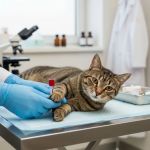 What Are the Benefits of FIV Testing for Cats? UK Feline Immunodeficiency Guide
 Travel Safety Explained: Keeping Your Cats Healthy in the UK
 How to Improve Senior Pets Seasonal Health Tips at Home