
Pet Poisoning in the UK: Call Your Vet Before First Aid
On this page
Quick answer
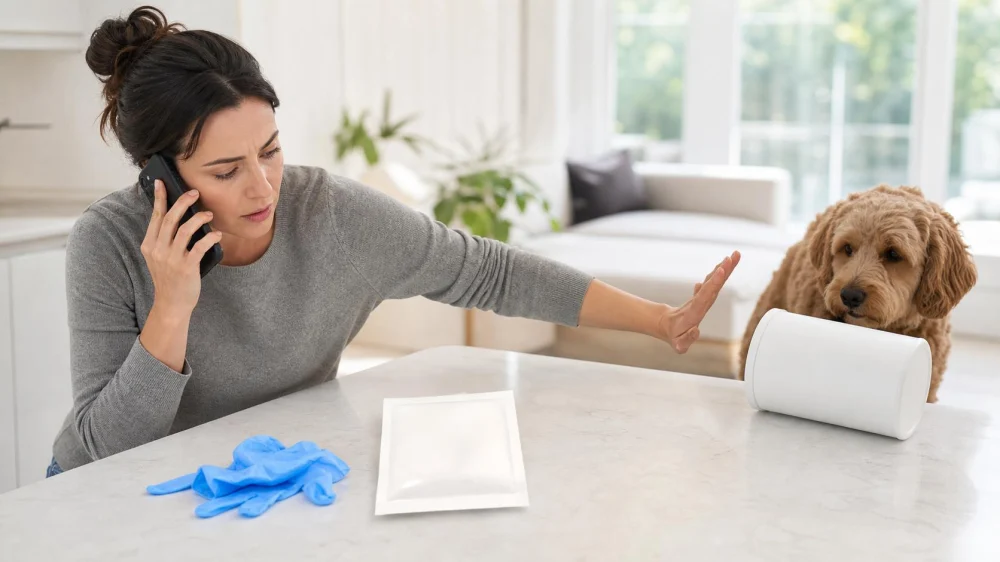
If your pet may have swallowed, inhaled, licked, or touched something harmful, phone your veterinary practice immediately and do not wait for symptoms. Outside normal hours, use the practice’s emergency number. Keep the pet away from the substance, protect yourself from exposure, and bring the package, plant sample, photo, or product details when safe.
Never try to make a pet vomit unless a veterinary professional specifically instructs you. Do not give salt, hydrogen peroxide, milk, oil, food, charcoal, or human medicines. The correct response depends on the animal, toxin, dose, time, symptoms, and risk that vomiting could cause burns or aspiration.

Emergency warning signs
Go to an emergency vet as directed, and call while travelling, for:
- difficulty breathing, blue or pale gums, collapse, or loss of consciousness;
- seizure, severe tremors, marked agitation, confusion, or inability to walk;
- repeated vomiting, blood, severe diarrhoea, or a swollen painful abdomen;
- drooling with mouth burns, difficulty swallowing, or pawing at the mouth;
- sudden weakness, abnormal heart rate, or rapidly worsening behaviour;
- known exposure to a highly toxic medicine, chemical, food, plant, pesticide, or antifreeze; or
- a swallowed battery, sharp object, magnet, packet, toy, fabric, bone, or other possible obstruction.
Do not put your hands near the mouth of a fitting, confused, or painful animal. Keep the environment quiet and follow the emergency team’s transport advice.

Safe first steps
- Move the pet away from the source without exposing yourself.
- Call the vet and state that poisoning or harmful ingestion is suspected.
- Record the exposure time and the earliest symptom time.
- Collect the original package or take clear photos of all sides.
- Estimate the amount missing without delaying departure.
- Follow only the instructions given for this exact exposure.
Use gloves for chemicals, plants, vomit, or contaminated fur. Ventilate the area after inhaled fumes only when it is safe. Keep other pets and children away. Do not enter a dangerous chemical environment to rescue an animal; call emergency services.
What not to do
PDSA explicitly advises never trying to make a dog vomit unless the vet directs it. Some substances burn again on the way up; some objects can tear tissue; and an animal with reduced alertness may inhale vomit. Home methods can create additional poisoning.
Do not search social media for a dose or wait for an online reply. Do not assume a human-safe food, medicine, cleaning product, essential oil, or garden product is safe for another species. Cats, dogs, rabbits, birds, and small mammals process substances differently.
Do not throw away vomit, packaging, tablets, bait, plant material, or chewed objects until the vet advises. Keep samples sealed and away from people and animals.
Information the vet needs
- species, breed, age, weight, sex, and pregnancy status;
- product name, active ingredients, strength, and manufacturer;
- plant or mushroom photo and where it was found;
- possible amount and maximum amount available;
- time of exposure and whether it was swallowed, inhaled, or on skin;
- current symptoms and when they began;
- medical conditions, medicines, and recent treatments; and
- anything already given or done at home.
Be honest about uncertainty. The maximum possible dose may be more useful than a confident guess. If several pets had access, tell the vet about each one.
Different routes of exposure
For a product on fur or skin, prevent licking and ask the vet how to decontaminate. Water can react with some chemicals, so do not automatically bathe. Remove a contaminated collar or bedding only if safe and place it in a sealed container.
For eye exposure, call immediately. The vet may direct gentle flushing, but product-specific instructions matter. Do not apply drops or ointment unless advised.
For inhaled fumes, move to fresh air without entering danger and seek veterinary advice. Breathing problems need emergency care. For bites or stings, photograph the animal or insect only from a safe distance and do not attempt risky capture.
Prevent repeat exposure
Store human and veterinary medicines in closed cupboards and never leave tablets in handbags within reach. Keep cleaning products, nicotine, cannabis, antifreeze, pesticides, rodenticides, fertiliser, and garden chemicals locked away.
Check foods before sharing: chocolate, grapes and raisins, onions and garlic, xylitol-containing products, alcohol, caffeine, and other items can harm pets. Species risks differ, so use vet-approved food.
Identify plants before bringing them home and prevent access to compost, mushrooms, bins, garages, sheds, and visitors’ medication. Keep the vet and out-of-hours numbers saved in every caregiver’s phone.
Poisoning call checklist
- Remove access and protect yourself.
- Call the vet immediately; do not wait for symptoms.
- Do not induce vomiting or give a home remedy.
- Bring packaging, photos, samples, and timing.
- Report the maximum possible amount.
- Transport in a secure carrier as instructed.
- Prevent other pets from reaching the source.
Frequently asked questions
My pet looks normal. Can I watch and wait?
No. Some effects are delayed and early treatment may matter. Call the vet immediately.
Should I make my pet sick?
No, not unless a veterinary professional specifically directs it for this exposure.
Can I call a human poison service?
Use your vet or a UK animal poison service because animal risks and treatment differ.
What if I do not know how much was eaten?
Report the amount originally present and what remains so the vet can estimate a maximum.
Can I give activated charcoal?
Only under veterinary direction. It is not suitable for every toxin and can be dangerous if inhaled.
Should I bring the product?
Yes when safe. Keep it sealed and bring the label or clear photos.
Sources and evidence notes
PDSA advises contacting a vet immediately when a dog may have eaten something harmful and never making the dog vomit unless a vet specifically directs it. See PDSA harmful-ingestion guidance.
Blue Cross advises calling a vet immediately after suspected poisoning and taking a sample or photo plus timing and symptom information. See Blue Cross cat poisoning guidance. Individual veterinary instructions take priority.
Conclusion and next steps
Suspected poisoning is a call-now problem even before symptoms appear. Remove access safely, preserve product information, and contact your UK vet or out-of-hours service. Do not induce vomiting or give a home antidote. Follow transport and decontamination instructions for the exact animal and exposure.

 Bay Vets4.0 (61 reviews)
 Calder Vets in Waterloo4.0 (52 reviews)
 Vets Now Preston4.0 (431 reviews)
 Companions Petcare5.0 (2 reviews)
 Tower Equine4.0 (66 reviews)
 Oakhill Veterinary Centre4.0 (199 reviews)
 Vet-Approved Skin and Coat Care for Cats: Expert Tips for Healthy Felines
 Vaccination Guide Tips for Hamsters: What UK Pet Owners Need to Know
 Top 10 Common Illnesses Every Fish Owner in the UK Should Know
 Expert Vet Advice on Travel Safety for Exotic Pets in the UK
 UK Pet Owner’s Guide to Health Checkups for Hamsters: Essential Tips for Keeping Your Pet Healthy
 Expert Vet Advice on Travel Safety for Senior Pets in the UK