
Pet Microchip Details: Check and Update UK Records
On this page
Quick answer
Keep your dog or cat’s UK microchip record current so an authorised finder can contact you. Confirm the chip number, approved database, owner name, phone, email, address, and backup contact after moving, changing numbers, or transferring ownership. A microchip is not GPS; it must be scanned and matched to an accurate database record, so keep a collar tag and lost-pet plan too.

Just For Pets Nuneaton
8 Horeston Grange Shopping Centre, Camborne Dr, Nuneaton CV11 6GU, UK
Know the rules
UK dog and cat rules vary by nation. Dogs throughout the UK generally must be microchipped and registered by eight weeks. Cats in England must be microchipped and registered by 20 weeks, including indoor cats; different cat rules apply in Scotland, Wales, and Northern Ireland.
Owners are responsible for keeping required details up to date and may face enforcement or a fine when legal requirements are not met. Check current government guidance for your nation and circumstances.

Find the record
Locate the microchip certificate, vet record, pet passport, insurance papers, or adoption documents. If you know the chip number but not the database, use the government-linked database checker. If you do not know the number, ask a vet, dog warden, or rescue centre to scan the pet.
Do not assume the practice that implanted the chip controls the database. Registration and updates are usually handled by the database company.
Update key details
- Owner's current name and postal address
- Primary mobile number and email
- A reliable secondary contact
- Pet's current name, species, sex, and identifying details
- Ownership transfer information
- Lost, stolen, found, or deceased status when applicable
Follow the database's identity checks and save confirmation. Fees may apply. Be cautious of lookalike websites or unsolicited payment messages; start from GOV.UK or the database information already in verified records.
Ask for a scan check
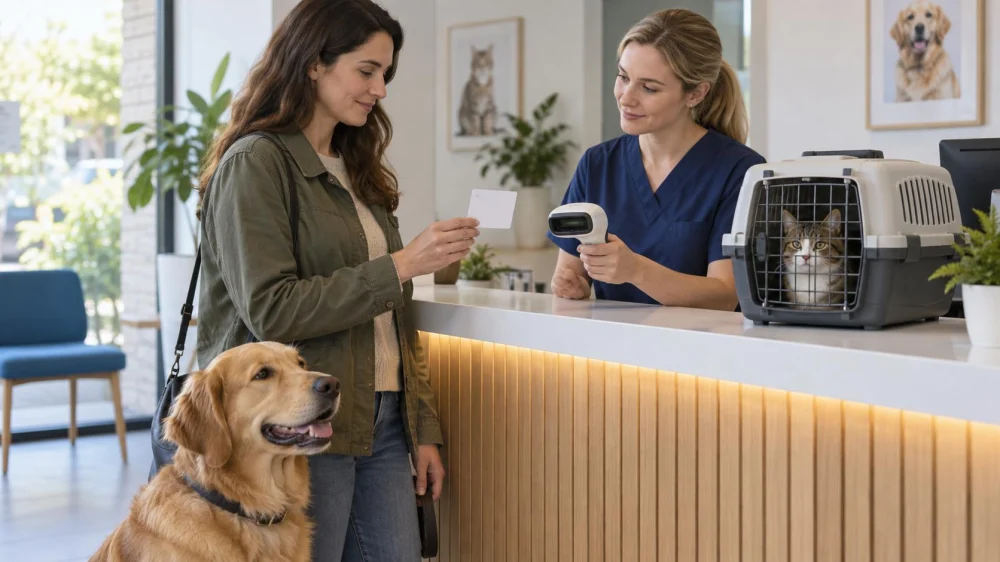
At a routine veterinary appointment, ask whether a quick scan check is appropriate to confirm the chip can be read and the number matches your record. Scanning does not itself prove the online details are current; log in or contact the database separately.
If the chip cannot be detected or has migrated, the vet can advise on further scanning, records, and whether another implant is needed. Do not assume an undetected chip is simply absent after one hurried scan.
Buying or rehoming
Before acquiring a dog or cat, ask for proof of microchipping and confirm the transfer process. The previous keeper and new keeper may each have steps to complete. Check the animal's identity against the record and update details promptly rather than waiting for the next vet visit.
A seller's certificate or screenshot should be verified through the appropriate database process. Keep adoption, purchase, and transfer documents.
Protect personal data
Use strong, unique passwords for database accounts and do not post the full chip number or home address publicly. Give finders the official lost-pet or database route rather than publishing sensitive details. If a pet is missing, notify the database, local wardens, vets, and rescues and follow police guidance for suspected theft.
Frequently asked questions
Does a chip track my pet's location?
No. It stores an identification number that must be scanned and checked against a database.
Do indoor cats need a chip?
In England, the rule includes cats that usually stay indoors; check the rules for other UK nations.
What if I have several database accounts?
Verify the number through the recognised lookup route and contact the correct database; avoid creating duplicate records blindly.
Does a collar tag still matter?
Yes. A visible tag can speed contact and may be legally required for dogs in public in addition to microchipping.
Sources and notes
GOV.UK explains current requirements to microchip dogs and cats, find the registered database, prove a chip was fitted, and keep owner details updated. Rules differ by animal and UK nation, so confirm the page for changes.
Next steps
Find the chip number and database, verify every contact field, save confirmation, and ask for a scan check at an appropriate vet visit. Update the record immediately after a move, phone change, ownership transfer, or lost-pet event.




 Just For Pets Nuneaton4.0 (180 reviews)
 Meadowview Chickens4.0 (100 reviews)
 Mutt & Moggy5.0 (8 reviews)
 Pets at Home Hinckley4.0 (711 reviews)
 The Pet Store4.0 (46 reviews)
 Abbeywood Pet Foods5.0 (64 reviews)
 Pet Microchip Details: Check and Update UK Records
 Pet Medicine Refill: Plan Ahead With Your UK Vet
 Pet Vaccination Records: Build a Clear UK Vet Timeline
 UK Pet Boarding Handover: Records, Medicines, and Routine
 Pet Vet-Visit Transport: Carrier, Car, and Arrival Plan
 Pet Mobility Changes: What to Record for Your UK Vet