
Pet Not Eating: What UK Owners Should Record and Do
On this page
Quick answer
Call your veterinary practice when a pet’s eating habits suddenly change or it refuses all food. Seek urgent advice sooner for rabbits, young or elderly pets, cats, animals with diabetes or other illness, suspected poisoning, repeated vomiting, a swollen abdomen, breathing difficulty, collapse, severe pain, or inability to keep water down. Record exact intake and related symptoms without delaying care.
Why appetite change matters
Loss of appetite is a sign, not a diagnosis. Pain, dental disease, nausea, infection, stress, medication, gut obstruction, and organ or hormonal disease can reduce eating. A pet that accepts treats but refuses normal food still has a meaningful change.
PDSA advises contacting a vet when a dog’s eating habits change and seeing a vet quickly when a dog has eaten nothing for more than 24 hours. Individual urgency may be much shorter depending on species, age, health and other signs.

Emergency signs
Contact an emergency vet immediately for breathing difficulty, collapse, repeated unproductive retching, a suddenly swollen abdomen, severe weakness, seizures, uncontrolled bleeding, suspected toxin or foreign-body ingestion, severe pain, or repeated vomiting with inability to keep water down.
Also seek urgent help for pale or yellow gums, blood in vomit or stool, straining without passing urine, marked dehydration, or rapid deterioration. Call before travelling so the practice can prepare.
Species and age change urgency
Rabbits that stop eating or producing droppings require emergency veterinary advice; PDSA warns that gut stasis can develop quickly. Cats also need prompt attention because prolonged not eating can contribute to serious liver disease, particularly in overweight cats. Kittens, puppies, tiny animals, elderly pets and animals receiving insulin can deteriorate faster.
Do not apply a dog’s “wait and see” timeline to another species. Ask the practice to triage the specific pet.
Record food and water accurately
- Write the last confirmed normal meal and the last food eaten.
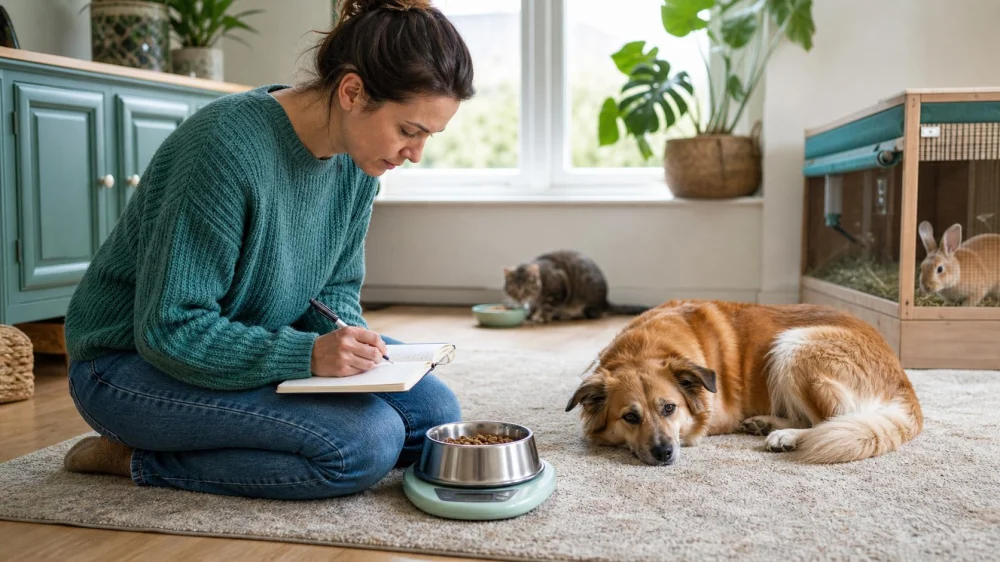
- Measure food offered and what remains; include treats and scavenged food.
- Separate pets at meals if safe so intake is attributable.
- Record drinking, vomiting, diarrhoea, urine and droppings.
- Note diet changes, new packets, medicines and possible access to rubbish or toxins.
- Take a current weight only if this can be done safely.
Observe related signs
- Approaches food then drops it, chews on one side, drools or paws at the mouth.
- Sniffs food and turns away, lip-licks, swallows repeatedly or vomits.
- Hides, sleeps more, seems restless or changes posture.
- Produces fewer droppings, strains, or has a painful abdomen.
- Loses weight, drinks more or less, or urinates differently.
A short video of attempted eating, breathing or movement can help, but do not stress the pet or delay departure to record it.
Safe actions while calling the vet
Keep fresh water available unless the vet gives different instructions. Offer the normal appropriate food in a quiet place and remove spoiled food. Do not force-feed, syringe water into an unwilling animal, give human medicine, or begin a home remedy without veterinary advice; these actions can cause aspiration, toxicity or delay.
For prescribed diets, diabetes, postoperative care or known disease, follow the treating practice’s plan and call about missed meals or doses before changing medication.
Vet-call checklist
- Species, breed, age, weight and existing conditions.
- Last normal meal and measured intake since.
- Water, urine, droppings, vomiting and diarrhoea.
- Behaviour, breathing, pain and abdominal change.
- Medicines, recent procedure and possible exposure.
- Photos, video and food packaging when relevant.
Important notes and limitations
This is general UK triage guidance and cannot diagnose an individual animal. Birds, reptiles, rabbits, rodents and other species have different metabolic and dietary risks. Contact the veterinary practice or its out-of-hours provider for a species-specific decision; emergency signs override any general timeline.
Evidence and sources
PDSA’s UK veterinary guidance recommends speaking to a vet about appetite change and treats a rabbit not eating or producing droppings as an emergency. Cats Protection advises calling a vet for sudden eating or drinking changes and highlights the risks of prolonged food refusal in cats.
- PDSA: Why Is My Pet Off Their Food?
- PDSA: My Dog Isn’t Eating Properly
- Cats Protection: Feeding Your Cat
Frequently asked questions
Can I wait 24 hours if my pet is not eating?
Not as a universal rule. Species, age, illness and other symptoms can make the situation urgent much sooner. Call the practice for triage.
What if my pet still eats treats?
Record it, but a clear change from the normal diet can still signal pain, nausea, dental disease or another problem.
Should I force-feed my pet?
No unless a vet has assessed the pet and provided a specific technique and amount. Force-feeding can be unsafe.
Is a rabbit not eating an emergency?
Yes. Contact a vet immediately, especially if droppings have stopped or reduced.
Should I skip insulin when my pet refuses food?
Call the prescribing veterinary practice urgently for case-specific instructions. Do not guess or independently change the dose.
Next steps
Measure what was actually eaten, note water and waste output, gather medication and food details, and call your veterinary practice. Use its out-of-hours service immediately for emergency signs or high-risk species and conditions.

 All About Enrichment5.0 (3 reviews)
 Capon Tree Veterinary Centre4.0 (61 reviews)
 Dudley's Natural Doggy Treats4.0 (15 reviews)
 Medivet Middleton St George4.0 (52 reviews)
 Gladwells Pet & Country Store5.0 (5 reviews)
 Grange Veterinary Surgery4.0 (206 reviews)
 UK Pet Owner’s Guide to Exercise and Fitness for Fish
 Vet-Approved Skin and Coat Care for Cats: Expert Tips for Healthy Felines
 The Importance of Parasite Prevention for Senior Pets in the UK
 The Importance of Behaviour Training for Puppies – UK Guide
 Puppy and Kitten Care Tips for Dogs: What UK Pet Owners Need to Know
 Expert Vet Advice on Travel Safety for Exotic Pets in the UK