
- Introduction to Cat First Aid
- Common Injuries and Emergencies in Cats
- First Aid Tips for Cats
- When to Seek Professional Help
- Real-Life Case Examples
- RegPets: Expert Care for Your Cat
Introduction to Cat First Aid
As a cat owner, it's essential to be prepared for any emergency, whether your cat gets injured or falls ill unexpectedly. Understanding first aid for cats can make a significant difference in handling these situations effectively until professional help is available. This guide will cover the basics of cat first aid, common injuries you may encounter, and important tips to keep your feline companion safe.

Why First Aid for Cats Is Important
Just like humans, cats can face accidents or health emergencies that require immediate care. A cat's natural instinct is to hide its pain or injury, so it can be challenging to detect issues early. Knowing how to respond promptly can prevent minor issues from becoming serious problems, potentially saving your cat’s life in critical situations.

Common Injuries and Emergencies in Cats
Cats are curious creatures, often exploring their environment, which increases the chances of them experiencing injuries or emergencies. Common injuries include:
1. Cuts and Scratches
Whether from fighting with other animals or sharp objects, cuts and scratches are frequent injuries in cats. While some may heal quickly, others can become infected if not cleaned and treated promptly.
2. Poisoning
Cats may ingest harmful substances such as toxic plants, household cleaners, or even human food. Poisoning is a serious emergency and requires quick intervention. Recognizing the signs of poisoning early can be crucial for effective treatment.
3. Burns and Scalds
Burns can occur when cats come into contact with hot surfaces, liquids, or chemicals. Immediate first aid can reduce the severity of the injury and prevent further damage to the skin and tissues.
4. Choking
Cats can occasionally choke on food, toys, or other objects. Knowing how to perform a cat Heimlich maneuver can help dislodge the obstruction and prevent suffocation.
First Aid Tips for Cats
When an emergency occurs, it’s important to stay calm and assess the situation. Here are some basic first aid tips to help you provide immediate care for your cat:
1. Handling Cuts and Scratches
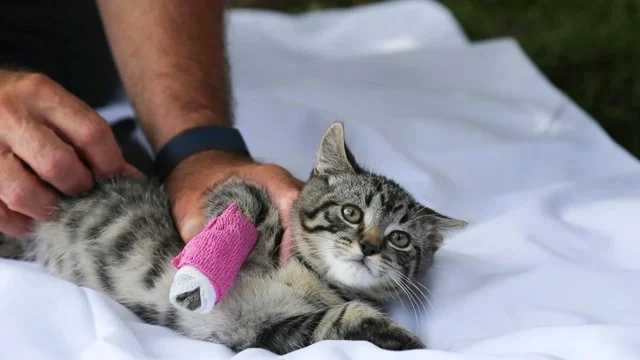
For minor cuts and scratches, clean the wound gently with warm water and a mild antiseptic. Apply a sterile bandage to prevent further contamination, and monitor for signs of infection such as redness, swelling, or discharge. If the wound is deep or bleeding heavily, contact your veterinarian for further care.
2. Dealing with Poisoning
If you suspect your cat has ingested a toxic substance, try to identify what it was and how much they consumed. Do not attempt to make your cat vomit unless instructed by a vet, as some substances can cause more harm when brought back up. Contact your vet or an emergency animal poison hotline immediately.
3. Treating Burns and Scalds
For minor burns, gently rinse the affected area with cool water (not cold) for several minutes. Do not apply ointments, creams, or ice to the burn, as these can cause further damage. Cover the area with a sterile, non-stick bandage and seek veterinary attention immediately for severe burns.
4. Addressing Choking
If your cat is choking, look for signs such as gagging, pawing at the mouth, or difficulty breathing. Try to open your cat’s mouth carefully to see if you can remove the obstruction. If it’s not easily removable, contact your vet immediately for guidance on performing a safe removal.
When to Seek Professional Help
While basic first aid can help in many situations, there are times when professional veterinary care is crucial. Always seek immediate help if:
1. The Injury Is Severe
If your cat is bleeding heavily, has broken bones, or is unresponsive, seek immediate veterinary attention. Serious injuries require professional care to prevent further harm.
2. Your Cat Is Having Trouble Breathing
Difficulty breathing is a serious sign of distress and can be caused by a variety of health issues. This requires urgent medical attention.
3. There Are Signs of Poisoning
If your cat has ingested something toxic or you suspect poisoning, time is critical. Call your vet immediately for guidance on how to handle the situation.
4. The Injury Does Not Improve
If your cat’s injury or condition doesn’t improve after basic first aid or continues to worsen, it’s time to see a vet. Delaying care can result in complications.
Real-Life Case Examples
Let’s look at a couple of real-life examples where quick first aid intervention helped save cats:
Case Study 1: Cat Ingesting a Toxic Plant
A cat named Mittens ingested a toxic plant while her owner was away. The owner returned home to find Mittens lethargic and vomiting. After contacting an emergency veterinary service, they learned about the plant and took Mittens in immediately. Thanks to the owner's quick action in contacting the vet, Mittens received prompt treatment and made a full recovery.
Case Study 2: Cat with Deep Cut
Oliver, a rescue cat, sustained a deep cut while playing outside. His owner quickly cleaned the wound and applied pressure to stop the bleeding before heading to the vet. Oliver received stitches and was able to heal without complications, demonstrating how fast intervention can prevent further harm.
RegPets: Expert Care for Your Cat
For more information on how to care for your cat in emergencies, check out RegPets. We provide expert advice on feline health and wellness, along with top-notch products and services to keep your cat safe and healthy. Visit our website for more information on first aid supplies and professional veterinary care.





 EW Equine Vets Ltd0.0 (0 reviews)
 Galemire Vets4.0 (262 reviews)
 Rutland Veterinary Centre4.0 (99 reviews)
 Pets at Home Preston Capitol4.0 (1116 reviews)
 CosyDogs4.0 (38 reviews)
 Calder Vets in Waterloo4.0 (52 reviews)
 The Importance of Skin and Coat Care for Senior Pets in the UK
 Top 10 Allergy Care Every Hamster Owner in the UK Should Know
 Essential Tips for Caring for Senior Pets: Best Practices for Pet Owners
 Vet-Approved Skin and Coat Care for Kittens
 UK Pet Owner’s Guide to Mental Health for Birds: Understanding and Supporting Your Pet’s Well-Being
 Essential Tips for Caring for Senior Pets: A Complete Guide for Pet Owners