
How to Tell If Your Dog Has a Foreign Body in Their Intestine: Obstruction Signs Every Owner Should Recognize
- Understanding Intestinal Foreign Bodies - What dogs accidentally swallow #foreign-body-basics
- Early Warning Signs of Obstruction - Subtle symptoms owners miss #early-signs
- Progressive Symptoms of Blockage - When the condition worsens #progression
- Emergency Red Flags - Signs requiring immediate vet care #emergency-signs
- Real Case Story - Dog intestinal blockage survival experience #real-case
- Common Objects Dogs Swallow - Everyday household risks #common-objects
- Diagnosis Methods Used by Veterinarians #diagnosis
- Treatment Options for Intestinal Blockage #treatment
- Recovery and Post-Treatment Care #recovery
- Prevention Strategies for Dog Owners #prevention
Understanding Intestinal Foreign Bodies - What Dogs Accidentally Swallow
Why dogs are naturally prone to swallowing dangerous objects
When learning how to tell if your dog has a foreign body in their intestine, the first step is understanding how it happens. Dogs explore the world using their mouths, and this natural behavior sometimes leads to accidental ingestion of non-food objects such as toys, socks, sticks, or even stones.
Once an object passes the stomach, it may become lodged in the intestines, leading to partial or complete blockage.
Yorkshire Equine Dentistry - Sam Norris BAEDT Qualified
Church FentonNorth YorkshireEngland
1 Rose Ln, Church Fenton, Tadcaster LS24 9QS, UK
Why intestinal blockage is a serious medical condition
A foreign object trapped in the intestine prevents food and fluids from moving normally through the digestive system. This can quickly lead to dehydration, tissue damage, and in severe cases, life-threatening complications if not treated promptly.

Early Warning Signs of Obstruction - Subtle Symptoms Owners Miss
The first behavioral changes you should never ignore
One of the earliest dog intestinal blockage signs is a change in appetite. A dog may suddenly refuse food or eat significantly less than usual. Mild lethargy and reduced interest in play are also common early indicators.
Some dogs may also appear uncomfortable, pacing or repeatedly lying down and getting back up.
Why early symptoms are often overlooked
These early signs are subtle and can easily be mistaken for minor stomach upset. However, when combined with other symptoms, they may indicate a developing intestinal obstruction.
Progressive Symptoms of Blockage - When the Condition Worsens
Vomiting as a major warning signal
As the obstruction worsens, vomiting becomes more frequent. In cases of foreign body in dog intestine symptoms, vomiting may occur shortly after eating or drinking, as the body attempts to expel the blockage.
The vomit may contain partially digested food or appear completely liquid depending on the severity of the obstruction.
Changes in bowel movements
Another key sign is a noticeable reduction in stool output. Some dogs may stop defecating entirely, while others may produce small, inconsistent stools.
Emergency Red Flags - Signs Requiring Immediate Vet Care
When intestinal blockage becomes life-threatening
Emergency dog obstruction symptoms include persistent vomiting, severe abdominal pain, bloated stomach, and inability to pass stool or gas. These signs indicate a potentially complete blockage requiring urgent medical attention.
In advanced cases, dogs may show signs of shock such as pale gums, weakness, or collapse.
Why time is critical
Intestinal blockages can progress rapidly. Delaying treatment can result in intestinal rupture or severe infection, both of which are life-threatening conditions.
Real Case Story - Dog Intestinal Blockage Survival Experience
A Labrador’s emergency surgery journey
A dog owner in Florida shared the experience of their Labrador retriever who swallowed part of a rubber toy during unsupervised play. Initially, the dog only showed mild vomiting and reduced appetite, which the owner assumed was minor stomach irritation.
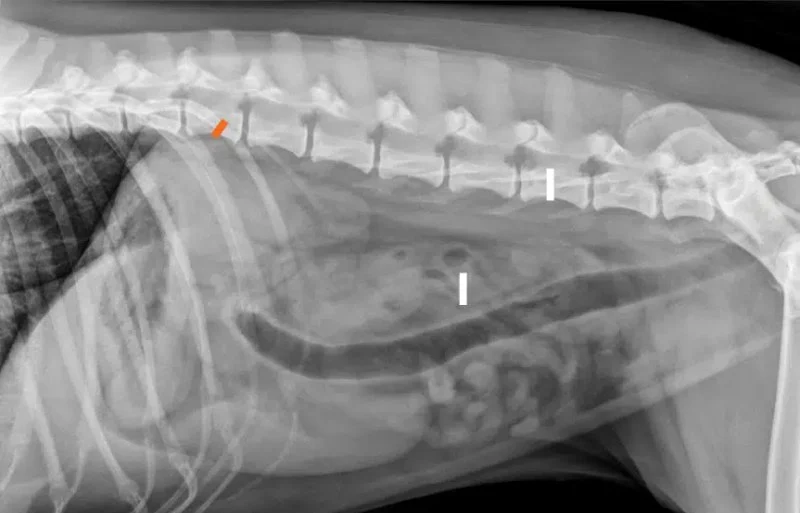
Within 24 hours, the dog became lethargic and refused water, prompting an emergency vet visit. X-rays revealed a complete intestinal blockage requiring immediate surgery.
Recovery and lessons learned
After successful surgery, the dog made a full recovery. The owner emphasized the importance of recognizing early warning signs and seeking immediate veterinary care instead of waiting for symptoms to worsen.
Common Objects Dogs Swallow - Everyday Household Risks
Why the home environment can be unexpectedly dangerous
Many intestinal blockage cases involve everyday items such as socks, hair ties, children’s toys, bones, and packaging materials. Dogs often swallow these items during play or while exploring unattended spaces.
Even small objects can become dangerous depending on their shape and material.
Diagnosis Methods Used by Veterinarians
How vets confirm intestinal foreign bodies
Veterinarians typically use physical examinations, X-rays, and ultrasound imaging to diagnose intestinal blockages. In some cases, contrast studies may be used to track the movement of material through the digestive tract.
Early diagnosis significantly improves treatment outcomes and reduces surgical risks.
Treatment Options for Intestinal Blockage
Non-surgical and surgical approaches
If the object is small and recently ingested, a veterinarian may attempt to induce vomiting or use endoscopy to remove it. However, most intestinal blockages require surgical intervention to safely remove the foreign object.
The choice of treatment depends on the location, size, and duration of the obstruction.
Recovery and Post-Treatment Care
What happens after surgery or treatment
After treatment, dogs require rest, controlled diet, and close monitoring for complications. Soft food diets are often recommended during recovery to reduce stress on the digestive system.
Veterinarians may also prescribe medications to manage pain and prevent infection.
Prevention Strategies for Dog Owners
How to reduce the risk of intestinal blockage
Prevention begins with supervision and environmental control. Keeping small objects out of reach and providing safe chew toys can significantly reduce risk.
Training commands such as “leave it” also help prevent dogs from picking up dangerous objects during walks.
For pet owners seeking more structured guidance on dog health, behavior safety, and emergency prevention tools, platforms like
Recognizing the early signs of intestinal obstruction can make the difference between a simple treatment and a life-threatening emergency, making awareness one of the most powerful tools a dog owner can have.





 Rase Veterinary Centre - Market Rasen4.0 (437 reviews)
 Belvoir Vets4.0 (135 reviews)
 Vets for Pets - Carrickfergus4.0 (261 reviews)
 M And L Aquatics4.0 (259 reviews)
 Appletree Cattery4.0 (13 reviews)
 Little Beasties4.0 (193 reviews)
 Top 10 Health Checkups Every Puppy Owner in the UK Should Know
 The Importance of Emergency Vet Advice for Reptiles in the UK
 Behaviour Training Tips for Senior Pets: What UK Pet Owners Need to Know
 How to Check for Dog Ear Mites: Dark Discharge, Head Shaking, and Treatment Tips
 Complete Guide to Nutrition Tips for Hamsters
 Expert Vet Advice on Travel Safety for Exotic Pets in the UK