
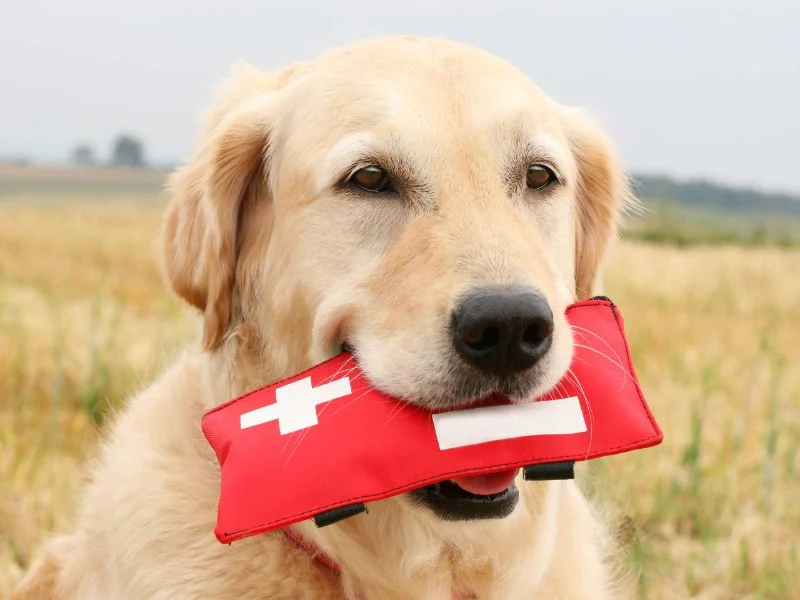
1. Why First Aid for Dogs is Crucial for Pet Owners
Accidents and health emergencies can happen at any time, and being prepared is essential when it comes to the health and safety of your dog. Understanding basic first aid for dogs allows you to act quickly and confidently in an emergency, helping to minimize the severity of injuries or illnesses while you wait for veterinary care.
As a responsible pet owner in the UK, it’s important to have basic knowledge of dog first aid, especially since emergencies such as choking, bleeding, or poisoning can happen unexpectedly. A well-equipped dog first aid kit, along with an understanding of how to use it, can be the difference between life and death for your pet.

2. Basic First Aid Tips Every Dog Owner Should Know
First aid for dogs doesn’t have to be complicated. Here are some basic first aid tips that every dog owner should be familiar with:

1. Assess the Situation Calmly
Before you do anything, stay calm and assess the situation. Panic can make it harder to think clearly or act quickly. Look for signs of injury, pain, or distress and try to identify what might have happened. Understanding the symptoms will help you provide the right care or seek appropriate help.
2. Stop Bleeding
If your dog is bleeding, the first step is to stop the bleeding by applying pressure to the wound with a clean cloth or bandage. If the wound is deep or large, elevate the area if possible, and apply continuous pressure. Never remove the cloth if it becomes soaked—add more layers instead. If the bleeding doesn’t stop, contact a vet immediately.
3. Control Shock
Shock is a common response to severe injury or trauma. Signs of shock in dogs include pale gums, rapid breathing, and weakness. To treat shock, keep your dog warm by covering them with a blanket or coat. Avoid giving them food or water and get to the vet as soon as possible.
4. Perform the Heimlich Maneuver (if choking)
If your dog is choking and can’t breathe, you may need to perform the Heimlich maneuver. For small dogs, hold them with their back facing you, place your hands around their rib cage, and apply gentle pressure to force the object out. For larger dogs, perform the maneuver by placing your hands around the abdomen and pushing upwards. Always contact a vet immediately if choking persists.
3. Handling Common Dog Emergencies
Understanding how to handle common dog emergencies can make all the difference when it comes to your pet’s safety. Here are some typical situations that may require quick first aid intervention:
1. Cuts and Scrapes
Minor cuts or scrapes can often be treated at home. Clean the wound gently with warm water and mild soap. Apply an antiseptic ointment to prevent infection and cover the wound with a bandage if necessary. Keep an eye on the wound for signs of infection, such as swelling or pus.
2. Dog Allergic Reactions
If your dog is stung by a bee or exposed to an allergen, you may notice swelling, hives, or difficulty breathing. If you suspect an allergic reaction, it’s important to get medical attention quickly, as severe reactions can be life-threatening.
3. Poisoning
Dogs are often exposed to toxic substances, such as chocolate, plants, or household cleaners. If you suspect your dog has ingested something toxic, call your vet or a pet poison hotline immediately. Keep your pet calm and try to identify the substance they’ve consumed for the vet’s reference.
4. How to Provide CPR for Dogs
In some emergency situations, you may need to provide CPR to your dog. Here’s a basic guide on how to perform pet CPR:
1. Check for Breathing and Heartbeat
First, make sure your dog is unresponsive. Check for signs of breathing by placing your cheek near their nose and mouth. Check for a heartbeat by feeling for it on the left side of their chest just behind the elbow. If there’s no breathing or heartbeat, proceed with CPR.
2. Perform Chest Compressions
For dogs under 30kg, place your hands over their chest and apply firm, rhythmic compressions at a rate of 100-120 per minute. For dogs over 30kg, place your hands on their ribcage, using more pressure to compress the chest. If you’re unsure of how much pressure to apply, consider seeking professional help or attending a pet first aid course.
3. Rescue Breathing
If your dog is not breathing, gently close their mouth and breathe into their nose. Ensure the air is going into the lungs and that the chest is rising with each breath. Repeat the cycle of chest compressions and rescue breaths until help arrives or your dog begins to breathe on their own.
5. When to Call a Vet for Help
While first aid is essential for stabilizing your dog in an emergency, it’s important to know when to call a vet. Here are some signs that your dog needs immediate professional attention:
1. Uncontrolled Bleeding
If the bleeding doesn’t stop with pressure or is from a major artery, it’s time to call a vet for professional intervention.
2. Difficulty Breathing
If your dog is having trouble breathing, showing signs of laboured breathing, or collapsing, seek immediate veterinary help.
3. Seizures or Unresponsiveness
If your dog experiences a seizure or is unresponsive, you should immediately take them to the vet. These could indicate a serious medical issue.
6. Where to Find Dog First Aid Resources in the UK
Being well-prepared for emergencies is key to keeping your dog safe. Many resources are available in the UK to help you learn more about pet first aid. You can find first aid courses, books, and online tutorials that teach you how to handle emergencies. For quality products, including first aid kits and guides, visit RegPets to ensure you're equipped to provide the best care for your pet in an emergency.



 Sheriffs Highway Vets4.0 (269 reviews)
 Planet pets4.0 (478 reviews)
 My Pet HQ Ltd4.0 (238 reviews)
 Peninsula Veterinary Clinics4.0 (33 reviews)
 Vets 4 Vets Ltd5.0 (1 reviews)
 Doberfields5.0 (16 reviews)
 UK Pet Owner’s Guide to Nutrition Tips for Dogs
 Top 10 Preventive Care Every Puppies Owner in the UK Should Know
 Top 10 Travel Safety Tips Every Cat Owner in the UK Should Know
 UK Pet Owner’s Guide to Puppy and Kitten Care for Hamsters
 UK Pet Owner’s Guide to Exercise and Fitness for Fish
 Best Practices for Allergy Care in Guinea Pigs: Keeping Your Pet Healthy